Last updated October 31, 2026
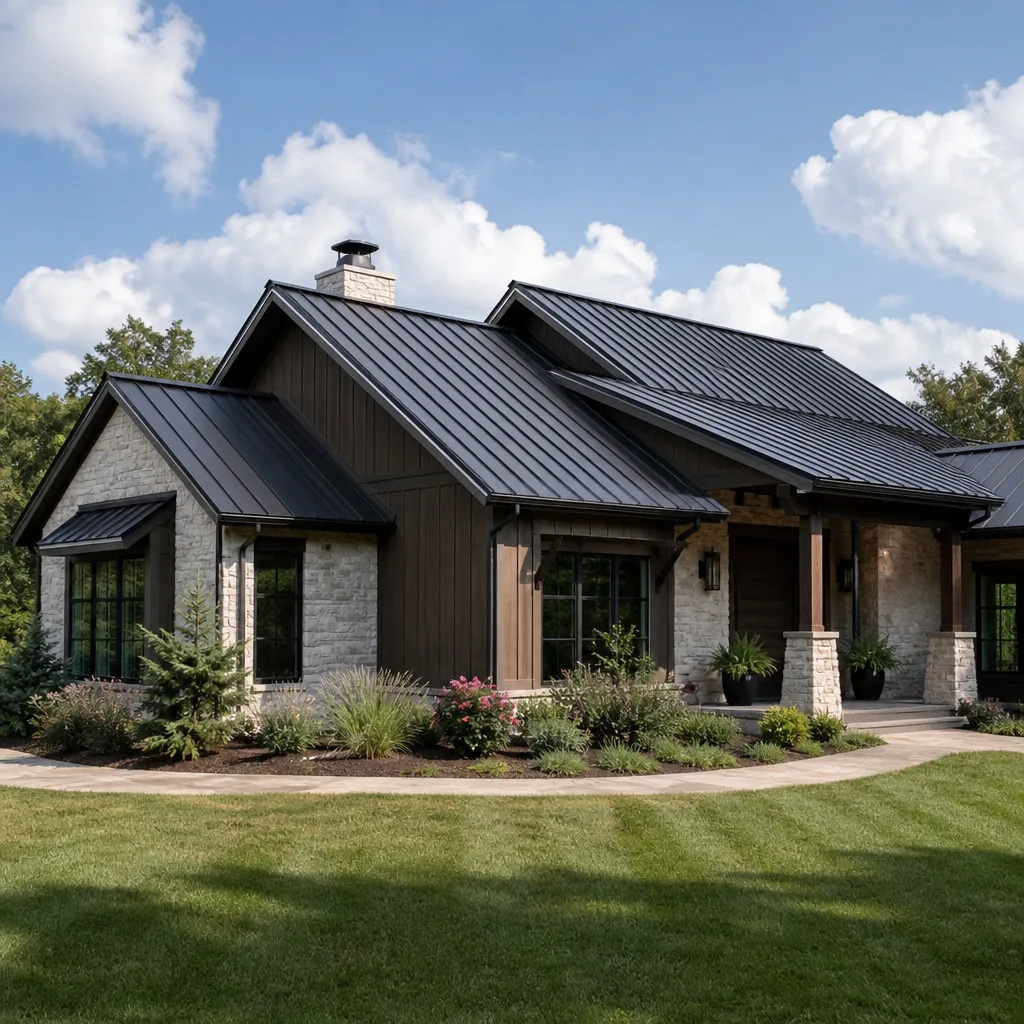 Metal roofing
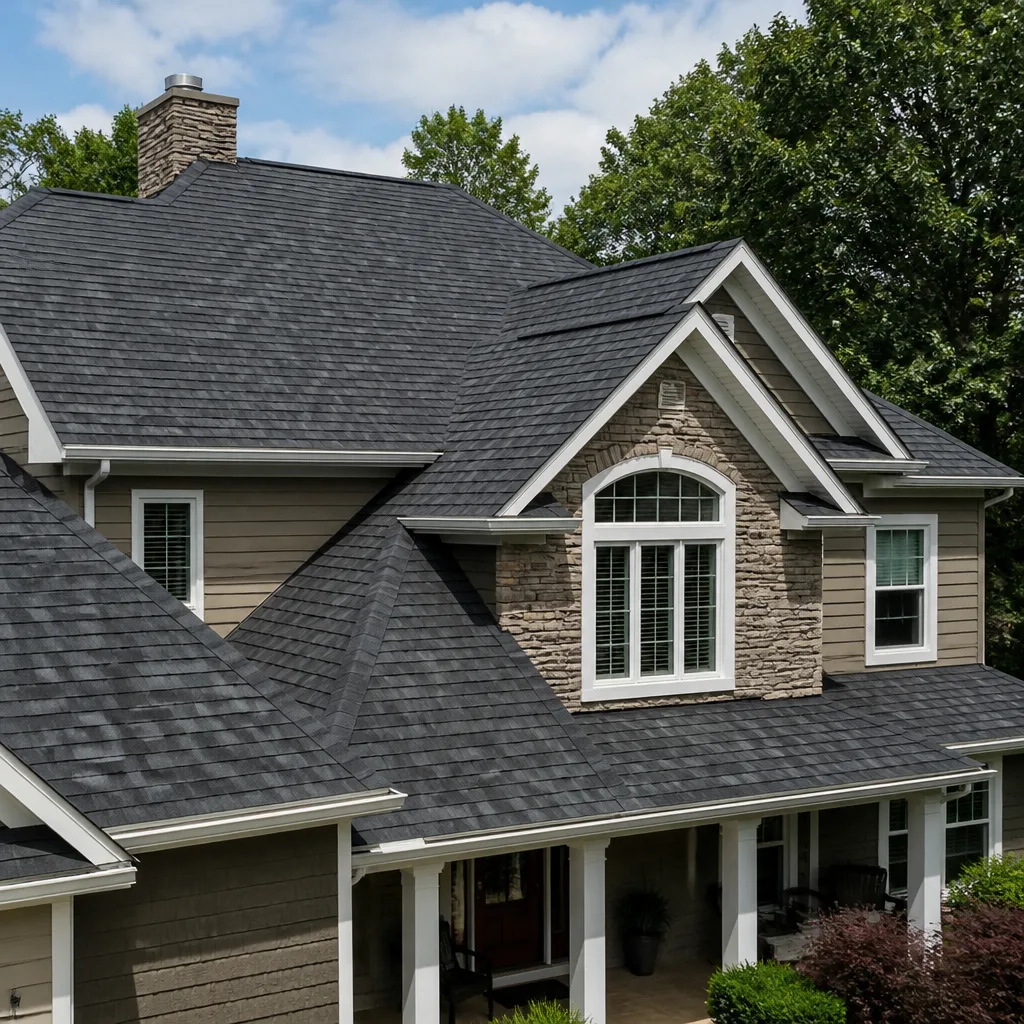 Architectural shingles
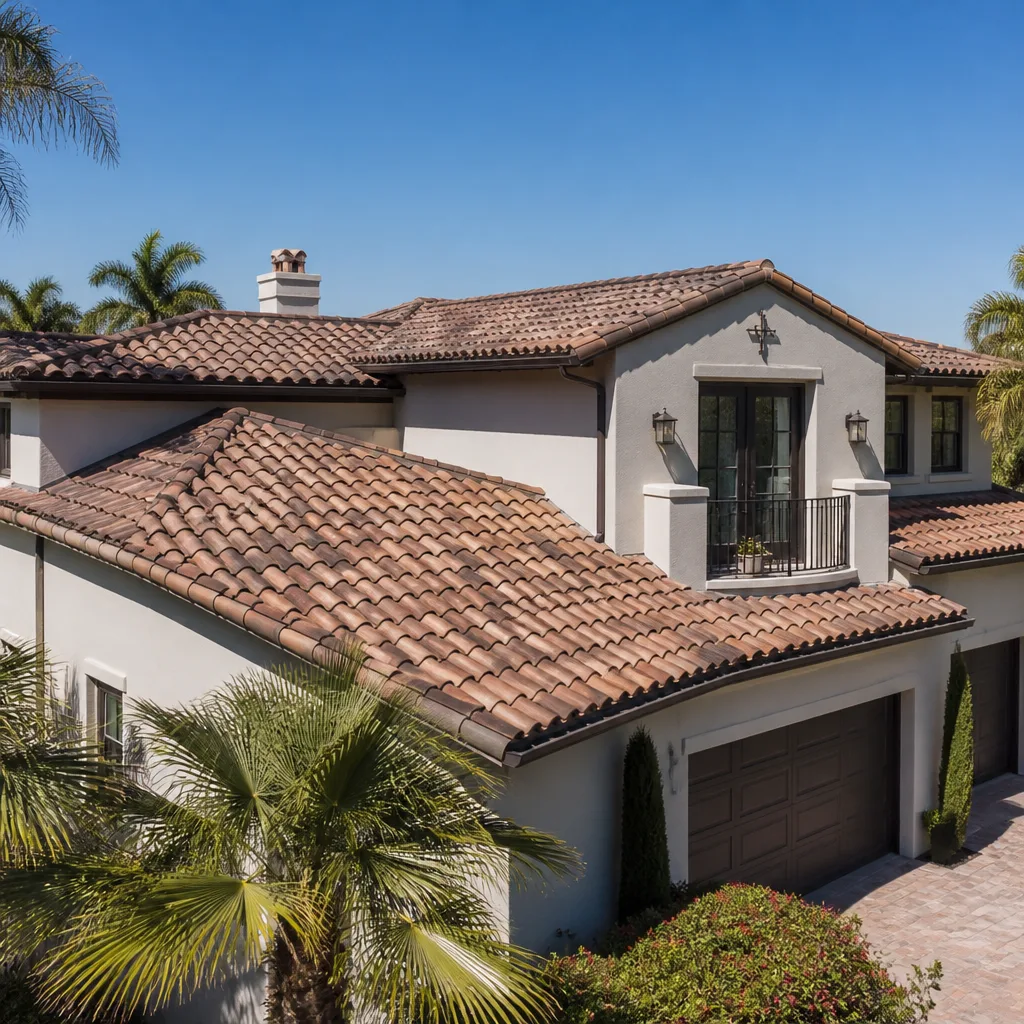 Tile roofing
 GAF
 Owens Corning
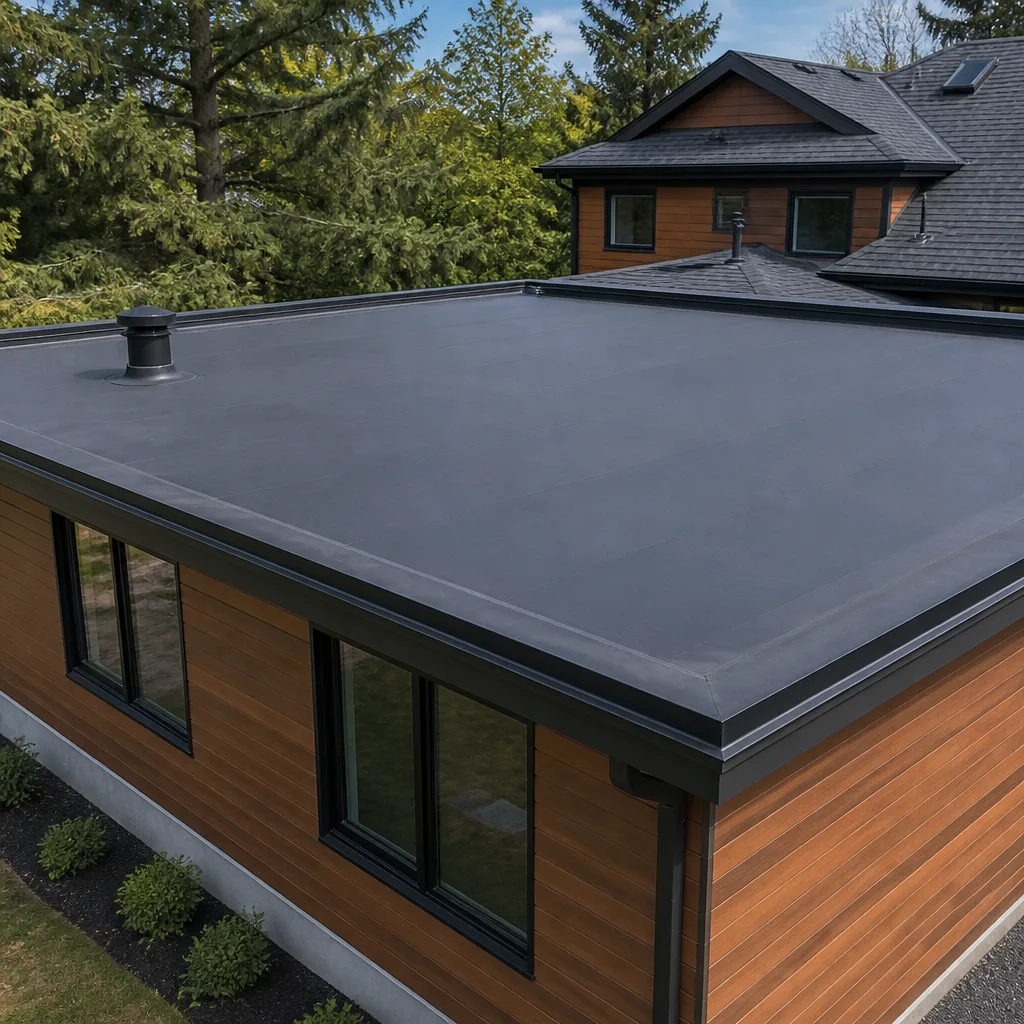 Flat & low-slope
Free roof inspection with deck photos before we talk money - GAF and Owens Corning certified installation
DIY vs Professional Roofing: The East Los Angeles Homeowner’s Decision Guide
California law allows homeowners to pull their own roofing permits, and in East Los Angeles, a surprising number do exactly that every year. But here’s the part nobody mentions until it’s too late: when you sign that permit application as the owner-builder, you become the contractor of record. Every seam you seal, every flashing detail you fasten, every nail you drive carries your personal liability, not a manufacturer’s warranty or a roofer’s workmanship guarantee. If the roof fails in two years and the insurance adjuster traces the damage to your handiwork, there’s no claim to file. This guide draws an honest line between what you can reasonably handle and what you should hand to a professional, based on the roof types actually common in East Los Angeles.
Styles & brands we work with
Quick Answer
DIY roofing in East Los Angeles makes sense for small, isolated fixes like replacing one damaged asphalt shingle, resealing a vent boot, or clearing a blocked scupper, provided the roof is pitched and safely accessible. But most ELA homes have flat or low-slope roofs where the materials, the permit rules, and the consequences of a bad seam make professional repair the smarter financial choice, even when the upfront number looks higher. The real question isn’t whether you have the skill. It’s whether you want to accept liability as the contractor of record on a roof over your family’s heads.
Table of Contents
- The Roof Types That Define East Los Angeles
- Permits, Liability, and What “Owner-Builder” Actually Means
- What a Capable DIYer Can Realistically Handle in ELA
- Why Flat and Low-Slope Roofs Are Higher-Risk DIY Territory
- The Tile Roof Reality Check
- The Real Cost Comparison: DIY vs Hiring a Pro
- What Your Insurance Policy Says About Homeowner-Performed Work
- How to Be an Informed Collaborator When You Hire Out
- Common Mistakes to Avoid
- When to Call a Professional
- Frequently Asked Questions
- The Bottom Line
The Roof Types That Define East Los Angeles
East Los Angeles is not a single-roof-type neighborhood. Drive down Whittier Boulevard and you’ll pass Spanish-style homes with clay tile, mid-century bungalows with composition shingles, and a large stock of post-war rental properties with flat or nearly flat roofs. That mix matters for the DIY conversation, because each roof type responds differently to amateur work.
The most common roof type in ELA, especially east of Indiana Street and throughout the unincorporated areas bordering the city limits, is the low-slope built-up roof or modified bitumen system. These roofs don’t shed water the way a pitched shingle roof does. They rely on sealed seams and a continuous membrane. Then you have the classic composition shingle roofs, often on homes built from the 1920s through the 1950s, where individual shingles can be swapped without touching the rest of the system. Tile roofs, both clay and concrete, appear most heavily in the hillside areas and on Spanish Colonial Revival homes, where they perform beautifully for decades and punish anyone who walks on them without knowing how.
This guide evaluates the DIY question through each of these lenses. Because the answer changes, not just by skill level, but by what’s actually on top of your house.
Permits, Liability, and What “Owner-Builder” Actually Means
California’s Business and Professions Code allows a property owner to pull a building permit for work on their own residence without holding a contractor’s license. That part is true and widely known. The part that gets glossed over is that the permit application requires you to sign an “Owner-Builder Declaration,” and that document formally certifies that you are performing the work yourself and you accept full responsibility for its compliance with state and local building codes.
In practice, this means:
- If a future leak is traced to your repair, the repair is not covered by any roofer’s workmanship warranty. It’s on you.
- If you sell the home, you must disclose that you performed the work, and any unpermitted or improperly permitted roofing work becomes a disclosure item.
- Many insurance companies will not cover damage caused by faulty workmanship, even if the damage itself would otherwise be a covered peril. If water gets in because a seam failed, the water damage claim can be denied.
- If you hire a day laborer to help with the work while acting as owner-builder, you take on the role of employer. That means workers’ compensation obligations, payroll responsibilities, and liability if someone gets hurt on your roof.
This isn’t anti-DIY fearmongering. It’s the reality of what you’re signing. A small cosmetic fix that doesn’t require a permit is one thing. But in East Los Angeles, any repair that involves replacing a section of underlayment, rebuilding a roof deck, or altering the roof structure requires a permit from the Los Angeles Department of Building and Safety, and when you sign that permit, you own the outcome.
When we perform a roof repair or replacement, we carry our own liability and workmanship responsibility. The permit is in our name. If a seam fails on a modified bitumen roof we installed, our repair team addresses it. That distinction is why the Sunrise Roof Repair home approach starts with understanding the scope before touching your roof.
What a Capable DIYer Can Realistically Handle in ELA
We’re not here to talk every homeowner out of every repair. There are legitimate tasks on East Los Angeles roofs that a careful, physically capable person can do correctly and safely. The key is knowing which jobs qualify, and which ones only look simple from the street.
Job 1: Replacing a Single Damaged Asphalt Shingle
- Identify the shingle type and color. Take a sample to a supplier or measure the tabs. Three-tab shingles from the 1970s are not the same as architectural shingles from 2010.
- Choose a cool, overcast morning. Asphalt shingles get soft and easy to damage in the heat of a Southern California afternoon.
- Lift the shingle above the damaged one and remove the four nails holding the damaged shingle, using a flat pry bar and taking care not to tear the shingle above.
- Slide the new shingle into place, nail with four roofing nails below the seal strip, and press the tabs down firmly.
- Seal the tabs with a small dab of roofing cement if the shingle’s adhesive strip doesn’t engage on its own.
This is a $2 repair in materials and about 30 minutes of careful work. It’s genuinely within reach, provided you can safely access the area and the roof pitch isn’t steep enough to make you nervous.
Job 2: Resealing a Roof Vent Boot or Pipe Flashing
Over time, the rubber boot around plumbing vents dries out and cracks under the ELA sun. Resealing is a straightforward job: clean the area, apply a generous bead of polyurethane roof sealant around the pipe where it meets the boot, and smooth it with a gloved finger. If the boot itself is cracked or disintegrating, replacing it is a bigger job that involves lifting shingles around the pipe, and at that point you’re entering territory where a mistake means a leak. Resealing a boot that’s still intact, though, is legitimate DIY.
Job 3: Clearing a Blocked Scupper or Roof Drain
East Los Angeles gets most of its rain between November and March, and when a scupper clogs, water backs up and finds its way inside. Clearing leaves and debris from a scupper or roof drain is maintenance, not repair. It requires a ladder, gloves, and a willingness to do it twice a year. For single-story homes with easy roof access, this is DIY that prevents expensive professional calls.
What these jobs share: they don’t require a permit, they don’t involve opening up the roof’s waterproofing layer, and a mistake is visible and correctable before it causes serious damage. For these tasks, go ahead. For anything else, keep reading.
If you’d rather not get on a ladder at all, Roof Repair in East Los Angeles covers these small fixes as part of our standard service scope.
Why Flat and Low-Slope Roofs Are Higher-Risk DIY Territory
Here’s the thing about East Los Angeles roofs that generic DIY articles from national websites never mention: a huge portion of our housing stock was built with flat or low-slope roofs, and those roofs fail differently than pitched roofs. They fail silently. A small gap in a shingle roof shows up as a missing tab or lifted shingle. A small gap in a modified bitumen seam shows up as water in your ceiling six months later, with no visible clue on the roof surface.
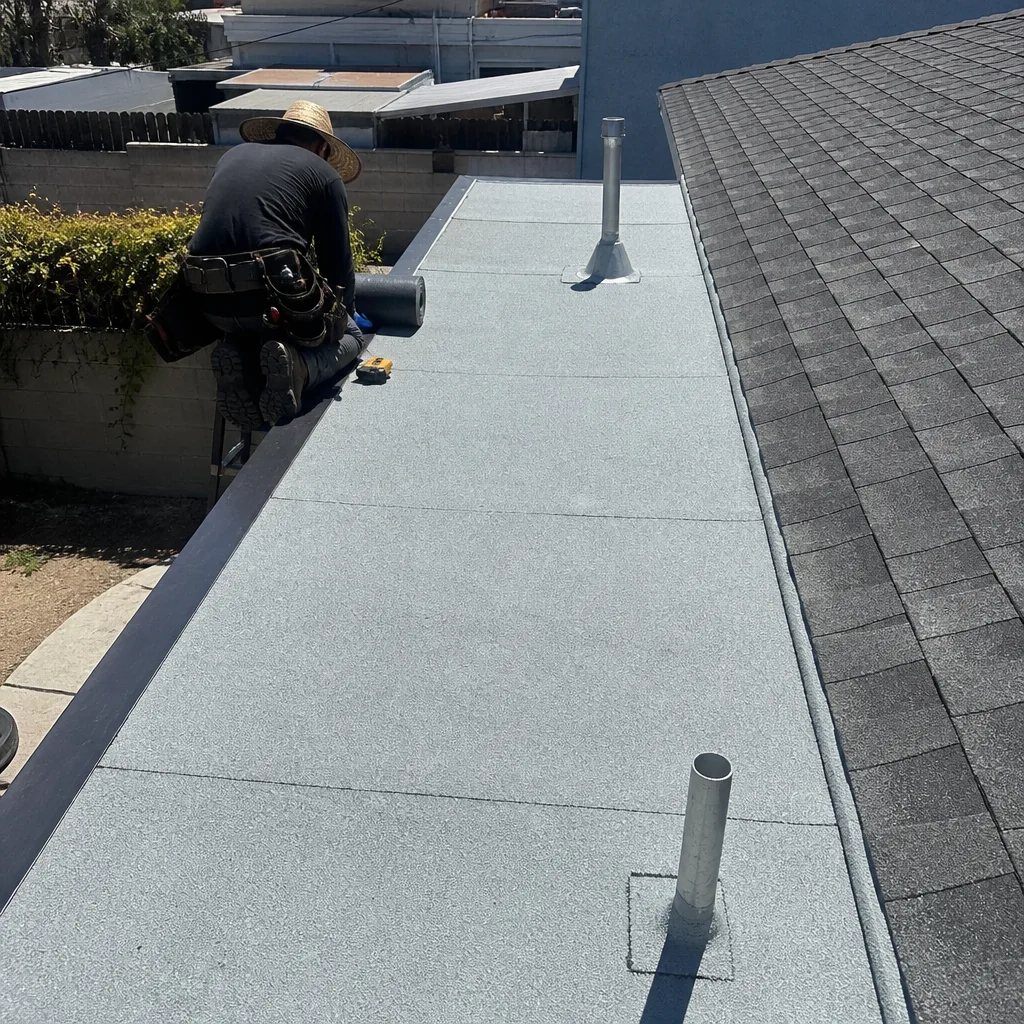
Modified bitumen roofs, the standard for low-slope applications throughout Los Angeles, consist of asphalt-impregnated sheets that overlap and bond to each other. The bonding process involves either torching the material until the asphalt melts (torch-on systems) or using cold adhesive or self-adhered sheets. The critical detail is the overlap. Every seam must be prepared, cleaned, and bonded under the right temperature and pressure conditions. If a seam is under-heated, debris gets trapped, or the material is stretched, the bond fails slowly.
What does that look like in practice? It looks like a homeowner who spends a Saturday patching an area they believe is the source of a leak, applies a bucket of roof coating over it, and feels good about the job. Six months later, the first big storm arrives, and water comes in through a seam three feet away from the patch. Why? Because the original leak wasn’t at the visible crack. It was traveling under the membrane from a failed lap joint uphill. That’s the difference between roofing and painting.
When we inspect flat roofs in East Los Angeles, we look for:
- Lap joints that lift at the edge, indicating the asphalt has cooled and re-hardened without bonding
- Blisters in the membrane, which signal trapped moisture or air under the surface
- Ponding water, especially around drains and scuppers, where the roof deck often begins to rot first
- Flashing failures at parapet walls and roof-to-wall transitions
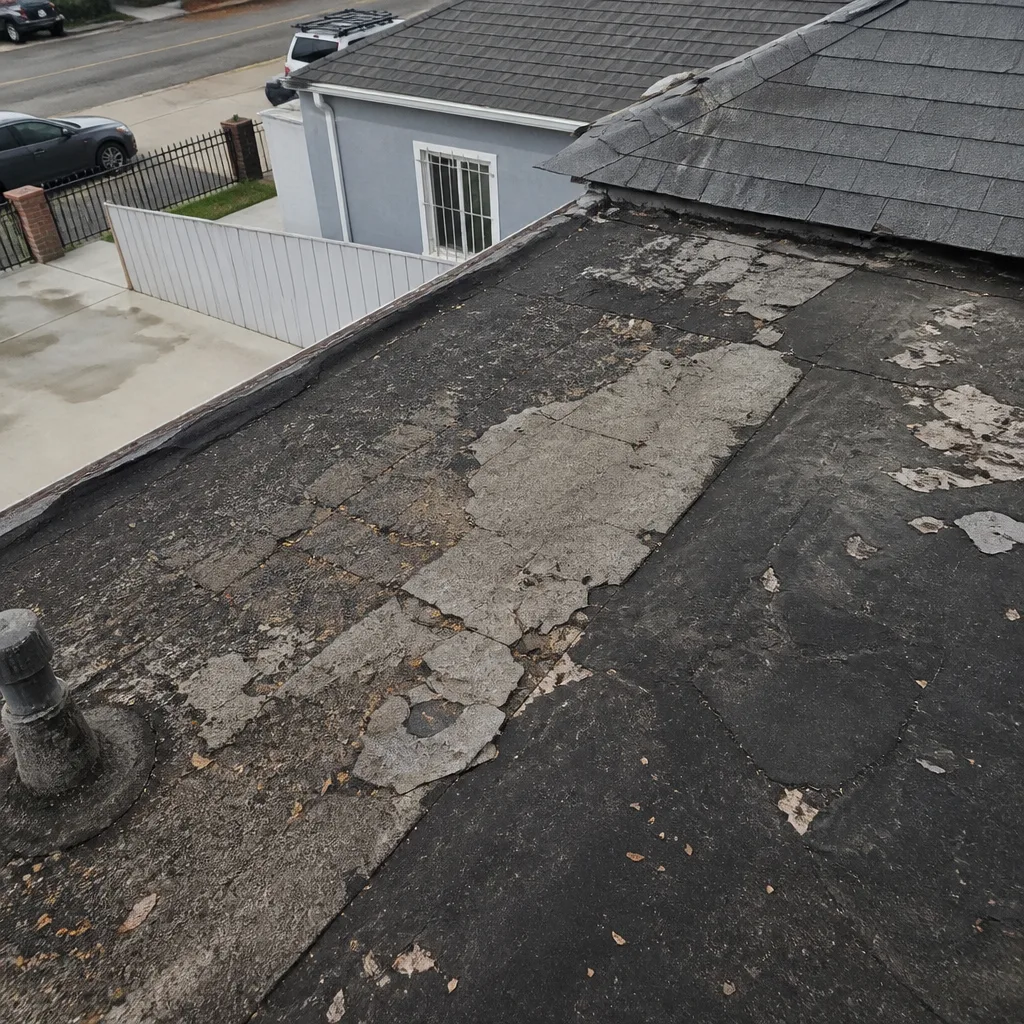
- Brittle patches and alligator cracking on older built-up roofs
None of these conditions are obvious to an untrained eye, especially from ground level. And that’s why flat-roof repair is where we see the most DIY attempts that turn into more expensive professional interventions later.
The Tile Roof Reality Check
Clay and concrete tile roofs are spectacular in the East Los Angeles sun, and they’re also the easiest roof type to damage while attempting to repair. Tile is heavy, brittle, and loaded in compression. Walk on it wrong and you’ll crack tiles that weren’t cracked before.
We see this happen often: a homeowner spots a broken tile after a wind event, climbs up with a replacement, and discovers that getting to the broken tile means walking on other tiles. They step directly on the center of a tile instead of on the overlapping edges, and the tile snaps. Now the project is two broken tiles. Then three. Then they decide to just replace the one visible tile and leave the hairline cracks they didn’t notice. The next rain finds those cracks.
If your tile roof has damage, the realistic DIY scope is limited to:
- Replacing a single tile that is fully visible and accessible without stepping on the roof surface, such as a tile at the eave edge or the first course above the gutter
- Temporary remediation, like placing a piece of sheet metal or a tarp over a broken tile until a professional can replace it properly
- Visual inspection from the ground or from a ladder, noting which tiles are out of position and where
Anything that requires walking the roof, lifting and resetting multiple tiles, or accessing the underlayment beneath the tile is professional territory. Tile systems depend on the layering of tile, batten, underlayment, and decking. Disturbing any layer without understanding the others leads to problems.
The same caution applies to metal flashings around skylights, chimneys, and roof penetrations on tile roofs. These details are where tile roofs usually leak, but fixing them correctly often requires removing and resetting surrounding tiles. That’s not a beginner’s job, and honestly, it’s not even a comfortable job for some roofers. It’s one reason we recommend Roof Inspection in East Los Angeles before committing to any scope of work on a tile roof.
The Real Cost Comparison: DIY vs Hiring a Pro
Let’s get into the numbers, because cost is usually the reason homeowners consider DIY in the first place. The honest comparison isn’t material cost versus contractor price. It’s total DIY cost versus contractor price, including tools, time, disposal, and the risk-adjusted cost of doing it wrong.
Here’s a typical single-shingle replacement in East Los Angeles, priced both ways:
DIY Cost Breakdown
- Bundle of matching shingles (minimum purchase is usually one bundle, which covers about 33 square feet): $35 to $45
- Roofing nails: $8
- Tube of roofing cement: $10
- Flat pry bar (if you don’t already own one): $15
- Ladder (if you don’t already own one, a basic 16-foot extension ladder): $120 to $180
- Fall protection harness or at minimum a solid pair of work boots with good grip: $60 to $100
- Your Saturday afternoon: 4 hours at whatever you value your time at
Total DIY cost: roughly $250 to $360, plus your time, plus the assumption of liability.
Professional Cost Breakdown
A single-shingle replacement as a service call through a roofing contractor in East Los Angeles typically runs between $150 and $275, depending on access and the condition of the surrounding shingles. The contractor supplies the shingles, the ladder, the insurance, and the responsibility.
The financial argument for DIY only holds when you already own the tools, you’re replacing multiple shingles, and you’re confident in the outcome. For a one-off repair, the savings are often under $100. The question becomes: is $100 worth spending a Saturday on your roof, accepting liability as an owner-builder, and wondering, the next time it rains, whether you missed something?
The Larger Job Comparison
For anything beyond a single shingle or vent boot, the comparison shifts decisively. A flat-roof repair on a modified bitumen system in a neighborhood like Belvedere or City Terrace, where homes are tightly packed and roof access is limited, involves specialized tools: a torch kit or cold-process adhesive applicator, seam roller, membrane probe, and safety equipment. Renting or buying these tools costs several hundred dollars. And a mistake on a flat roof isn’t visible until the water comes through the ceiling.
We’ve seen homeowners spend $400 on materials attempting a flat-roof patch, only to call us two months later when the same leak reappeared. The professional repair would have cost less than $600 and come with a workmanship warranty. The DIY savings evaporated, and then some.
If you’re considering a larger repair and want to understand your options, Roof Replacement in East Los Angeles explains when patching stops making sense and replacement becomes the right financial call.
What Your Insurance Policy Says About Homeowner-Performed Work
Insurance is the least discussed and most consequential part of the DIY roofing decision. Here’s what your standard homeowner’s policy in California actually says, in practical terms.
Homeowner’s insurance covers sudden and accidental damage to your roof from covered perils: wind, hail, fire, falling objects, and sometimes water damage depending on the specific policy. What it does not cover is damage caused by faulty workmanship. If you perform a repair, and that repair fails, and water enters your home because of the failure, your insurance company can deny the claim for the damage caused by the repair failure.
But it gets more specific. The “workmanship exclusion” typically applies to the direct cost of correcting the faulty work itself, but insurance companies vary in how far they extend the exclusion. Some will deny only the cost of re-doing the repair. Others will deny the entire water damage claim, arguing that the water damage would not have occurred absent the faulty work. If you’re in that second category, a $300 DIY patch that fails can become a $20,000 interior damage claim that you pay out of pocket.
When a licensed contractor performs the work, a different dynamic applies. Most reputable roofing contractors in California carry general liability insurance and workmanship warranties that cover the repair itself. If the contractor’s repair fails, their insurance and warranty respond. You aren’t making a claim against your homeowner’s policy at all. That’s the structural difference between hiring a pro and acting as your own contractor.
There’s also the matter of your property’s insurability. Some insurers in the Los Angeles market are tightening underwriting standards for homes with older roofs or roofs with prior claims. A meticulous professional repair with documentation can help your renewal. An owner-builder repair with no documentation, no warranty, and an open permit can complicate it.
If you do perform DIY work, document everything: photos before, during, and after, receipts for materials, and a written description of what you did. It won’t protect you from a workmanship exclusion, but it demonstrates that you acted reasonably and helps if there’s any dispute about the cause of a future loss.
How to Be an Informed Collaborator When You Hire Out
Here’s the part most guides skip: even when you hire a professional, you’re still the person who lives in the house. You don’t need to know how to weld a modified bitumen seam to deserve an explanation of what’s happening on your roof. Being an informed collaborator makes the whole process better.
What to Watch During the Job
- Materials match. If you approved CertainTeed shingles, the bundles should say CertainTeed on them. Ask to see the packaging. Any reputable contractor in East Los Angeles will show you without hesitation.
- Safety is visible. The crew should be using harnesses and tie-offs on steep pitches, and the roof should be clear of trip hazards like loose hoses or scattered tools.
- The old material is getting removed. If it’s a re-roof or replacement, you should see the old roofing being torn off down to the deck. A contractor who layers new shingles over failed underlayment is masking a problem, not fixing it.
- Cleanup is underway. Nails and debris falling into your yard or, worse, your neighbor’s yard, happens during tear-off. A professional crew manages it with tarps and daily cleanup. Not perfectly, but with obvious effort.
- Questions are welcome. If the foreman avoids explaining what they’re doing or gets defensive when you ask, that’s information too.
Questions to Ask Before Work Starts
- What exactly will be done, in what order?
- Which materials and brands are being used, and why those?
- Where is the flashing being replaced versus reused?
- How will the roof be protected if it rains before the work is complete?
- What’s the daily cleanup process?
- Who is my point of contact if something looks wrong during the job?
At Sunrise Roof Repair, the answer to most of these questions comes from carrying products from seven manufacturers, including Owens Corning, IKO, and GAF. That breadth matters because it means the material recommendation you get is driven by what your specific roof needs, not by what a single-brand contractor has in the yard. Seven brands, one contractor. It’s a simple idea that changes the conversation.
Common Mistakes to Avoid
- Thinking a flat-roof leak is directly under the visible damage. On built-up and modified bitumen roofs, water travels laterally along the deck before showing up at a seam. The visible crack is rarely the actual entry point. You’ll patch the wrong spot, and the leak will persist.
- Walking on a tile roof without understanding where to step. Tile breaks under concentrated point loads. Step on the center of a tile, especially a sun-weathered clay tile in East Los Angeles, and you’ll hear the crack immediately. Then you have a bigger repair than you started with.
- Signing the owner-builder declaration without reading it. That signature changes your liability for the roof’s performance. Read the document. Understand what “contractor of record” means before you commit.
- Using silicone caulk where roofing cement or polyurethane sealant is required. Common household caulk degrades under UV exposure and fails at roofing temperatures. By summer in ELA, a silicone patch from a hardware store tube is already separating from the membrane.
- Over-torching a modified bitumen patch. Homeowners attempting torch-on repairs often apply too much heat, which burns off the asphalt and destroys the material’s waterproofing properties. The result looks fine on top and leaks underneath.
- Ignoring the underlayment. Shingles are not the waterproofing layer. The underlayment is. If the underlayment beneath a shingle patch is compromised, the new shingle is just decoration over a leak that hasn’t happened yet.
- Waiting until the rainy season to address a known issue. Every November, our inspection schedule in East Los Angeles books up with homeowners who noticed something in July and decided to wait. Before the next rain hits is the right time to deal with a roof that’s already told you something’s wrong.
When to Call a Professional
Call a professional when the repair involves opening the roof’s waterproofing layer, which means any flat-roof patch, any tile reset, any flashing replacement, any underlayment work, and any repair that requires a permit. Call a professional when accessing the roof requires walking on tile, working on a steep pitch, or navigating a second-story roof without safe access. Call a professional when the leak has already caused interior damage, because that means the roofing detail and the interior repair need to be coordinated.
Critically, call a professional when you’re not sure. A roof inspection costs less than the materials for a DIY repair on a flat roof, and it tells you what’s actually wrong. Sunrise Roof Repair offers Roof Inspection in East Los Angeles as a standalone service, because we inspect first and recommend second. It’s not a sales call disguised as a service. It’s an objective look at what’s happening on your roof, with recommendations sized to what you actually need.
Sunrise Roof Repair offers free estimates in East Los Angeles. Call (877) 752-3460 to schedule yours.
Frequently Asked Questions
Minor repairs that don’t alter the roof structure or replace the waterproofing underlayment generally don’t require a permit in East Los Angeles. But any work that involves rebuilding roof decking, replacing underlayment on a section of the roof, or altering the structure does require a permit from the Los Angeles Department of Building and Safety. When you pull that permit as an owner-builder, you sign a declaration accepting liability for the work’s compliance. For an exact determination on your specific repair, call (877) 752-3460 and we’ll help you understand what’s needed.
Small repairs in East Los Angeles, like replacing a single shingle or resealing a vent boot, typically run between $150 and $275 through a professional. Flat-roof patches on modified bitumen systems usually fall between $350 and $700 depending on the size and location of the damage. A full roof inspection, which identifies all active and potential issues, is typically under $250 and gives you an objective view of what needs work. For an exact quote on your roof, call (877) 752-3460, estimates are free.
Repair addresses a specific, localized failure: a leak at a flashing, a broken tile, a handful of missing shingles, a seam separation on a flat roof. Replacement removes and rebuilds the entire roofing system down to the deck. The decision depends on the roof’s age, the extent of deterioration, and the condition of the underlying structure. In our experience with East Los Angeles homes, many roofs that look like they need full replacement actually have years of serviceable life left with targeted repair. We recommend Roof Repair in East Los Angeles when the damage is localized, and Roof Replacement in East Los Angeles when the system has reached the end of its service life.
Flat roofs don’t actually leak more than pitched roofs, but they fail differently and are less forgiving of minor installation errors. A pitched shingle roof sheds water quickly, and the overlapping shingle system works with gravity. A flat roof relies entirely on continuous, sealed membranes. Any gap, any imperfect seam, any pooling water has prolonged contact with the roof surface and finds its way through. This is why flat-roof repair is the highest-risk DIY category in East Los Angeles. The margin for error is thin, and the errors are invisible from the surface.
Your homeowner’s insurance typically excludes damage caused by faulty workmanship, and a DIY repair is workmanship performed by you. If your repair fails and water damage results, the insurance company may deny the claim for that damage. When a licensed professional performs the work, their liability insurance and workmanship warranty cover the repair. This is not legal advice about your specific policy, but it’s the standard structure of California homeowner’s policies. Read your policy’s exclusions section, and ask your agent directly about workmanship exclusions before starting any DIY roofing work.
Every two years for most roofs, and annually for flat or low-slope roofs older than ten years. East Los Angeles has a long dry season that hides slow deterioration, followed by intense winter rain events that reveal it. An annual inspection catches failed seams, lifted flashing, and tile damage before the next winter storm turns small problems into interior damage. Before the next rain hits is a good rule. Call (877) 752-3460 to schedule a roof inspection, and you’ll get an objective report on the condition of your roof, not a high-pressure sales presentation.
The Bottom Line
The DIY versus professional roofing question in East Los Angeles comes down to roof type, liability, and honest math. Single-shingle replacements and vent boot resealing are realistic DIY territory for a capable homeowner on a pitched, accessible roof. Flat and low-slope repairs are not, because modified bitumen systems fail invisibly and the cost of a mistake is measured in drywall, insulation, and insurance denials. Tile roofs are not, because the material is too easy to damage and too expensive to replace. And in every case, the owner-builder declaration on a permit makes you the contractor of record, which is a liability transfer most homeowners don’t fully grasp until a claim is denied. If you’re unsure, an inspection costs less than a failed DIY attempt. Start there. We inspect first, recommend second.
Written by the team at Sunrise Roof Repair, serving East Los Angeles since 2015.
See the difference
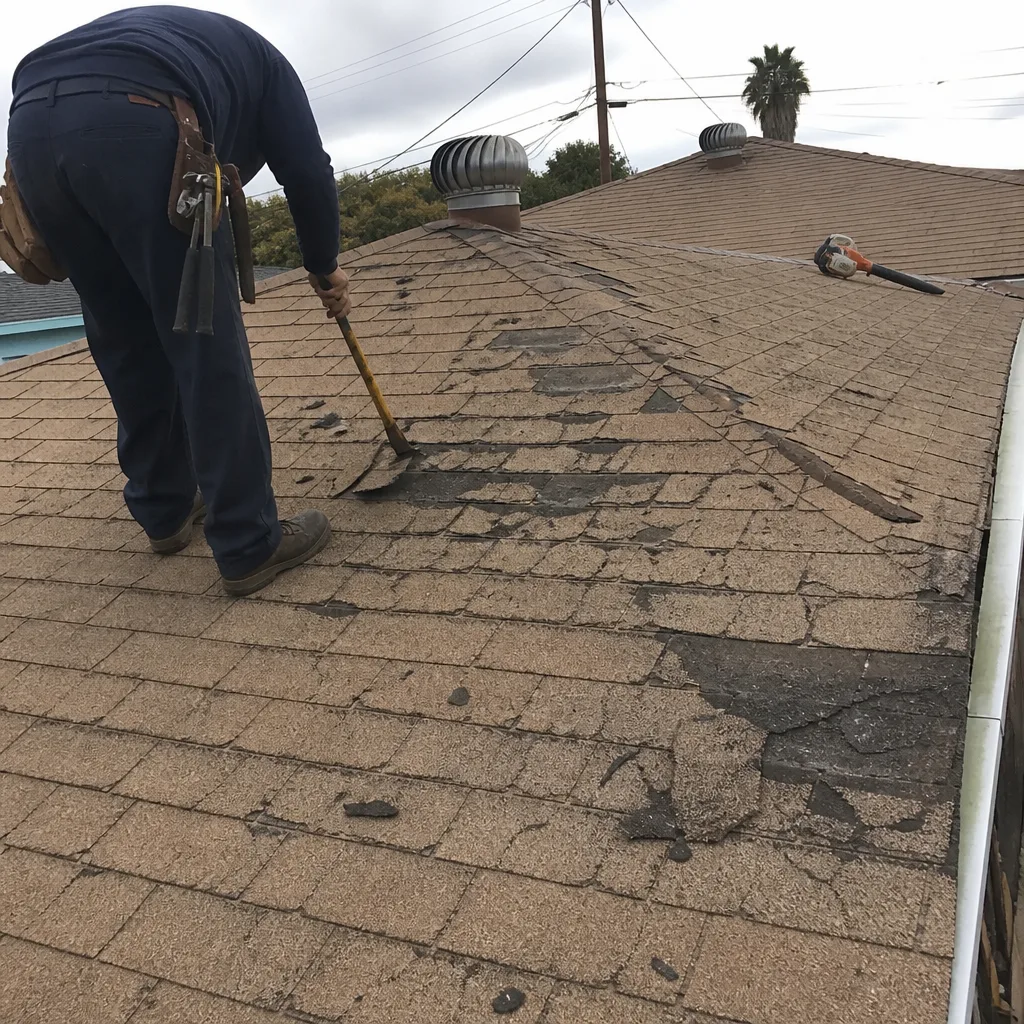 Before
 After
 Before
 After
 Before
 After