
Last updated October 31, 2026
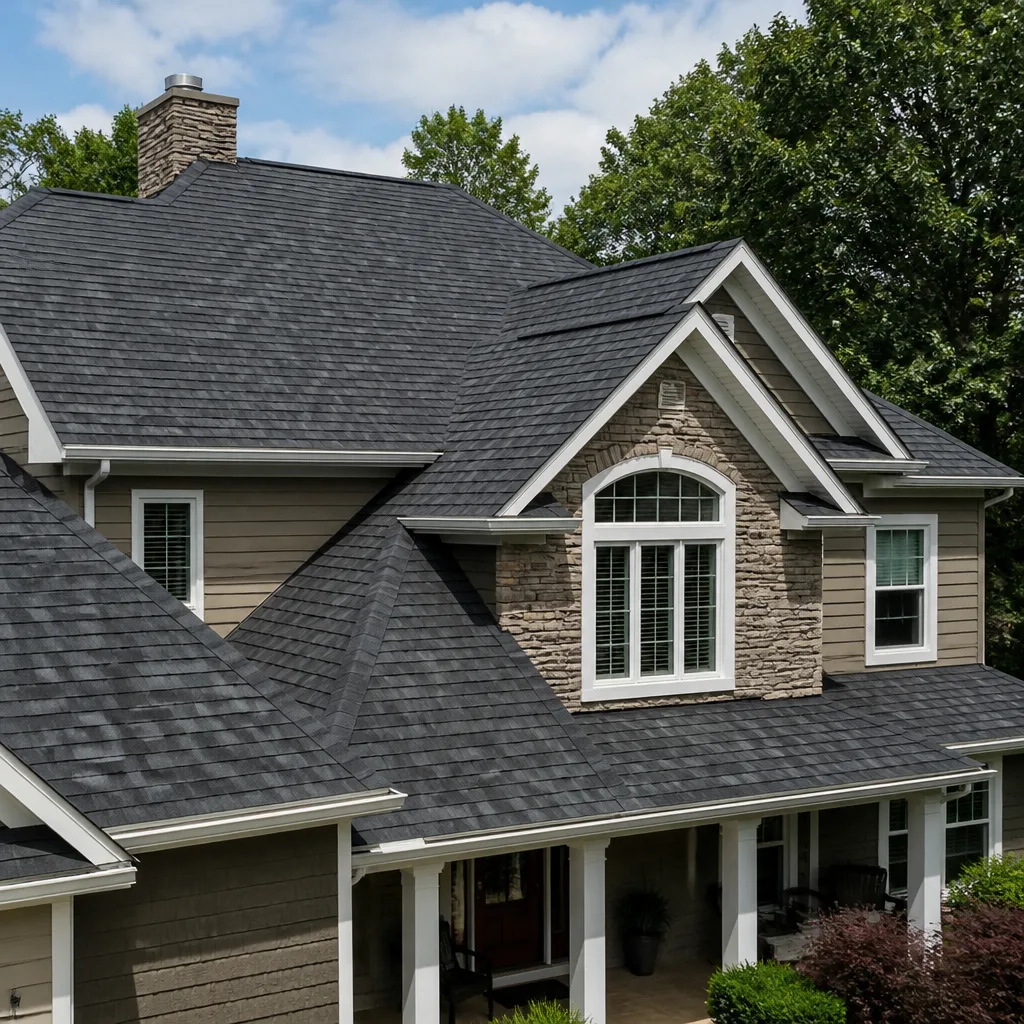 Architectural shingles
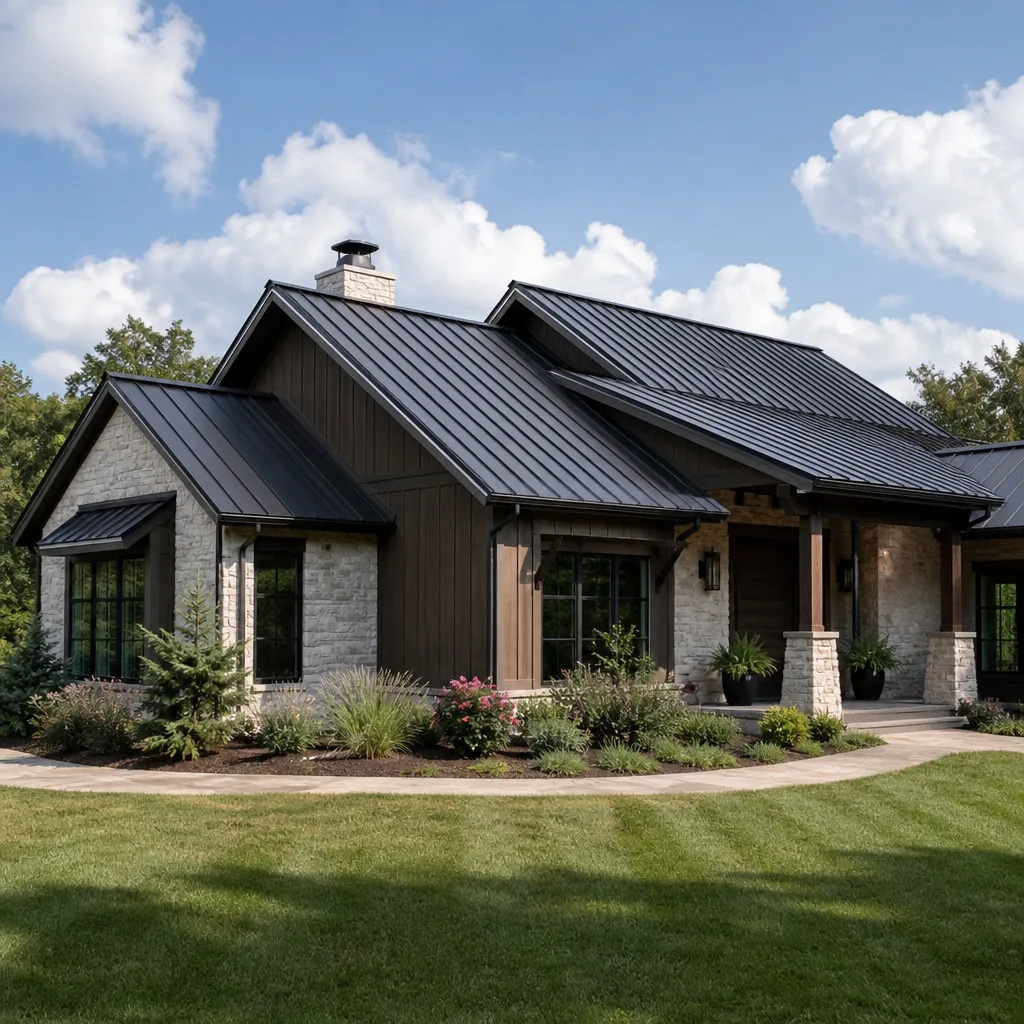 Metal roofing
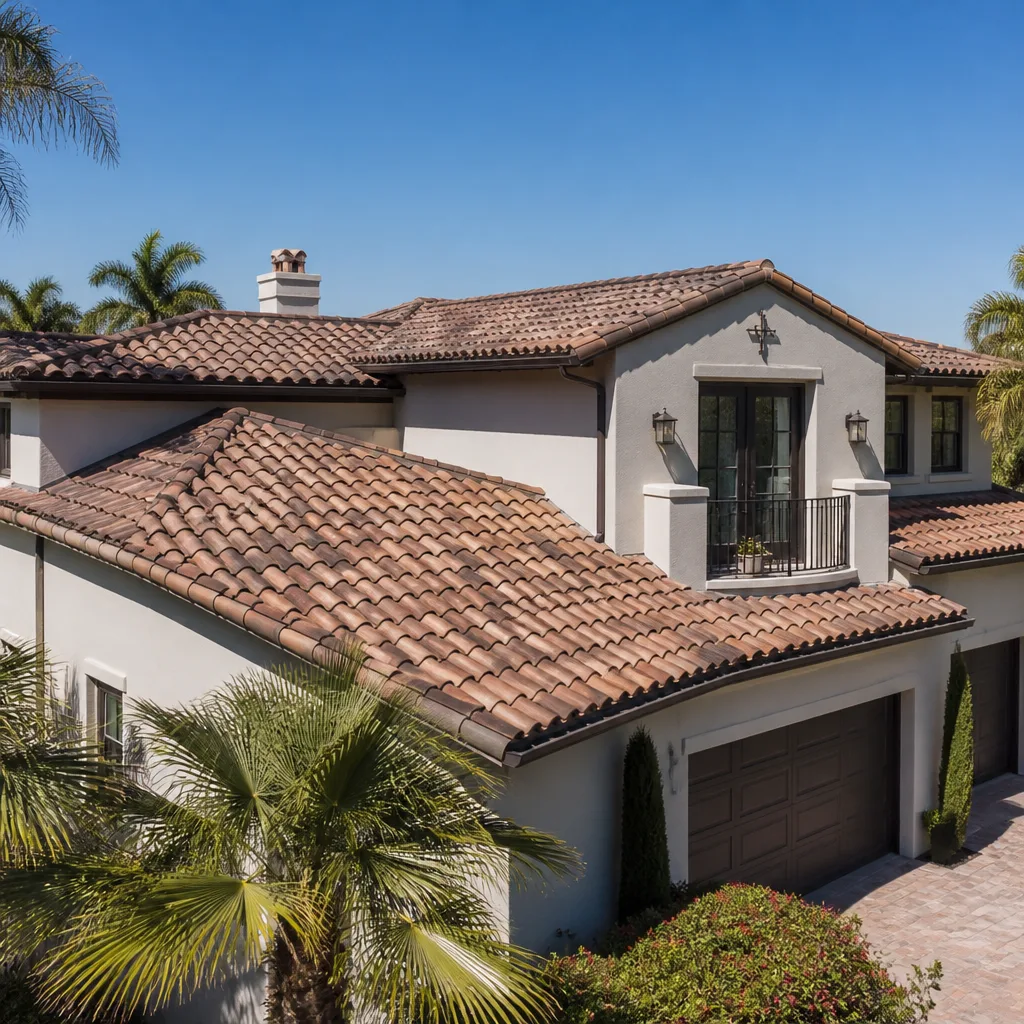 Tile roofing
 GAF
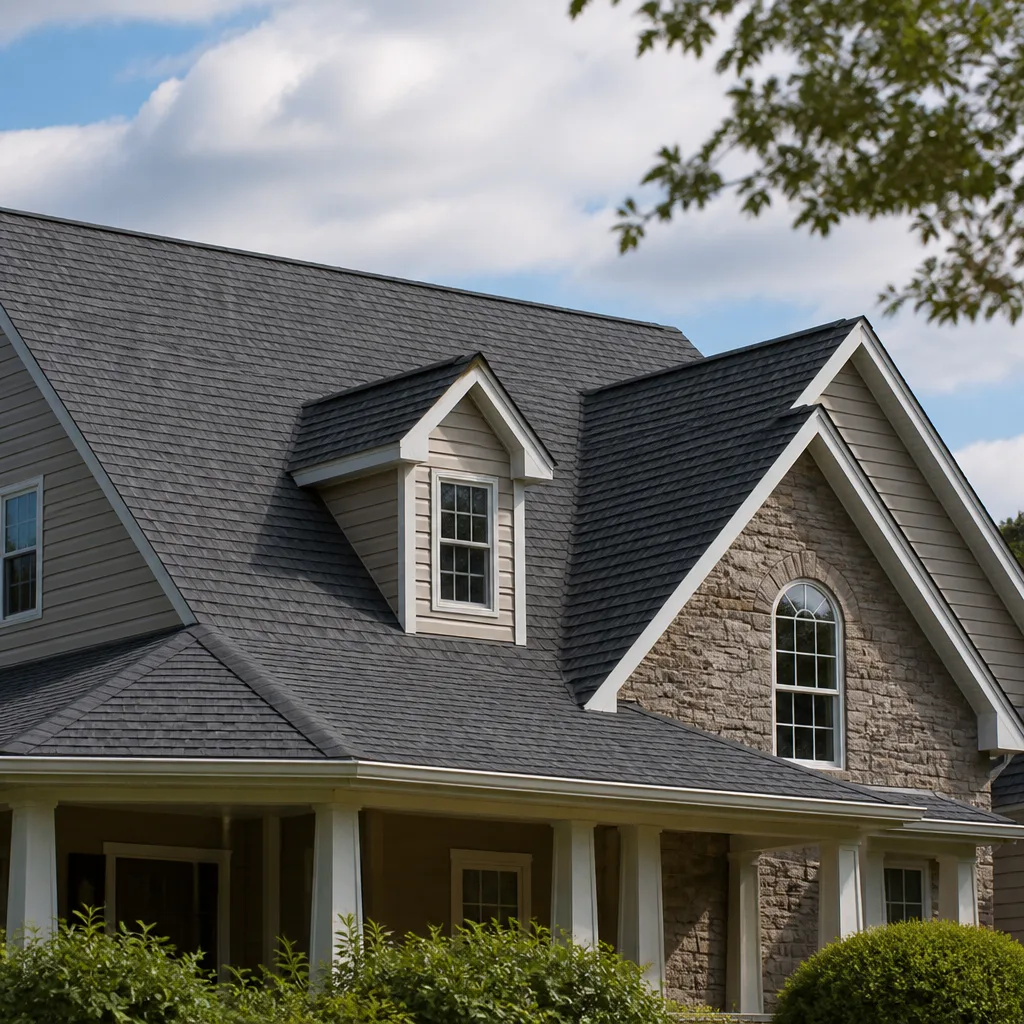 Owens Corning
 Flat & low-slope
Free roof inspection with deck photos before we talk money - GAF and Owens Corning certified installation
Roof Repair Maintenance Checklist for East Los Angeles Homeowners
Here’s a truth most roofing guides won’t tell you: the roof over an East Los Angeles home ages differently than roofs in Pasadena, Glendale, or even Boyle Heights. Not because the shingles are different, but because ELA sits in a specific microclimate band where UV intensity, thermal swing, and Santa Ana wind debris combine to stress roofing materials in predictable, preventable ways. We’ve walked hundreds of roofs between Whittier Boulevard and the 710, and the failures follow patterns. This guide maps those patterns into a maintenance rhythm that works with East Los Angeles weather, not against it. You’ll learn what to check, when to check it, and which tasks genuinely extend roof life versus which ones just make you feel productive.
Styles & brands we work with
Quick Answer
A practical roof maintenance checklist for East Los Angeles homeowners means checking three things twice a year: pipe boots and flashing seals (which crack from UV exposure within 5-7 years), debris accumulation points on flat or low-slope sections, and granule loss on sun-exposed slopes. The timing matters more than the task list: inspect in late September before Santa Ana winds, again in November before winter rain, and spot-check after any wind event over 30 mph. Most ELA roof leaks we repair trace back to a $15 pipe boot or a dried flashing joint that a 30-minute inspection would have caught 12-18 months earlier.
Table of Contents
- A Maintenance Rhythm Built for ELA Weather, Not Calendar Seasons
- Month-by-Month Task Calendar for East Los Angeles
- Ground-Level Checks: What You Can Safely Do With Binoculars
- Flat and Low-Slope Roofs: Where ELA Debris Actually Collects
- Pipe Boots, HVAC Curbs, and Swamp Coolers: The Usual Suspects
- Documentation Habits That Pay Off in Claims and Sales
- Common Mistakes to Avoid
- When to Call a Professional
- Frequently Asked Questions
- The Bottom Line
A Maintenance Rhythm Built for ELA Weather, Not Calendar Seasons
Most roof maintenance checklists you’ll find online are written by someone in Ohio or Georgia. They tell you to check your roof in spring and fall, clean gutters when leaves drop, and watch for ice dams in winter. None of that maps to East Los Angeles. We don’t get ice dams. Our trees drop leaves in December and January, not October. And our biggest roof stressor isn’t freeze-thaw cycles; it’s ultraviolet radiation breaking down sealants, flashings, and asphalt shingle granules month after month under clear skies.
East Los Angeles averages over 280 sunny days a year. That’s a blessing for weekend plans and a slow, relentless assault on your roof. The compounds that keep pipe boots flexible, flashing sealant pliable, and shingle asphalt stable all degrade faster here than in coastal neighborhoods like Long Beach or Santa Monica, where marine layer moderates temperature and UV exposure. An ELA roof at 10 years old often shows the same sealant cracking as a Seattle roof at 15.
Thermal expansion is the second chronic stressor. ELA summer days routinely hit the high 80s and low 90s, then drop into the 50s at night. That 35-40 degree swing causes roofing materials to expand and contract daily. Metal flashing joints, caulk beads around penetrations, and even the nails holding shingles in place work loose over thousands of these cycles. We see this most on south-facing roof slopes in neighborhoods like Belvedere and Maravilla, where afternoon sun exposure is unrelenting.
Then come the Santa Anas. From late September through November, dry winds gusting 30-50 mph sweep through the San Gabriel Valley and into East Los Angeles. Those winds carry dust, palm fronds, and micro-debris that settles into roof valleys, behind chimneys, and against parapet walls on flat roofs. Left in place, that debris holds moisture against the roof surface during winter rains and accelerates localized rot and shingle deterioration.
So the rhythm we recommend is simple: two thorough inspections a year timed to the periods that matter here, plus a quick visual check after any wind event over 30 mph. September catches UV damage before wind season. November catches wind-related issues before the first real winter rain. Everything else is optional.
Month-by-Month Task Calendar for East Los Angeles
Here’s a month-by-month breakdown aligned to what actually happens on East Los Angeles rooftops. Not every task applies to every home, but this gives you a framework to adapt. For a deeper look at what repairs commonly follow these inspections, see our guide to roof repair in East Los Angeles.
January – February: Post-Rain Assessment
- Check ceilings and attic spaces for water stains. After January rains, any discoloration on ceiling drywall or rafters tells you exactly where water is getting in. Mark the spot with painter’s tape so you can correlate it to roof penetrations directly above.
- Inspect interior walls near chimneys and vents. Slow leaks often travel along roof sheathing before showing up on interior walls. Look for bubbling paint, soft drywall, or faint brown rings.
- Clear debris from roof valleys and behind chimneys. Wet leaves and palm fronds from December winds are now matted and holding moisture. On the next dry weekend, remove them or have them removed.
- Check flat roof areas for ponding water. After a rain, if water is still standing 48 hours later, you’ve got a drainage problem that will shorten the life of whatever membrane is on that section.
March – April: Post-Rain Repair Window
- Schedule any repairs identified in January and February. This is the sweet spot for roof work in ELA. Days are warm enough for sealants to cure properly, and you still have months before the next rain season.
- Check pipe boots for cracking. The rubber collar around plumbing vent pipes is the most common leak point on East LA homes. Look for hairline cracks radiating from the pipe, or rubber that’s gone stiff and chalky.
- Inspect attic ventilation. Rising spring temperatures mean your attic is about to get hot. If soffit vents are painted over or ridge vents are blocked, attic heat will accelerate shingle aging from underneath.
May – June: Pre-Summer UV Inspection
- Examine south-facing and west-facing slopes. These get the hardest UV hit. Look for shingles that have lost most of their granules, exposing smooth black asphalt underneath. That’s advanced UV degradation, and those shingles are in their last year or two.
- Check all sealant beads. The caulk around chimneys, vent pipes, and skylights takes a beating. Look for cracked, peeling, or separated sealant. Silicone-based sealants generally last 5-7 years in ELA sun before needing attention.
- Look for raised or lifted shingles. Heat causes shingles to expand. If they were nailed too tightly or the adhesive strip has failed, they’ll lift at the edges. This is when you’ll see it.
July – August: Peak Heat Monitoring
- Watch for attic heat symptoms. If upstairs rooms feel dramatically hotter than downstairs, or your AC is running constantly, poor attic ventilation may be cooking your roof from below. This is worth addressing proactively.
- Check swamp cooler mounts and old cooler openings. Many older ELA homes have abandoned swamp coolers still sitting on the roof. The mounting brackets, screen covers, and old duct openings are chronic leak sources we address on a regular basis. More on this in the section on pipe boots and HVAC curbs below.
- Inspect skylights and solar tubes. High heat causes metal frames to expand and can break old sealant bonds. Check the seal where the skylight curb meets the roof membrane.
September: Pre-Santa Ana Wind Inspection
- Do a full visual roof walk. This is the most important inspection of the year for East Los Angeles. Santa Ana winds will find every loose shingle, every cracked seal, every compromised flashing and make them worse. Catch issues before the wind does.
- Secure or trim overhanging branches. Tree limbs rubbing against shingles during wind events cause scuffing that removes granules. A limb that’s close now will be touching during 40 mph gusts.
- Check all roof penetrations. Every pipe, vent, antenna mount, and satellite dish mast has a seal where it passes through the roof. Santa Ana winds will flex these and accelerate any existing seal failure.
- Verify drainage paths are clear. Make sure valleys, scuppers, and downspouts are clear of debris so the first real rain doesn’t back up and flood a flat section.
October: Post-Wind Cleanup
- Remove all wind-driven debris. Palm fronds, leaves, dust, and random litter have now settled into every low spot on your roof. Pay special attention to areas behind parapet walls on flat roofs and the uphill side of chimneys.
- Re-inspect for wind damage. Look for lifted shingle tabs, displaced flashing, and any material that’s shifted. If branches hit the roof, check for punctures.
- Clear the sharp edges. Debris piled against flashing or shingle edges can work its way under materials and create water entry points.
November – December: Pre-Winter Rain Prep
- Final sealant check. Any sealant that was marginal in September is now a liability. Cold rain will exploit every crack. If you’re unsure about a seal, get a professional opinion before the first storm.
- Test drainage. If it’s safe, run a hose on the roof and watch where water goes. Make sure it drains fully and doesn’t pool against walls or behind chimneys.
- Clear gutters and downspouts. Although we don’t install gutters at Sunrise Roof Repair, clogged gutters back water up under shingle edges and cause leaks. This is basic homeowner maintenance that protects the roof system.
Ground-Level Checks: What You Can Safely Do With Binoculars
You don’t need to climb on your roof to catch most problems early. A decent pair of binoculars, good lighting, and a systematic approach from the ground will identify 80% of the issues we find during professional inspections. The key is knowing exactly where to look and what to look for. If you’d rather have a trained eye handle it, Sunrise Roof Repair offers roof inspection in East Los Angeles as a standalone service, not just a pre-sales tactic.
What You Can Check From the Ground
- Shingle curl or lift: Stand far enough back to see the entire slope. Look for shingles that appear rumpled, lifted at corners, or curled at the edges. Early morning or late afternoon sun raking across the roof makes these easier to spot.
- Granule loss: Dark streaks, inconsistent color, or shiny patches on asphalt shingles indicate granule loss. You may also see granules collecting in gutters or at downspout bases after rain.
- Flashing condition: Check the metal or rubber transition where the chimney meets the roof, where walls meet shingles, and around vent pipes. You’re looking for rust, bending, gaps, or chalky sealant.
- Pipe boots: Most homes have 2-4 plumbing vent pipes. From the ground, look for cracked rubber, metal rings that have lifted, or seals that appear off-center.
- Debris accumulation: Leaf piles, palm fronds, or built-up dirt on any roof section. On flat roofs, look for any darker areas that suggest water is pooling.
- Moss or algae: Less common in sunny ELA than in shaded coastal communities, but still appears on north-facing slopes or areas shaded by trees.
- Punctures and impact marks: After wind events, check for shingle tears, shifted tiles, or visible holes.
What You Should NOT Do From the Ground (Or At All)
In our experience, most homeowner injuries related to roof maintenance happen when someone decides the ladder looks manageable and the roof “isn’t that steep.” East Los Angeles roofs range from genuinely flat to 6:12 pitches, and even a 4:12 slope is treacherous in the wrong shoes or after morning dew. If you cannot safely inspect an area from the ground, or if walking the roof requires maneuvering around penetrations, parapets, or steep sections, call a professional. A Sunrise Roof Repair home inspection costs far less than an emergency room visit, and it includes the documentation you’ll want for insurance purposes.
The binomials are for the birds, but the rule is real: if you need to put a ladder against the roof line to see something clearly, skip it. Binoculars get you close enough to identify concerns. The professional who comes to fix the concern can confirm details when they arrive.
Flat and Low-Slope Roofs: Where ELA Debris Actually Collects
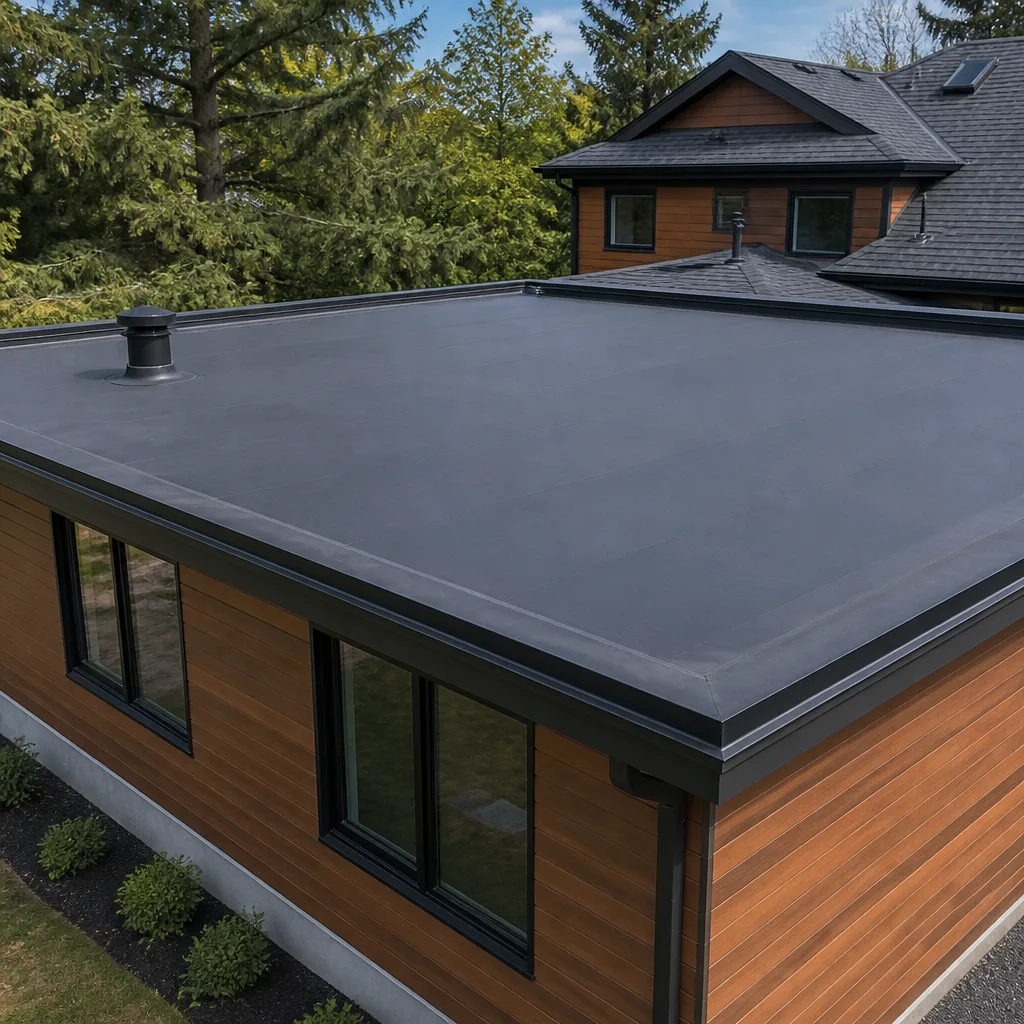
East Los Angeles has a substantial stock of flat and low-slope roofs, particularly on post-war ranch homes, apartment buildings, and additions built from the 1940s through the 1970s. These roofs behave fundamentally differently from pitched shingle roofs, and they fail differently too. If your home has any flat section, even a small porch or rear addition, it needs its own maintenance attention.
The defining characteristic of a flat roof in ELA is that water leaves slowly, and debris leaves almost never. On a pitched roof, gravity helps clear leaves and fronds into gutters. On a flat roof, everything that lands stays. Santa Ana winds deposit dust and organic matter. Winter rains turn that into a damp layer that sits against the roofing membrane. Summer sun bakes it into a crust that holds moisture longer and accelerates membrane breakdown.
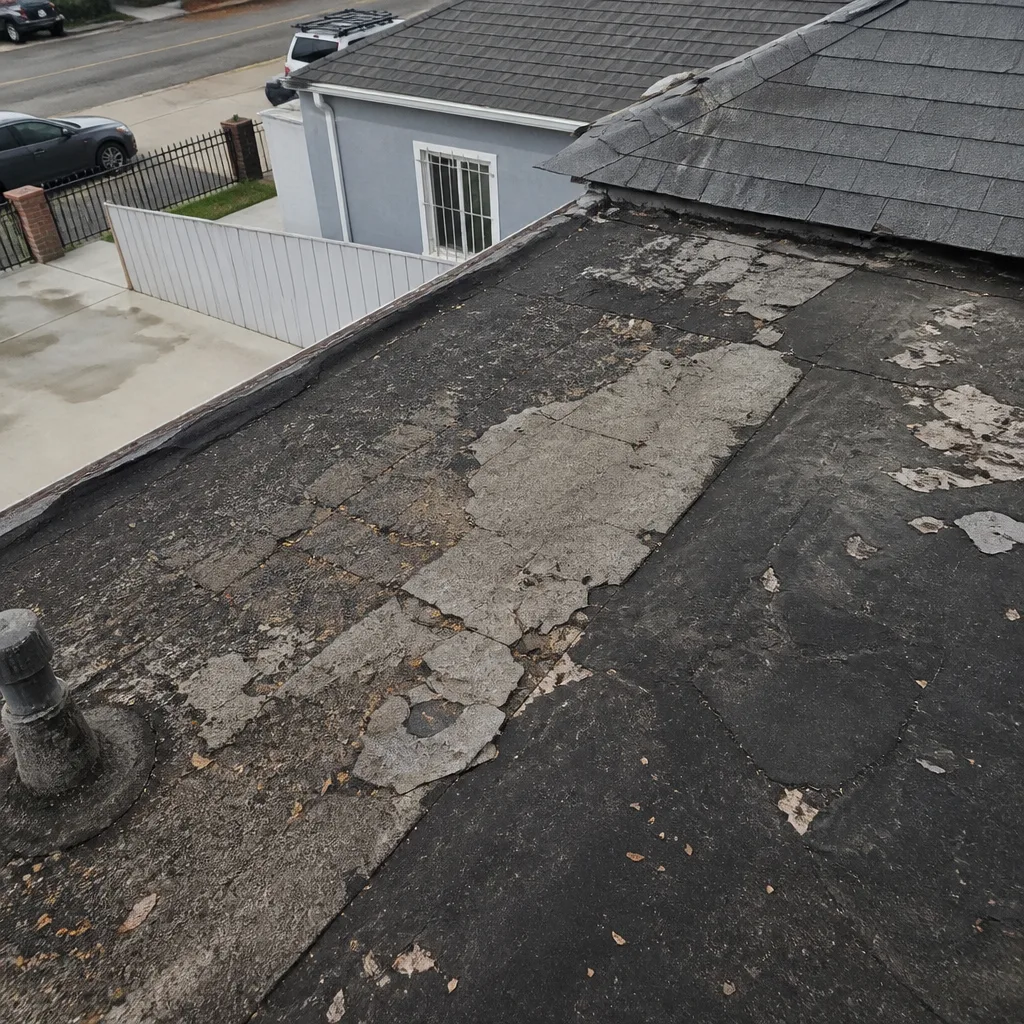
The second defining characteristic is that flat roof membranes in southern California take a UV beating that manufacturers’ warranties don’t entirely account for. Most modified bitumen and single-ply membranes are rated for 15-20 years in general terms, but ELA sun exposure can shave several years off that if the roof isn’t maintained and any protective coating isn’t renewed.
Flat Roof Maintenance Priorities
- Remove debris monthly during wind season. September through December, check flat sections every few weeks. Palm fronds especially hold moisture and can puncture membrane edges.
- Check seams and flashing joints twice a year. On rolled roofing and modified bitumen, the seams are the failure points. Look for lifting, cracking, or separation at overlaps.
- Watch for ponding water. After any rain, note where water stands. If it’s still there after 48 hours, you have a drainage or sag issue. Prolonged ponding dramatically shortens membrane life.
- Inspect parapet wall caps and counter-flashing. These are common leak origins on ELA flat roofs. The metal cap protects the top of the parapet wall, and the counter-flashing covers the transition from wall to roof. Both are easy to spot from the ground and often show obvious deterioration.
- Check all penetrations on the roof surface. Vent stacks, exhaust fans, HVAC curbs, and abandoned mounts all pierce the membrane. Each one is a potential leak point, especially as sealants age.
Common Flat Roof Areas ELA Homeowners Miss
In our experience working on East Los Angeles flat roofs, three specific areas repeatedly cause problems that homeowners don’t notice until a leak appears.
- Behind HVAC condenser units: Roof-mounted AC units create a wind shadow where debris accumulates. The area directly behind the unit (downwind of it) collects leaves and dirt that hold moisture against the membrane. This area is rarely visible from the ground and frequently overlooked.
- At the base of TV antenna and satellite dish mounts: Older homes often have abandoned mounts from past antenna or dish installations. The mount itself may be secure, but the sealant around the foot plate ages and cracks. We’ve seen active leaks from mounts that were installed 20+ years ago and forgotten.
- At transitions between flat and pitched sections: Many ELA homes have a pitched roof on the main house with a flat roof on a porch or rear addition. The transition point where the two meet is a chronic problem area. Flashing details at these transitions are often improvised and fail earlier than either roof surface.
For homeowners specifically researching maintenance on flat sections, our roof replacement in East Los Angeles guide covers when repair stops making sense and replacement becomes the honest answer.
Pipe Boots, HVAC Curbs, and Swamp Coolers: The Usual Suspects
If you gave us a list of every roof leak we’ve repaired in East Los Angeles over the years and sorted by cause, roof penetrations would top the list by a wide margin. The shingles themselves, in most cases, are still doing their job. The problem is where pipes, wires, vents, and equipment pass through the roof surface. Every penetration is a potential water entry point, and in ELA, the seals around these penetrations degrade faster than the roofing material itself.
This is a great example of why we tell customers the inspection matters more than the repair. A roof can look fine from the street and be leaking around a plumbing vent that no one has looked at since the home was built. We inspect first, recommend second, because the cheap fix you need is often invisible until someone actually looks at the details.
Pipe Boots (Plumbing Vent Flashings)
The rubber boot around your plumbing vent pipes is one of the most failure-prone components on any ELA roof. Most pipe boots are made from neoprene or EPDM rubber, and under East Los Angeles sun, that rubber hardens and cracks. We typically see boots start showing UV damage around year 5-7, with outright failure common by year 10.
What to look for: cracks in the rubber collar around the pipe, rubber that’s turned white or chalky, a metal base ring that’s lifted from the shingle surface, or a boot that’s no longer centered on the pipe. Any of these signals means water has a path to your sheathing. The fix is usually simple and inexpensive: replace the boot with a new one, ideally a unit made from UV-stabilized rubber that will hold up better in this climate. Brands like GAF and CertainTeed offer pipe boot flashing components we regularly install in East Los Angeles.
HVAC Curb Flashings
Central air is standard across ELA now, but many homes still have roof-mounted HVAC components, especially evaporative coolers and condenser pads on flat roofs. The “curb” is the raised frame that supports rooftop HVAC equipment, and the flashing around that curb is a chronic leak point. Once water gets past the curb flashing, it travels through the roof sheathing and often shows up as a ceiling stain far from the unit.
Common issues: the metal counter-flashing has separated from the curb, sealant has failed at the corners, or the curb itself has rotted and compromised the fasteners holding the flashing. If your HVAC unit is original to a 1990s or earlier home, the curb flashing may predate modern sealant standards. This area deserves attention during both the September and November inspections.
Swamp Cooler Mounts and Abandoned Openings
East Los Angeles has a large inventory of homes built before central AC was standard. Many of those homes had swamp coolers (evaporative coolers) mounted on the roof at some point. A surprising number of those units are still sitting up there, long abandoned. The mounting brackets rust, the screen covers fail, and the openings where ducts passed through the roof become open channels for rain.
If your home has an abandoned swamp cooler on the roof, it’s worth having it assessed. The weight of a non-functioning unit sitting on old mounting pads can also compress roof decking and create low spots where water pools. Removing the unit and properly sealing the opening is often the honest repair recommendation, especially before winter rain arrives. We’ve worked with products from Owens Corning and IKO on these types of repairs, matching the repair materials to the existing roof system rather than forcing a brand mismatch.
A Word on DIY Repairs Around Penetrations
Replacing a pipe boot or resealing a vent collar sounds simple, and in some cases it is. But the work requires getting on the roof, working around existing roofing materials, and making sure the new seal is compatible with whatever sealant and roofing type is already in place. If you’re comfortable working on a roof and understand the risks, a pipe boot replacement is a reasonable DIY task on a low-slope section. But be honest about the risks: falls from even single-story roofs cause serious injuries every year. If you’re unsure, the cost of a professional repair is far less than the cost of a bad fall.
Documentation Habits That Pay Off in Claims and Sales
Maintenance is about more than preventing leaks. It’s also about building a paper trail. When you file an insurance claim after a wind event, or when you sell your East Los Angeles home, having documentation of regular roof maintenance makes a measurable difference in what you recover or what buyers will pay.
Insurance companies don’t deny wind damage claims because your roof wasn’t maintained, but they absolutely reduce payouts based on pre-existing deterioration. If a Santa Ana wind event tears off shingles and the adjuster finds evidence of long-term granule loss and neglected flashing, they’ll subtract for the pre-existing wear. A maintenance log showing that you inspected the roof in September, noted the condition, and addressed issues before the wind event changes that conversation.
What to Document
- Date and findings of every inspection: Even ground-level visual checks. Note what you looked at, what you found, and what you did about it.
- Receipts from any repair work: Keep copies of invoices that specify what was done and what materials were used.
- Photos: Take photos from the same angles year over year. Time-stamped photos showing a stable roof condition before and after a storm are powerful evidence in a claim dispute.
- Manufacturer warranty info: If your roof was replaced, know what was installed and keep the warranty documentation. Sunrise Roof Repair installs products from GAF, CertainTeed, Owens Corning, IKO, Atlas, Tamko, and Boral, each with its own manufacturer warranty terms. Your documentation should reflect what’s actually on your home.
- Records of any professional inspections: If you’ve had a roof inspection done, keep the report. It establishes a professional baseline for roof condition at a point in time.
What This Means for Home Sales
When you sell a home in East Los Angeles, buyers and their inspectors will look at the roof. A roof with a documented maintenance history sells differently than one without. You’re not just selling the roof’s current condition; you’re selling the evidence that the roof was cared for. That can be worth thousands in negotiation, and it often is the difference between a buyer asking for a roof credit and a buyer accepting the roof as-is. The right material for your roof, not the only brand we carry, is a principle that applies equally to a maintenance log: the right documentation for your situation, gathered consistently over time.
Common Mistakes to Avoid
- Checking only after a leak appears. By the time water shows up on your ceiling, the roof has been compromised for weeks or months. The damage is always worse than the stain suggests. Waiting for symptoms means paying for sheathing repair, drywall repair, and sometimes mold remediation on top of the original roof fix.
- Ignoring the flat section because “it’s not really part of the house.” Every flat area, even a small porch roof or carport, is connected to the main structure. A leak there can travel along framing members and show up in unexpected places. Treat every roof surface as part of the system.
- Painting over sealant to “refresh” it. Sealant fails because the material itself breaks down, not because it’s ugly. Painting over cracked, aging sealant does nothing for its function and makes the problem harder to see in future inspections. The sealant should be removed and replaced when its useful life is over.
- Assuming the home inspector checked the roof when you bought. Home inspectors often do a visual-only assessment from the ground or the eaves. They don’t usually walk the roof, inspect every penetration, or evaluate sealant condition in detail. Many homeowners discover this when the first heavy rain reveals a problem the inspector didn’t flag.
- Focusing on the shingles while ignoring flashings and penetrations. Shingles are the most visible component, and in our experience, they’re rarely the failure point on East LA roofs. The leak sources are almost always at transitions: pipes, chimneys, walls, curbs, and equipment mounts. A maintenance checklist focused only on shingles misses the actual risks.
- Deferring September inspection because “the roof looked fine last spring.” UV damage continues through summer, and Santa Ana winds expose weaknesses quickly. Six months between inspections is enough time for a pipe boot to fail, a seal to separate, or a branch to begin rubbing shingles. The September inspection is non-negotiable for ELA homes.
- Using generic sealant from the hardware store on a roof penetration. Not all sealants are roof-grade, and not all roof-grade sealants are compatible with every roofing material. Using the wrong product can create a bigger problem than the one you’re trying to fix. When in doubt, have a professional handle it with the right materials.
When to Call a Professional
Some maintenance tasks are safely in the homeowner’s lane, and others aren’t. You should call a professional if you see any of the following: water stains on ceilings or walls that you can’t trace to a plumbing leak, shingles that are visibly missing or displaced, any area where decking feels soft or sags underfoot, repeated leaks in the same area that suggest a flashing problem rather than a shingle problem, or any repair that would require you to work on a slope steeper than you’re comfortable on. If your September or November inspection turns up issues you can’t fully assess from the ground, that’s the time to bring in a trained eye. Before the next rain hits, get an honest assessment. Sunrise Roof Repair offers free estimates in East Los Angeles. Call (877) 752-3460 and we’ll tell you what’s actually going on up there, repair what repair is right, and replace only when replacement is the honest call.
Frequently Asked Questions
Twice a year is the right rhythm for East Los Angeles homes, timed for the two periods that matter most: late September before Santa Ana winds and November before winter rain. A professional inspection costs less than most people expect, and it catches issues months before they become visible leaks. Call (877) 752-3460 to schedule a roof inspection in East LA, or use our roof inspection guide to learn what a proper inspection covers.
Pipe boot failure is the single most common leak source we repair on East Los Angeles homes. The rubber collar around plumbing vent pipes cracks under UV exposure within 5-7 years in this climate, and once it does, water follows the pipe straight through the roof sheathing. The repair is usually simple and inexpensive. Call (877) 752-3460 for an exact quote, or read more on our East LA roof repair page to see common repair scopes.
Basic homeowner maintenance (clearing debris, ground-level inspections, documentation) costs nothing but time. A professional roof inspection in East Los Angeles is typically a modest fixed fee, and Sunrise Roof Repair offers free estimates on any repair work identified during the inspection. If issues are found, the repair cost depends entirely on scope, which is why we recommend starting with an inspection rather than guessing. Call (877) 752-3460 to schedule yours. Estimates are free.
Yes. A pair of binoculars and a systematic walk around your property will catch most visible issues: lifted shingles, granule loss, cracked pipe boots, failed flashing, and accumulated debris. What you cannot safely assess from the ground is the condition of flat roof membranes, the area behind rooftop equipment, and any detail that requires being on the roof surface. If you see something concerning from the ground, a professional can confirm and advise from there.
Not necessarily. Roof age alone is not a reason to replace. We’ve seen 25-year-old roofs in East Los Angeles that are still in serviceable condition, and 15-year-old roofs that are failing due to poor ventilation or extensive UV damage. The honest approach is an inspection that evaluates actual condition, then a recommendation based on what’s there. Repair when repair is right. Replace when it’s not. For a deeper look at replacement timing and costs, see our East Los Angeles roof replacement guide.
Most homeowners policies cover sudden and accidental wind damage, but the claims process gets complicated quickly when there’s evidence of pre-existing deterioration. If your roof was already compromised by neglect (cracked seals, lifted shingles, granule loss), the insurer may reduce the payout by the amount of that pre-existing wear. This is why documentation matters. A maintenance log and inspection reports showing your roof was in good condition before the wind event strengthen your claim substantially. Our overview of Sunrise Roof Repair home services includes the inspection documentation we provide for exactly this purpose.
The Bottom Line
Roof maintenance in East Los Angeles is less about doing a long checklist of chores and more about knowing the right times to look and the right spots to check. The climate is hard on roofs in predictable ways: UV breaks down sealants and pipe boots, thermal cycling loosens flashing, and Santa Ana winds deposit debris that holds moisture. Twice a year, in September and November, walk around your home with binoculars. Check the pipe boots, the flashing transitions, the flat roof sections, and the equipment mounts. Document what you find. Fix small things early. The homes that leak after a rainstorm in East Los Angeles are almost never the ones that got checked before the rain arrived. They’re the ones where a $15 part failed 18 months ago and no one noticed. If you’d rather have a professional set of eyes on it, Sunrise Roof Repair offers free estimates at (877) 752-3460. We inspect first, recommend second, and repair only what needs repairing.
Written by the team at Sunrise Roof Repair, serving East Los Angeles since 2015.
See the difference
 Before
 After
 Before
 After
 Before
 After