
Last updated October 31, 2026
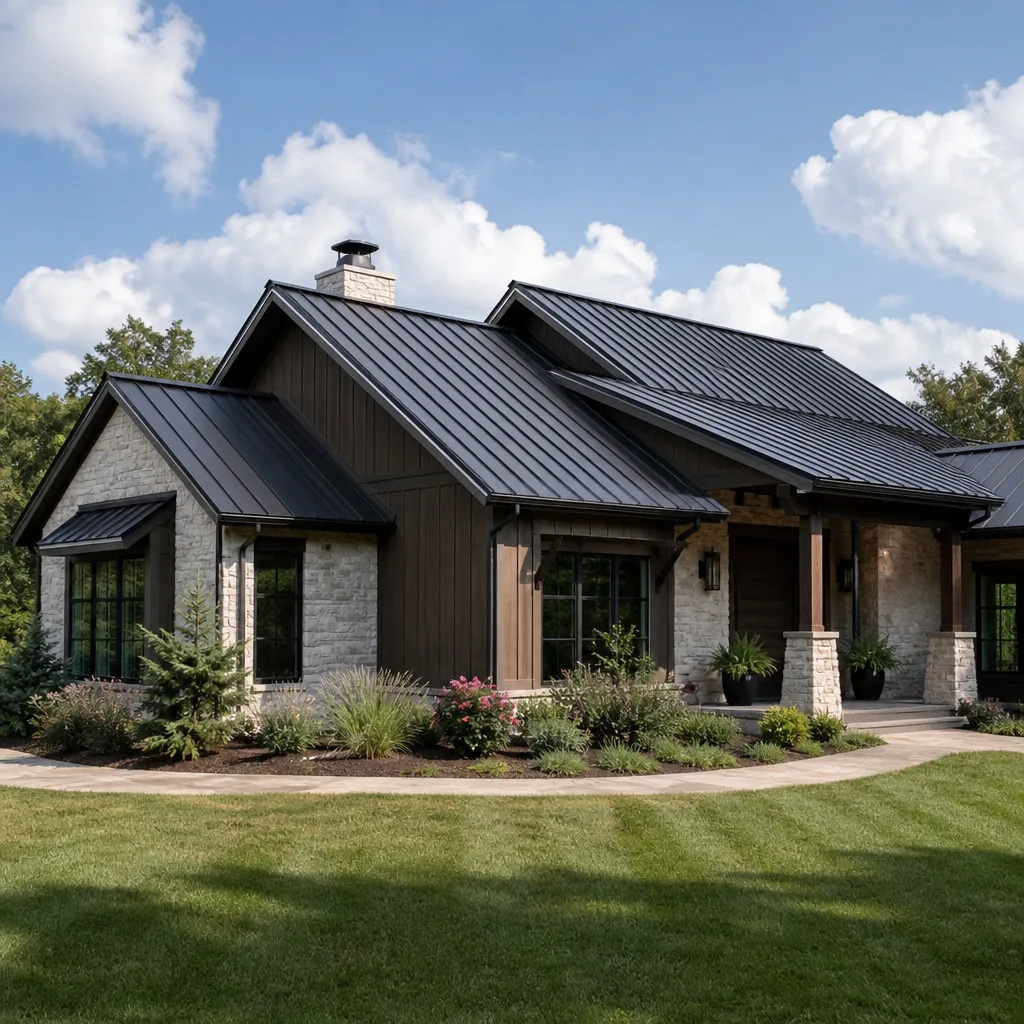 Metal roofing
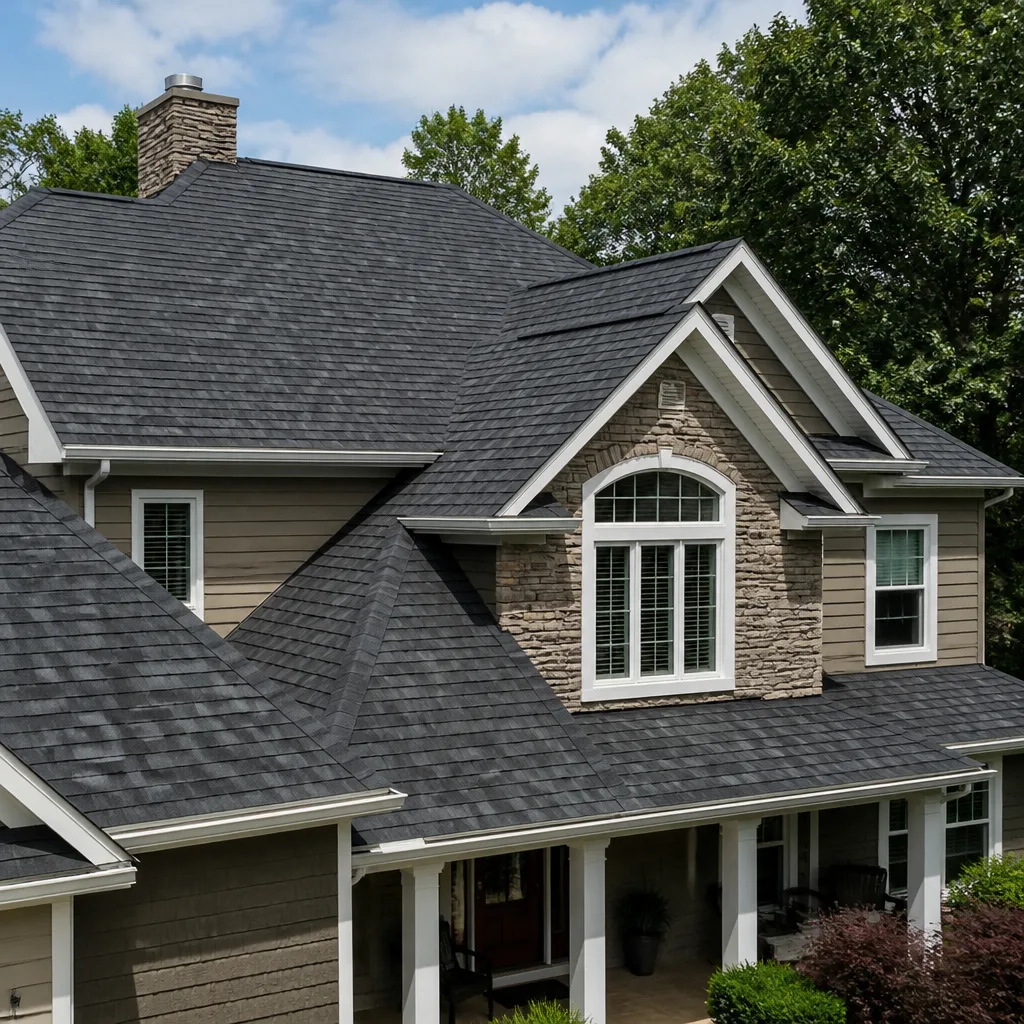 Architectural shingles
 Tile roofing
 GAF
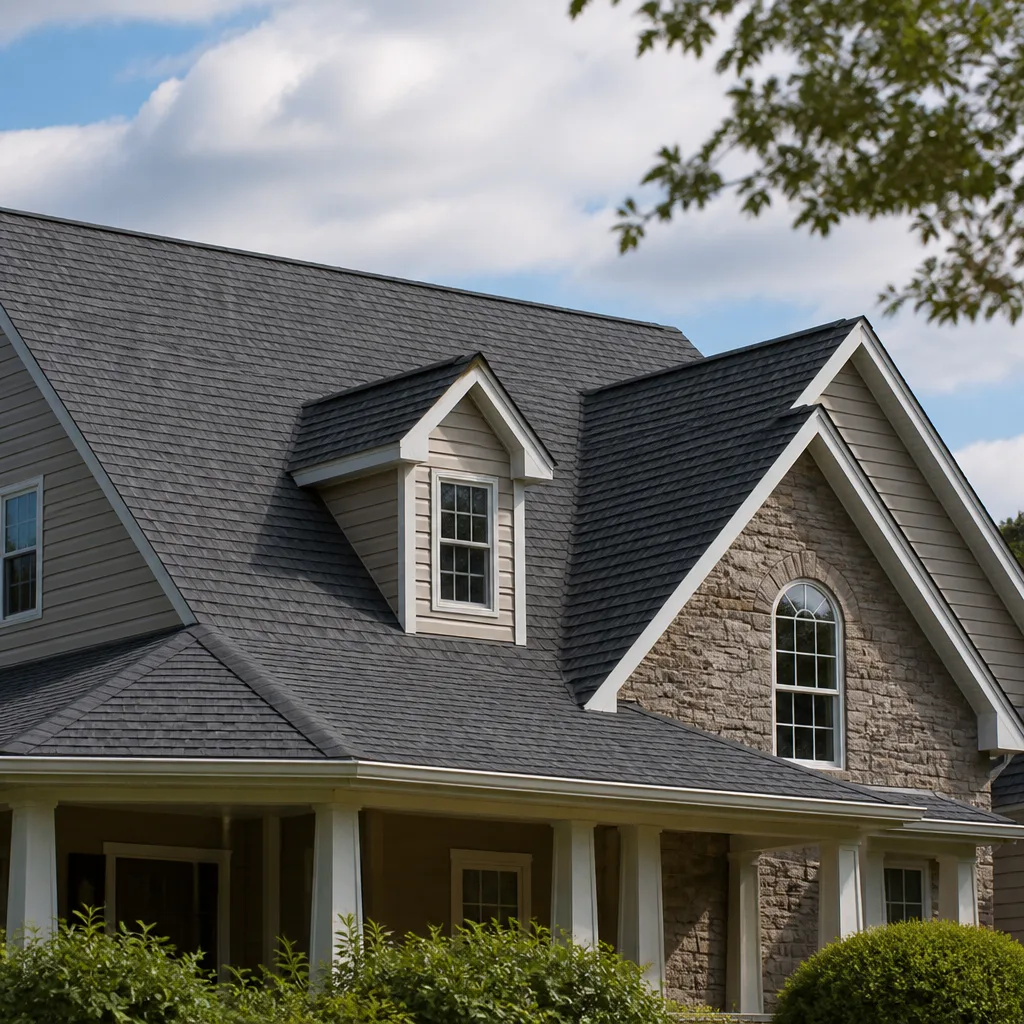 Owens Corning
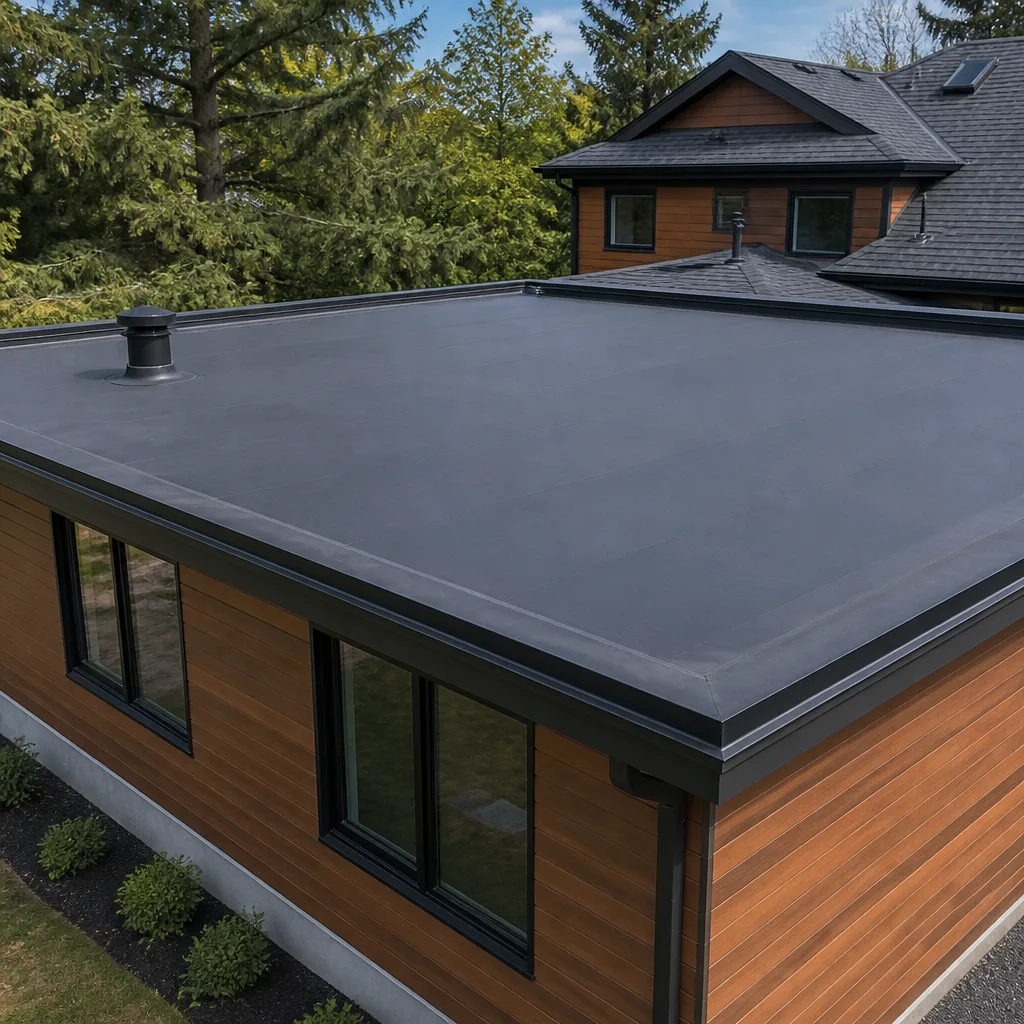 Flat & low-slope
Free roof inspection with deck photos before we talk money - GAF and Owens Corning certified installation
Roofing Warning Signs: A East Los Angeles Homeowner’s Reference Guide
Here’s something most roofing guides won’t tell you: the dark streak on your bedroom ceiling after a January rain might not have anything to do with the roof directly above it. Water entering through a failed flashing seam near your chimney can travel six, eight, even twelve feet along a rafter before gravity finally pulls it through your plaster. That’s why a handyman who says “we couldn’t find anything above that spot” hasn’t cleared your roof, he’s just told you he doesn’t understand how water moves through a 1940s East Los Angeles home. This guide connects the symptoms you can see to the structural failures you can’t, so you know whether to call a roofer today or add something to your watch list. We’ll walk through exterior signs, interior signs, flat-roof specifics, and the warning signs that a previous repair wasn’t done right.
Quick Answer
The roof warning signs that demand attention in East Los Angeles are: granule loss beyond normal aging (visible as bare patches or excessive grit in gutters), shingles that lift or slide when wind hits them, water stains on ceilings or walls that appear or darken after rain, daylight visible through attic boards, and ponding water on flat or low-slope sections that lasts more than 48 hours after a storm. Each of these signals a different failure mechanism, and each has a different urgency level. A professional Roof Inspection in East Los Angeles costs less than the interior damage a missed warning sign will cause within one rainy season.
Styles & brands we work with
Table of Contents
- Granule Loss: Normal Aging vs. Accelerated Failure
- Wind-Lifted Shingles vs. Age-Related Adhesion Loss
- Interior Stains: What Plaster and Drywall Tell You Differently
- Flat and Low-Slope Roofs: Ponding Water and What It Means
- Flashing Failures: The Most Common Leak Source in ELA
- Signs a Previous Repair Was Done Wrong
- Attic Checks: What to Look For Before You Call Anyone
- Common Mistakes to Avoid
- When to Call a Professional
- Frequently Asked Questions
Granule Loss: Normal Aging vs. Accelerated Failure
Every asphalt shingle sheds granules over its lifetime. The ceramic-coated mineral granules that give shingles their color also protect the asphalt substrate from ultraviolet radiation. Some loss is normal, especially in the first year after installation when excess granules from the manufacturing process wash off. But there’s a line between aging and failure, and East Los Angeles’s sun exposure pushes roofs toward that line faster than coastal neighborhoods. Our inland climate means more days above 85 degrees, and UV radiation is the primary driver of asphalt degradation.
Normal aging granule loss looks like evenly distributed thinning. The shingle color fades slightly across the whole roof surface, and gutters collect a thin layer of grit during the first few heavy rains of each season. Accelerated UV failure looks different: bare, shiny patches where the asphalt is exposed, pronounced color variation between shingles that were installed at the same time, and granules collecting in specific downspout locations rather than evenly across the gutter run.
Here’s how to tell from the ground:
- Look for shiny spots. Asphalt reflects light differently than granules. If sections of your roof glint on sunny days, the granule layer is gone and the shingle is burning in direct sun.
- Check gutter accumulation after the next rain. A tablespoon or two of grit along a 10-foot gutter run is normal. Piles of granules an eighth of an inch deep at downspout elbows mean the shingles are shedding at an accelerated rate.
- Compare sun-facing slopes to shaded slopes. On an East Los Angeles home with a south or west-facing roof plane, accelerated granule loss typically shows up there first. If the sunny side looks noticeably thinner or patchier than the shaded side, UV failure is underway.
- Look for “bald” shingle edges. The butt edge of a shingle, the part that overlaps the shingle below it, should look the same color as the rest of the shingle. If edges look darker or shinier, granules have worn away where water sheets off.
Why this matters: granules are protective armor. Once they’re gone, the asphalt substrate oxidizes, becomes brittle, and cracks. A roof with widespread granule loss might still shed water for a year or two, but it’s structurally compromised. In our experience, by the time an East Los Angeles homeowner notices granule loss from the ground, the roof has already lost 30 to 40 percent of its remaining service life. When repair won’t extend it meaningfully, Roof Replacement in East Los Angeles becomes the right call, and that’s a conversation worth having with real material options on the table, not a one-brand pitch.
Wind-Lifted Shingles vs. Age-Related Adhesion Loss
East Los Angeles gets hit by Santa Ana winds every fall, with gusts that routinely top 40 miles per hour through the hillside neighborhoods. Those winds reveal two different roof problems that look similar from the ground but have completely different implications. One is wind-lifting: shingles with intact adhesive strips being physically lifted by wind force. The other is adhesion failure: shingles whose sealant has degraded with age and heat, leaving them lying flat but unsealed, waiting for a strong gust to peel them back.
The distinction matters because urgency differs. A wind-lifted shingle on an otherwise healthy roof is a targeted repair. A roof full of unsealed shingles is a systemic failure that will leak in the next Santa Ana event no matter how many individual shingles you re-seal.
Here’s how to tell them apart:
- Wind-lifted shingles spring back. If you watch during a wind event (or review after), wind-lifted shingles on a healthy roof will flap and then mostly settle back into place when the gust passes. They’re still bonded at the sealant strip.
- Unsealed shingles stay lifted or slide. Shingles that have lost adhesion don’t spring back. They remain raised, cracked, or slid out of alignment after the wind dies down. The sealant strip has failed permanently.
- Check the age of the roof. Adhesion failure typically appears on roofs past the 15-year mark in our climate. If your roof is younger and you’re seeing lifted shingles, a wind event likely exceeded the shingle’s rating (or installation was faulty).
- Look for a pattern. Wind-lifting is usually isolated to roof edges, ridges, and corners where wind uplift is strongest. Adhesion loss shows up randomly across the entire field of the roof.
One more East Los Angeles-specific factor: our older housing stock includes a lot of three-tab shingle roofs installed in the 1990s and early 2000s. Three-tab shingles have smaller sealant strips than architectural shingles and fail earlier. If your roof has three-tab shingles and you’re seeing lifted or sliding shingles, the adhesion has likely failed across the entire roof, not just in the spots you can see. Materials from manufacturers like CertainTeed and GAF that are installed today carry sealant ratings designed for high-wind zones, but no sealant lasts forever under our sun.
Interior Stains: What Plaster and Drywall Tell You Differently
East Los Angeles has a lot of homes built between 1920 and 1960, and that means plaster walls and ceilings. Plaster and drywall respond to water differently, and knowing which one you have changes how you read a stain.
Plaster is porous and slow-absorbing. A leak that drips onto a plaster ceiling often doesn’t show as a defined dark spot. Instead, you’ll see a faint discoloration that looks almost like a shadow, sometimes with a slight yellow or brown tint. Plaster also develops a chalky residue called efflorescence when water passes through it repeatedly, leaving mineral deposits behind. By the time a plaster ceiling shows an obvious stain, water has been accumulating in the cavity above for weeks or months. The stain you’re seeing is the tip of a much older problem.
Drywall reacts faster and more dramatically. Because drywall is paper-faced gypsum, water creates visible swelling, bubbling, or staining within days of the first leak. A drywall stain will have defined edges, often ringed like a coffee stain, and the surface will feel soft or spongy when pressed. If you see a drywall seam line darkening, water is traveling along the taped joint, which means the leak is spreading laterally, not just pooling in one spot.
Here’s what each pattern suggests:
- Plaster, faint shadow stain, no texture change: Slow, intermittent leak. Check flashing and roof penetrations first. The leak has likely been active through multiple rain events.
- Plaster, yellow or brown stain with a chalky surface: Water has been moving through the plaster for a long time. The stain is mineral residue, not just moisture. Investigate the roof structure above and expect some wood damage.
- Drywall, dark defined stain, soft to touch: Active leak within the last few weeks. The drywall is saturated and will need replacement once the roof leak is fixed.
- Drywall, stain following a seam line: Water is pooling on the back of the drywall and running along the taped joint. The entry point may be several feet away from the visible stain.
The most important takeaway: the visible stain rarely marks the entry point. Water enters through a roof penetration, runs along a rafter or joist, and drips at a low point or fastener. A roofer who only patches the area directly above the stain is guessing. A proper Roof Inspection in East Los Angeles traces the water path from entry to exit, which is the only way to fix the actual problem.
Flat and Low-Slope Roofs: Ponding Water and What It Means
East Los Angeles has a significant number of flat and low-slope roofs, particularly on mid-century ranch homes, garage conversions, and commercial-residential mixed buildings. Flat roofs fail differently than pitched roofs, and the warning signs are different too. If you own one of these roofs, the single most important indicator is ponding water.
Ponding water is water that remains standing on a roof surface 48 hours after rain has stopped. Some roofers will tell you ponding is normal on a flat roof. It’s not. A properly installed flat roof with adequate slope, even a slight one, should drain within 48 hours. Water that sits longer than that is actively degrading the roof membrane through three mechanisms: UV magnification (water droplets focus sunlight and accelerate membrane breakdown), thermal stress (standing water heats and cools at different rates than dry areas, causing expansion and contraction fatigue), and biological growth (algae and moss hold moisture against the membrane and root into seams).
Here’s what different ponding patterns indicate:
- Ponding directly around drains or scuppers: The drain is partially clogged or the surrounding roof area has settled, creating a low spot that defeats the slope toward the drain. Fixable with drain cleaning and a tapered system or a localized leveling repair.
- Ponding in the center of large roof fields: The roof deck has sagged between supports. This is structural deflection, not a surface issue. A membrane patch won’t fix it; the deck needs evaluation.
- Ponding along parapet walls or roof edges: The edge flashing or cant strip has failed and water is being trapped against the wall. Check for cracking at the wall-roof junction, which is the most common flat-roof leak point in our area.
- Widespread ponding scattered across the whole roof: The original roof didn’t have enough slope, or years of accumulated patches have created a lumpy, uneven surface. This roof is past the point of targeted repair.
For flat roofs in East Los Angeles, the most common systems we see are modified bitumen, built-up roofing, and single-ply membranes. Each fails differently. Modified bitumen and built-up roofs show alligator cracking at the surface and seam separation at overlaps. Single-ply membranes like TPO or PVC show seam failure where heat-welded joints peel apart, and puncture damage from foot traffic or debris. If you have a low-slope section and you’re seeing any of these, a targeted Roof Repair in East Los Angeles might extend the roof’s life by several years. Waiting until water is pouring into the building means the repair window has likely closed and replacement is the only option.
Flashing Failures: The Most Common Leak Source in East Los Angeles
Ask any roofer who works in East Los Angeles what causes the majority of roof leaks, and they’ll tell you the same thing: flashing. Not shingles. Flashing is the metal, typically galvanized steel, aluminum, or copper, that seals the joints where the roof meets a vertical surface or a penetration. Chimneys, vents, skylights, walls, dormers, and pipe boots all require flashing. When flashing fails, water gets in.
Flashing fails in predictable ways in our climate. The daily expansion and contraction cycle, hot days cooling into cold nights, eventually breaks the sealant bond between flashing and the surrounding roofing material. The metal itself can also corrode. In East Los Angeles, homes near the 710 and 5 freeway corridors show accelerated flashing corrosion from airborne particulates. We’ve seen galvanized flashing rusted through in 15 years in some neighborhoods, while the same flashing would last 25 years in less polluted air.
The warning signs of flashing failure:
- Stains on walls below a chimney or roof-wall junction. Water entering at a flashing seam runs down the inside of the wall cavity and exits where the wall meets the ceiling or where baseboards sit.
- Rust streaks on the flashing itself. Visible from the ground or a ladder. Rust means the galvanized coating is gone and the metal is thinning.
- Lifted or separated flashing. Flashing that has pulled away from the roof surface or wall, leaving a visible gap. You can sometimes see this from the ground with a pair of binoculars on a two-story home.
- Caulk or sealant slathered around flashing. This is a sign someone tried to fix a flashing leak with sealant instead of addressing the underlying issue. It’s a temporary patch, not a repair, and it’s usually failing.
- Missing flashing entirely. On some older East Los Angeles homes, we find flashing that was never properly installed in the first place. Roofs replaced decades ago sometimes got shingles but not new flashing, leaving the original metal in place far beyond its service life.
The fix for flashing failure depends on the specific location. Chimney flashing is a multi-part system involving step flashing, counter-flashing, and a cricket or saddle on the high side. Pipe boot flashing is simpler but still needs to be properly sized and sealed. Wall step flashing that has failed behind stucco typically requires removing the stucco to install new flashing correctly. We inspect first, recommend second, because the right flashing repair at the right time prevents the interior damage that turns a $600 repair into a $6,000 remediation.
Signs a Previous Repair Was Done Wrong
East Los Angeles has a lot of homes with roofing history. Multiple roofs, multiple repairs, multiple contractors over decades. Some of that work was done well; some of it wasn’t. If you’re looking at a roof that was repaired in the past, here are the warning signs that the previous repair is failing or was done incorrectly from the start.
Mismatched granule color. When a roofer replaces individual shingles or a small section, they’re supposed to match the existing shingle color as closely as possible. Some difference is inevitable due to weathering and manufacturing runs, but a patch that’s visibly a different color from the roof means the repair was done with whatever shingle was on the truck, not the right product for your roof. It’s a flag that other corners may have been cut. Materials come in specific color lines from manufacturers like Tamko, Owens Corning, and Atlas, and a professional roofer stocks or orders the right one.
Exposed fasteners. On a properly installed shingle roof, you should not see nail heads. Nails are driven through the shingle above, which covers them. If you can see fasteners from the ground or from a ladder, the shingles were installed incorrectly. Exposed nails rust, leak, and eventually work loose. On flat roofs, exposed fasteners at seams or at flashing terminations mean the repair was done without proper weatherproofing cover.
Sealant over flashing gaps. We touched on this above, but it bears repeating. If you see caulk, tar, or roofing cement smeared around flashing, vents, or pipe boots, someone treated a structural problem with a cosmetic solution. Sealant degrades under UV exposure within one to two years in our climate. It’s not a repair; it’s a delay.
Shingles that don’t align. Architectural and three-tab shingles are designed to be installed in specific patterns. If a repaired section has shingles that are misaligned, staggered irregularly, or offset from the surrounding courses, the repair was done quickly and without care. Misaligned shingles create water channels and expose the adhesive strips.
Multiple patch layers on a flat roof. Built-up and modified bitumen roofs can sometimes be re-coated, but each layer adds weight and changes the drainage profile. If you see a flat roof with three or four different surface patches of different materials or colors, the roof has been repeatedly band-aided. At some point, patching stops working and a full replacement becomes the honest answer. We carry materials from brands like Boral and CertainTeed for exactly this reason: when the right call is replacement, you should have real options, not just whatever one contractor happens to stock.
Attic Checks: What to Look For Before You Call Anyone
You don’t need to be a roofer to do a basic attic inspection, and the attic is where the truth lives. What you can’t see from the ground is visible from inside. Before you call anyone, grab a flashlight and spend 15 minutes in your attic. Here’s what to look for, in order of seriousness.
- Daylight through the roof deck. Turn off the attic light and let your eyes adjust. If you can see pinpricks, cracks, or slivers of daylight coming through the roof boards, water can get in through those same openings. This is a definitive sign of roof failure.
- Dark stains on the underside of the deck boards. These are water marks. Stains that feel dry and don’t extend far may be from a past leak that was fixed. Stains that feel damp or have active drip trails mean a leak is currently active.
- Wet or discolored insulation. Insulation that’s matted down, darker than surrounding areas, or smells musty has been wet. Wet insulation loses its R-value and holds moisture against framing, promoting rot and mold.
- Rust on nail points. Nails that come through the roof deck will rust if water is reaching them. If the nail points visible in your attic are rusted while the deck boards around them are dry, water is wicking through the roof assembly.
- Sagging deck boards. Roof decking that’s lost its rigidity and sags between rafters has been water-damaged. This is structural, and it won’t fix itself.
- Animal droppings or nesting material. Squirrels, rats, and birds find their way into attics through roof openings, usually at eave gaps or damaged soffit areas. Their presence means there’s an entry point that’s also letting water in.
One caution: if you have an older East Los Angeles home with knob-and-tube wiring or vermiculite insulation, be careful moving around. Some attics weren’t designed for foot traffic. If you’re uncomfortable going up, that’s exactly what a professional Roof Inspection in East Los Angeles is for. We inspect first, recommend second, and you get an objective assessment before any scope of work is proposed.
Common Mistakes to Avoid
- Ignoring a small stain because it’s “not that bad.” By the time water reaches your ceiling, the leak has already been active long enough to saturate the materials above. Small stains become big stains within one rainy season in East Los Angeles.
- Calling a handyman for roof work. Roofing is a specialized trade. A handyman can apply sealant or replace a shingle, but they can’t diagnose the underlying failure mechanism, and they rarely carry the right materials for a lasting fix.
- Assuming the leak is directly above the stain. As we covered, water travels. A stain near an exterior wall might come from a roof penetration eight feet up the slope. Fixing only directly above the stain leaves the real leak active.
- Waiting until after the rainy season to address a known issue. Every roofer in East Los Angeles gets a flood of calls in November and December when the first big storms hit. If you see a warning sign in August, you’ll get faster service and often better scheduling than if you wait until the first leak appears.
- Replacing the whole roof when a repair would do. Some contractors push replacement because it’s more profitable. We stock seven manufacturer lines, including GAF, CertainTeed, and Boral, so when we recommend repair, it’s because repair is genuinely the right scope, not because we can’t offer you a replacement.
- Replacing shingles without addressing the flashing. If the flashing is the failure point and you only replace shingles, the leak will return. Flashing and shingles work as a system, and both need to be in good condition.
- Not documenting roof condition before and after. Take photos. When you’re comparing estimates or filing an insurance claim, dated photos of the roof’s condition are worth more than any verbal description.
When to Call a Professional
Some roofing issues are obvious enough that a professional call should happen the same day you notice them. Active water intrusion into your home, shingles sliding off during a wind event, or a visible hole in the roof all qualify. But there are quieter signs that also warrant a call. If your roof is past 20 years old and you’re seeing granule loss, schedule an inspection before the rainy season. If you’re seeing stains on multiple ceilings after rain, don’t wait for the next storm to confirm the pattern. If a previous repair involved sealant over flashing and that sealant is now cracked or peeling, the original problem is still there underneath. Sunrise Roof Repair offers free estimates in East Los Angeles, and a Roof Repair in East Los Angeles quote will tell you exactly what’s wrong and what it costs to fix, without a push toward replacement when repair is the honest answer. Call (877) 752-3460 to schedule yours.
Frequently Asked Questions
A roof needs repair when the damage is localized: a few missing shingles, one failed flashing point, or a small area of granule loss. Replacement becomes the right call when damage is widespread across multiple roof planes, the roof is past 20 years old with systemic granule or adhesion loss, or the decking beneath the shingles is compromised. A professional inspection will tell you which applies to your specific roof, and a contractor who offers both repair and replacement can give you an honest recommendation without a financial incentive to push one over the other. Call (877) 752-3460 for a free assessment of your roof’s condition.
Inspection pricing varies by contractor and the scope of the inspection, but many roofing companies in East Los Angeles offer free estimates that include a basic roof assessment. A standalone, objective inspection, one that’s not tied to a sales pitch, typically runs between $150 and $400 depending on roof size and accessibility. Sunrise Roof Repair offers roof inspection as a dedicated service, not just as a lead-in to a replacement bid. Call (877) 752-3460 to discuss what your inspection would include.
East Los Angeles roof leaks are most commonly caused by flashing failure at chimneys, vents, and roof-wall junctions, followed by age-related shingle degradation accelerated by our inland heat and UV exposure, and then by wind damage during Santa Ana events. Flat and low-slope roofs add ponding water and membrane seam failure to the list. Homes near freeway corridors see accelerated flashing corrosion from airborne pollutants, which shortens the service life of metal components even when shingles are still in good condition.
You can wait until spring, but every rain event between now and then adds water damage to your roof decking, insulation, and ceiling materials. What would be a $500 flashing repair in October can become a $5,000 remediation by February if water has been moving through the cavity for weeks. Our rainy season in East Los Angeles is concentrated between November and March, and the compounding damage from repeated saturation is the expensive part, not the original roof repair.
Flat roofs fail differently because water sits on them instead of running off. Pitched roofs shed water quickly and rely on overlapping shingles for protection. Flat roofs rely on a continuous membrane that must be completely watertight at every seam and penetration. When that membrane is compromised, water ponds, penetrates seams, and saturates the underlying insulation and deck. The warning signs are also different: alligator cracking, seam separation, and standing water are the flat-roof equivalents of granule loss and lifted shingles.
They matter in two ways. First, different manufacturers build shingles with different sealant strengths, granule adhesion, and wind ratings. A high-wind-rated shingle from GAF or CertainTeed performs differently in Santa Ana conditions than an entry-level product from the same manufacturer or a value-tier product from another brand. Second, color and profile matching matters for repairs. If your existing roof is a specific Tamko or Owens Corning color line, the repair shingles should come from that same line, not a close-enough substitute. A contractor who works across multiple brands can match your roof correctly. Call (877) 752-3460 if you want a repair estimate that accounts for your roof’s actual materials.
The Bottom Line
Roof warning signs are messages from your roof about what’s happening underneath the surface. A granule-bare patch is a UV failure alert. A lifted shingle is a sealant failure notice. A stained ceiling is your roof’s way of telling you water has been moving through your structure, not just dripping through. East Los Angeles homeowners deal with specific conditions: intense inland sun, Santa Ana winds, aging housing stock with plaster interiors, and flat-roof sections that need different attention than pitched slopes. Read the signs early, understand what they’re actually telling you, and you’ll make better decisions about when to repair, when to replace, and when a second opinion is worth getting. When you need one, Sunrise Roof Repair home is where you’ll find inspection, repair, and replacement services under one roof, with seven brands and one contractor.
Written by the team at Sunrise Roof Repair, serving East Los Angeles since 2015.
See the difference
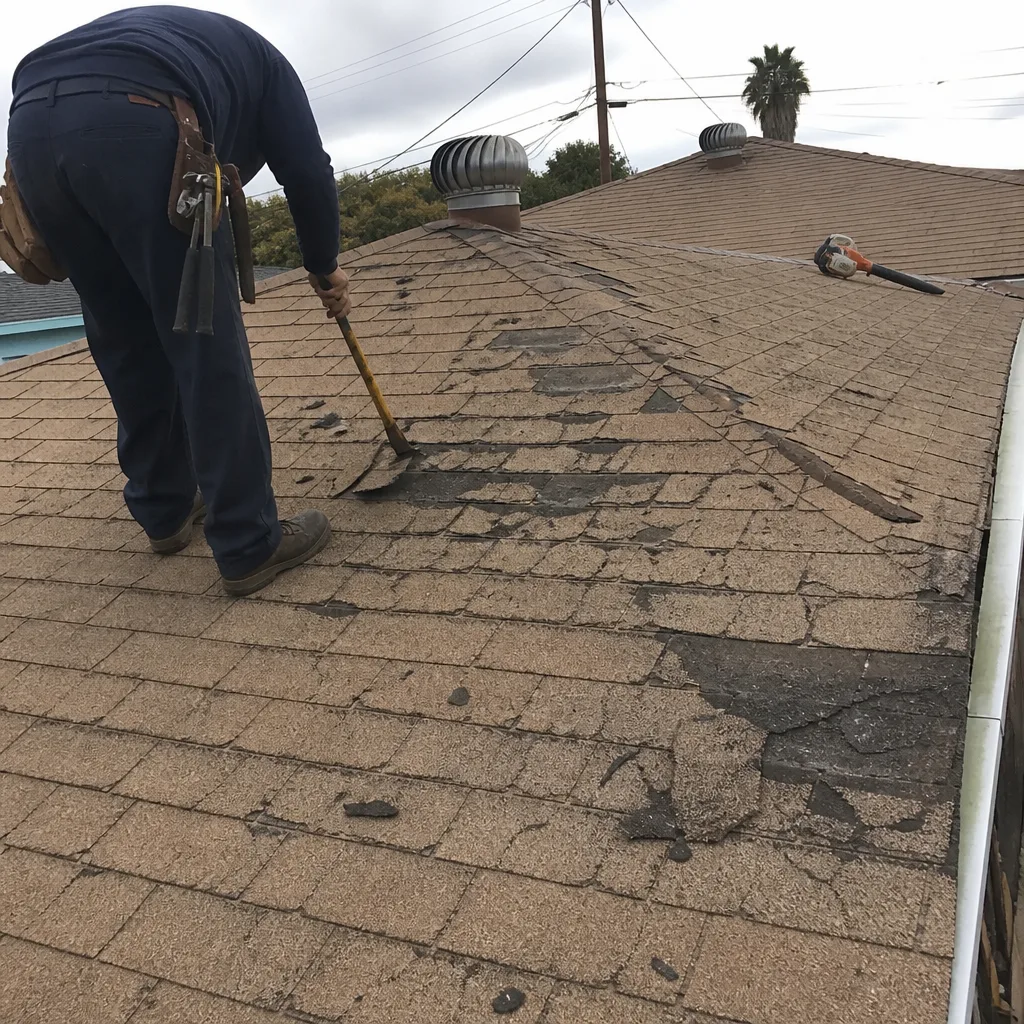 Before
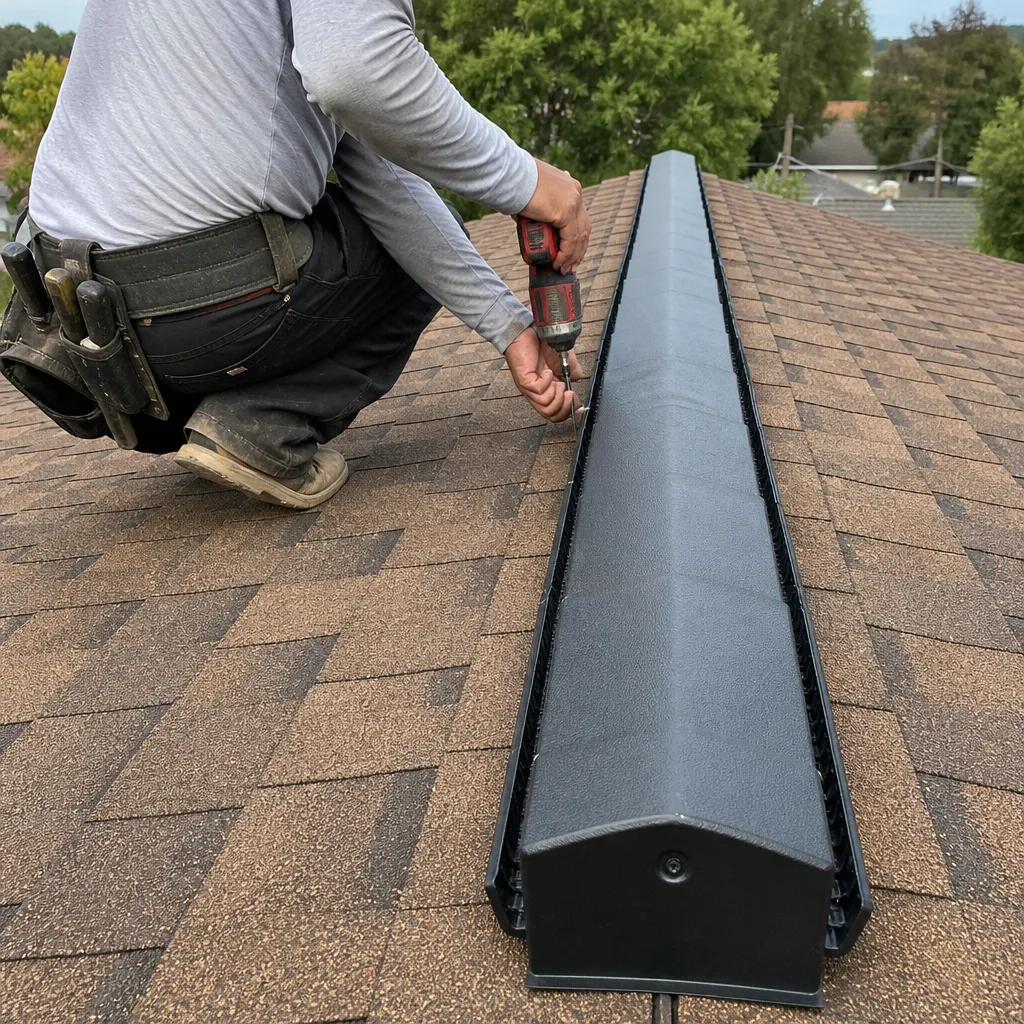 After
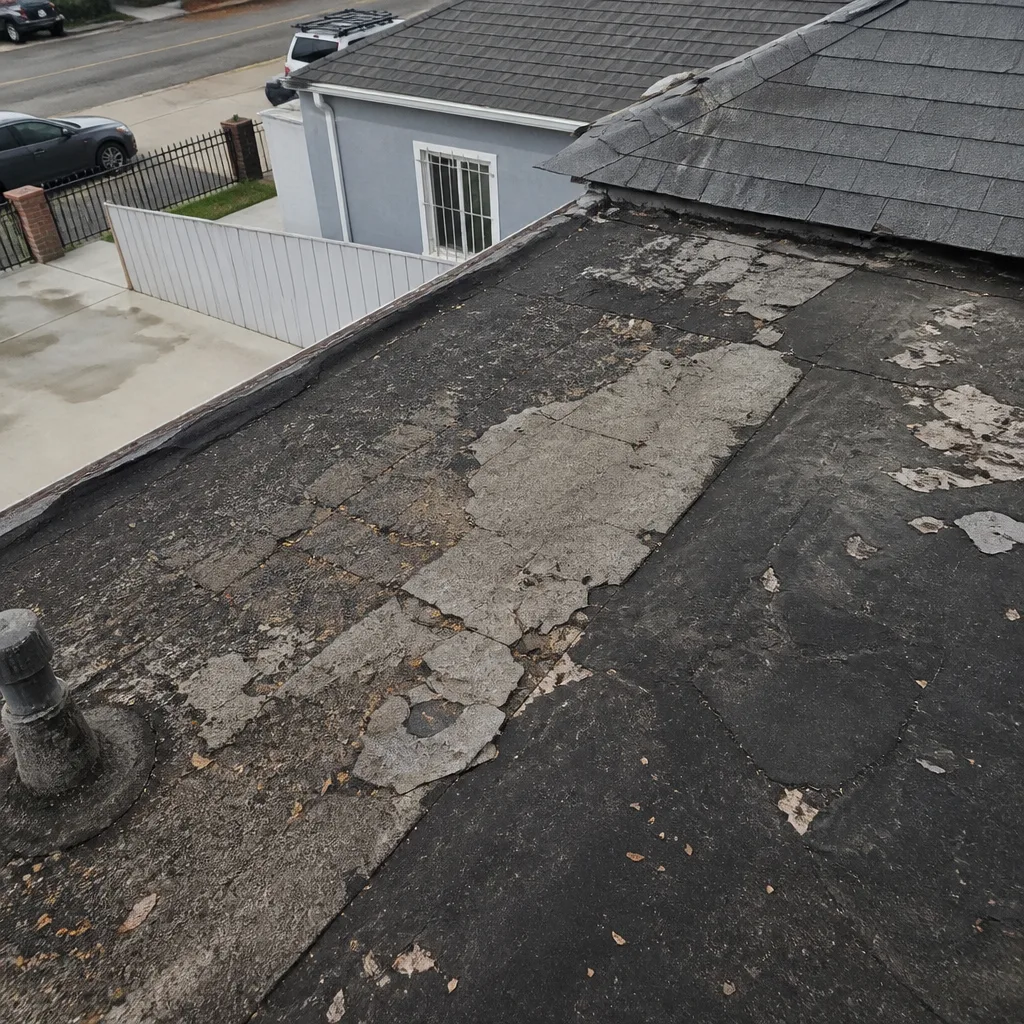 Before
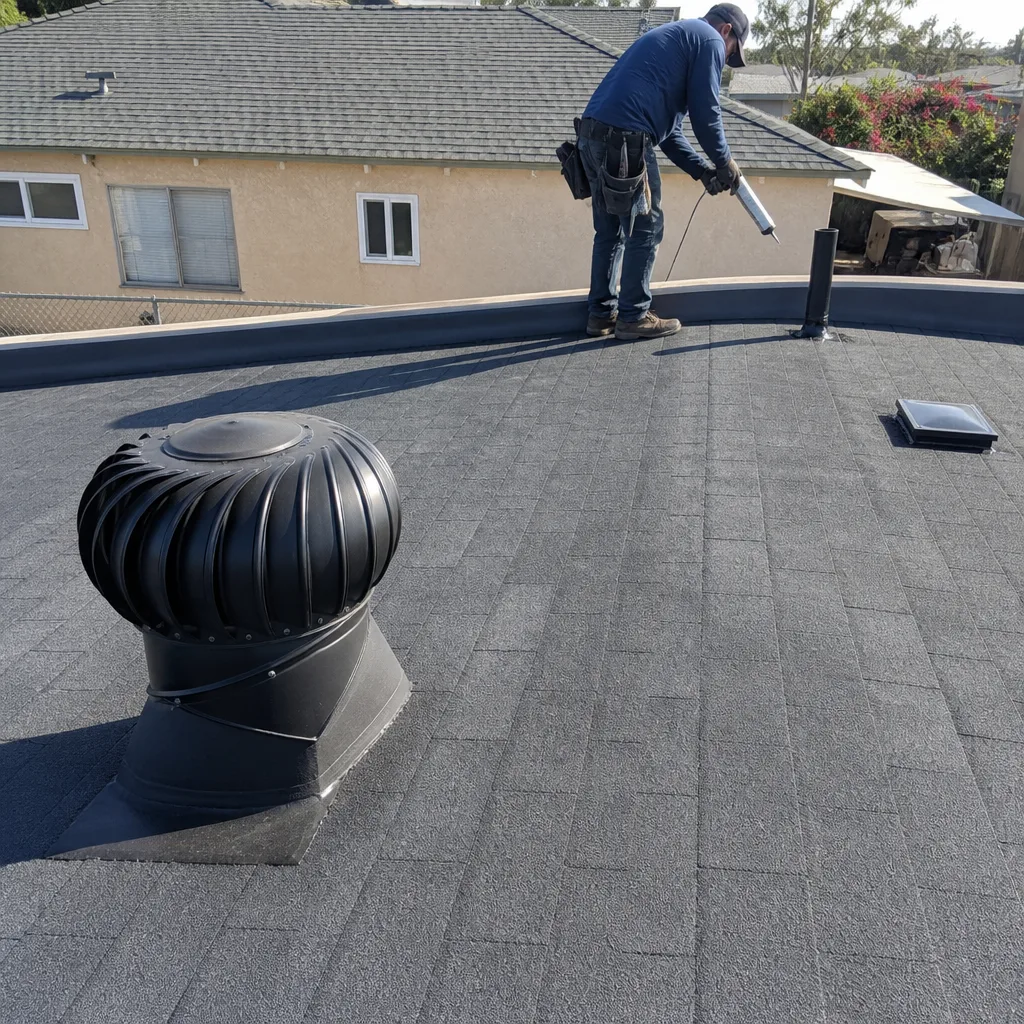 After
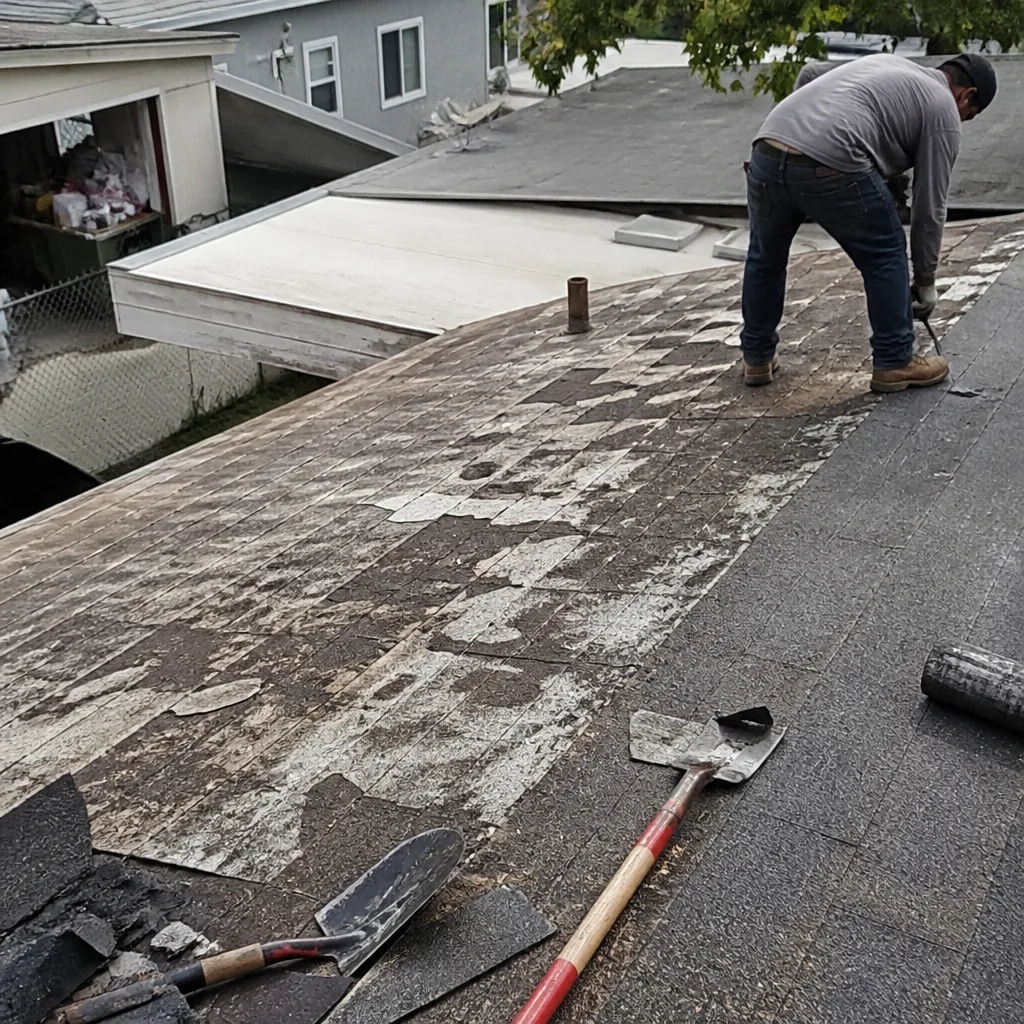 Before
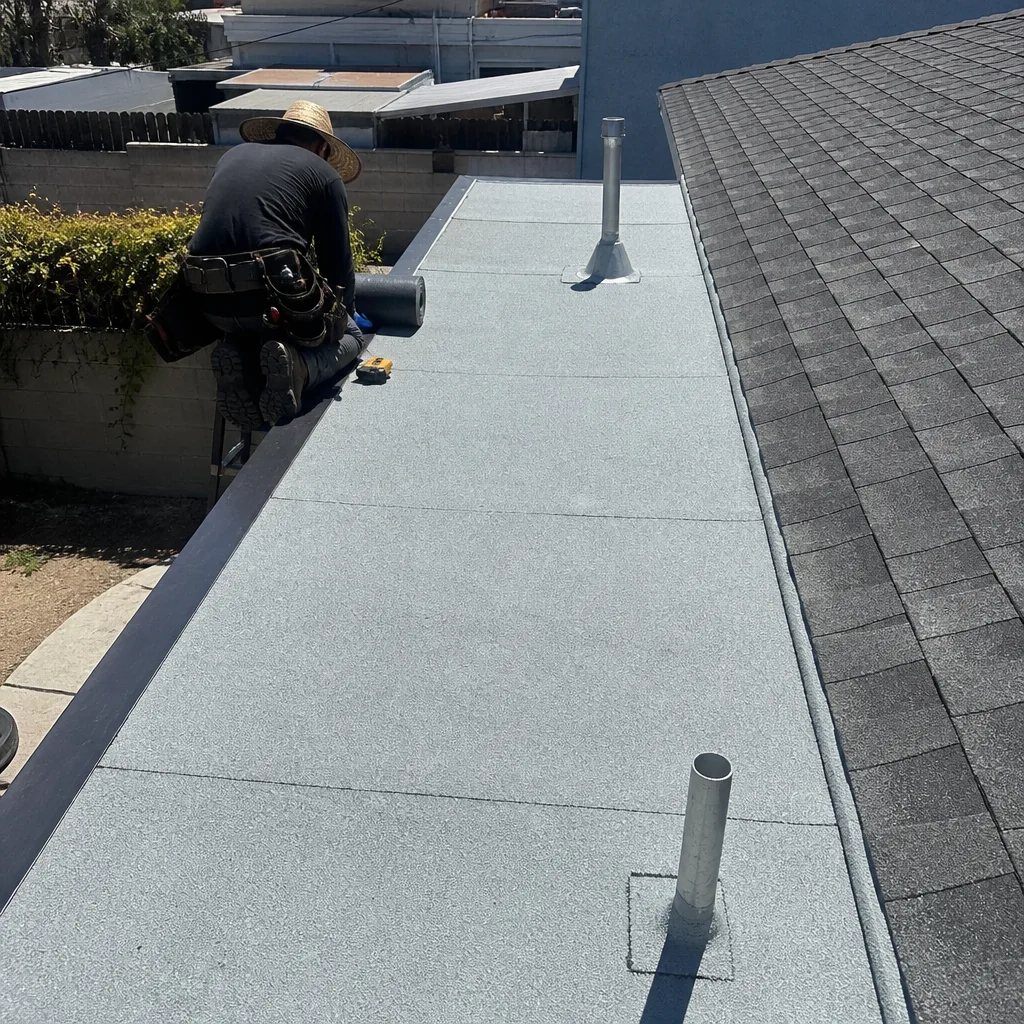 After