
Last updated October 31, 2026
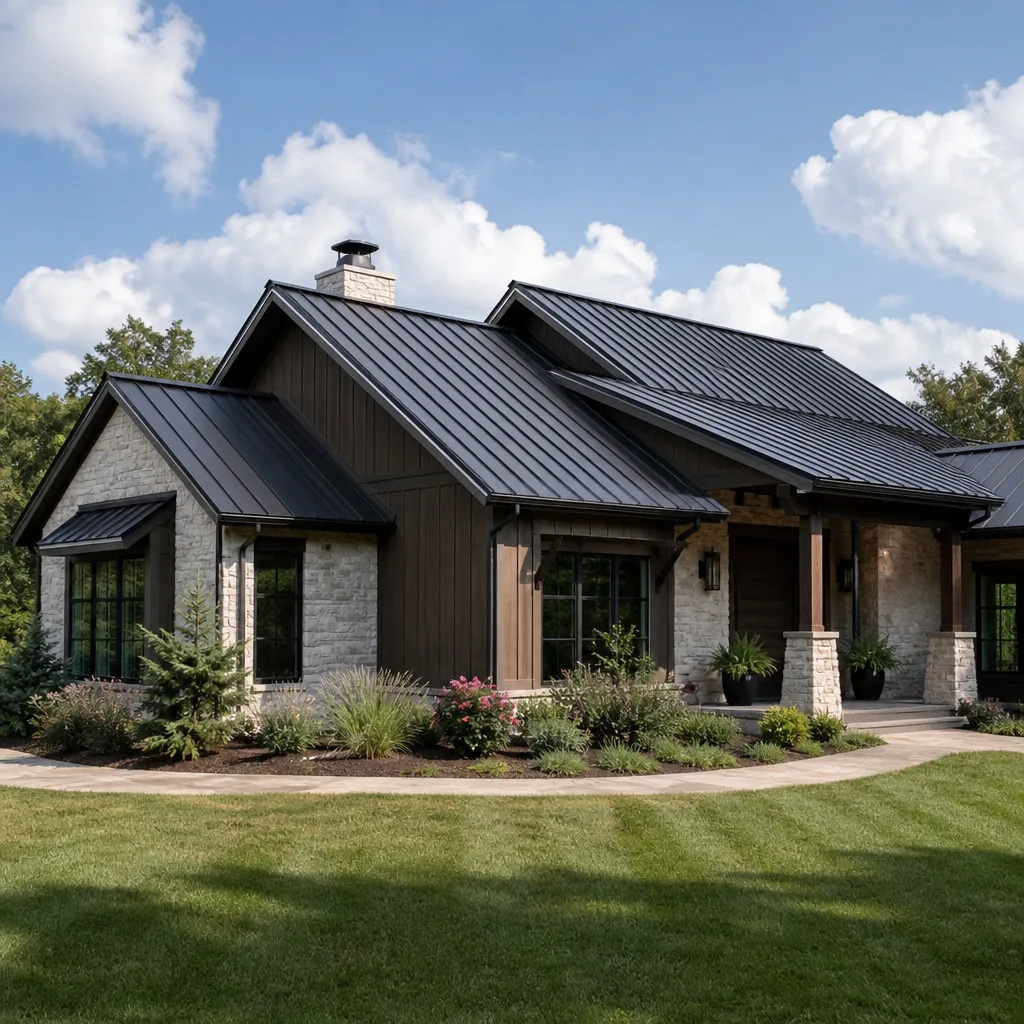 Metal roofing
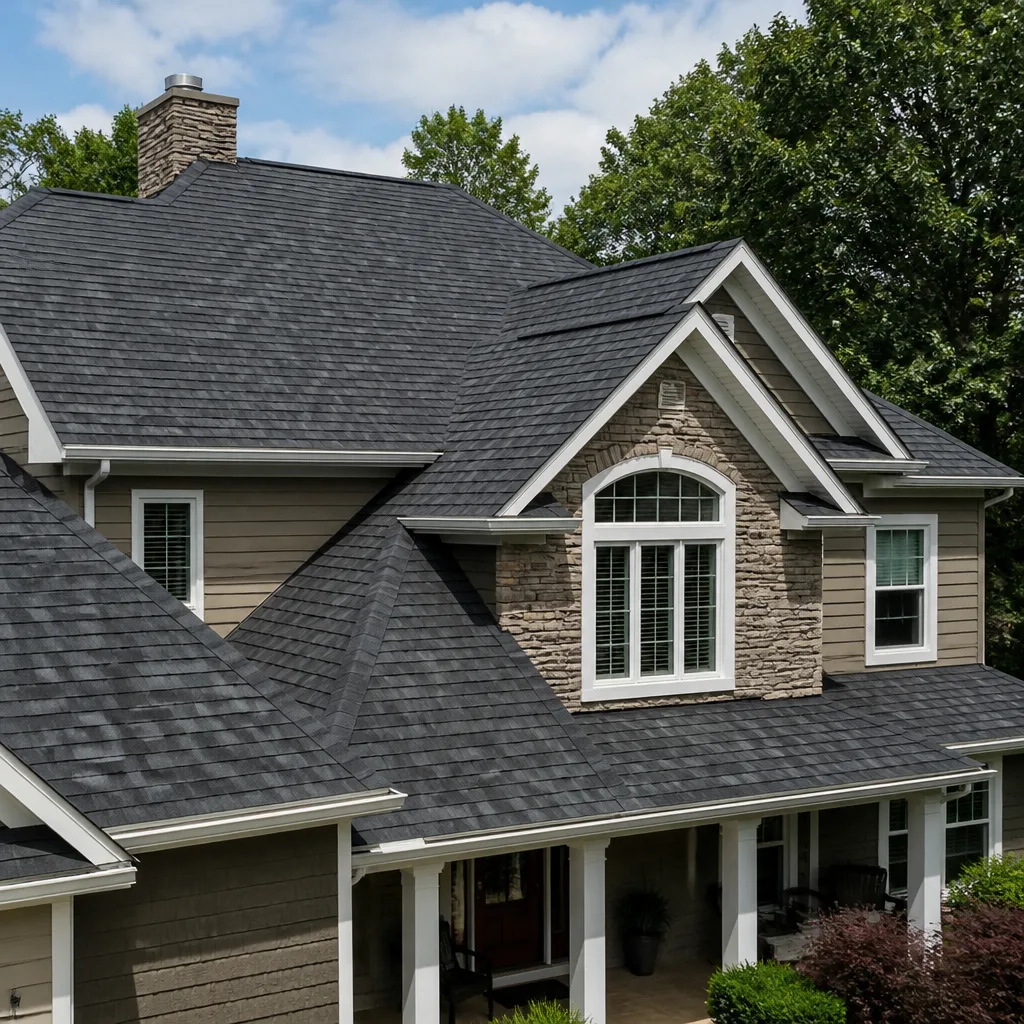 Architectural shingles
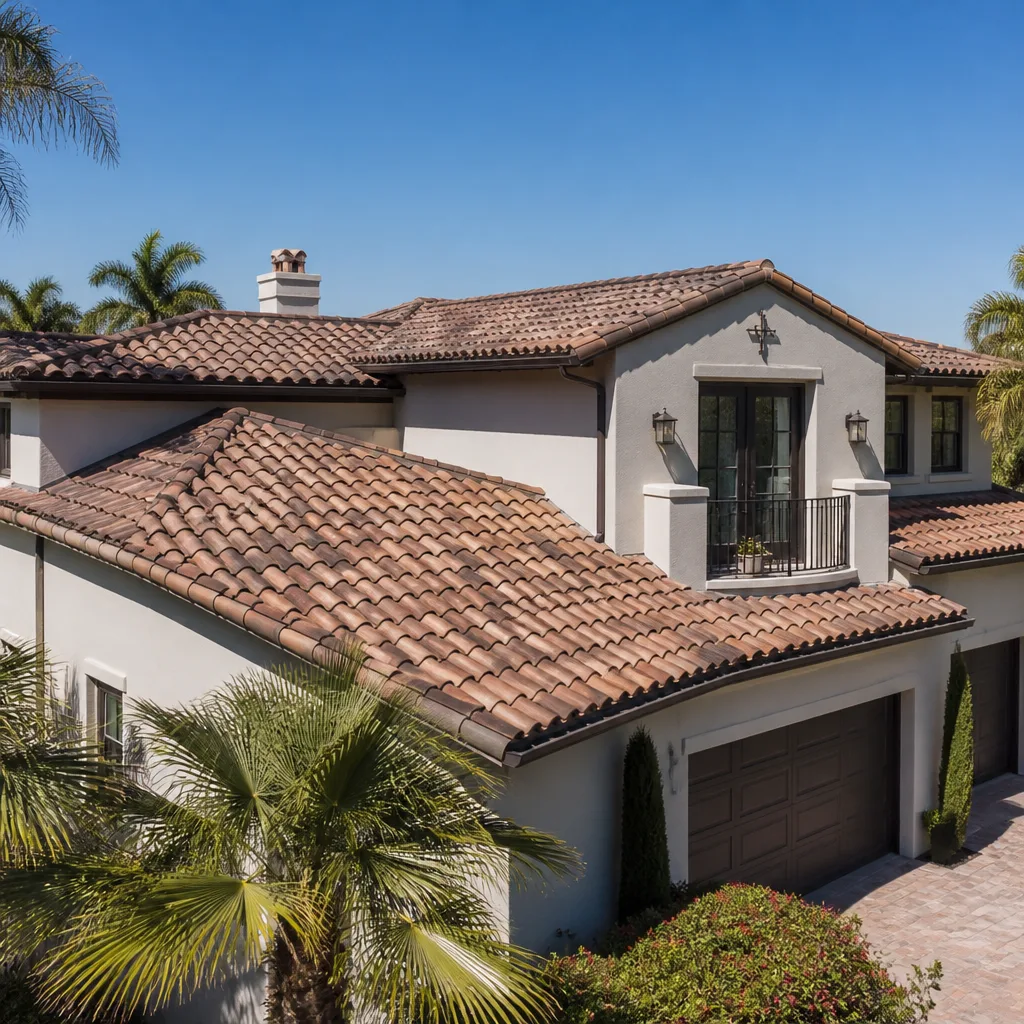 Tile roofing
 GAF
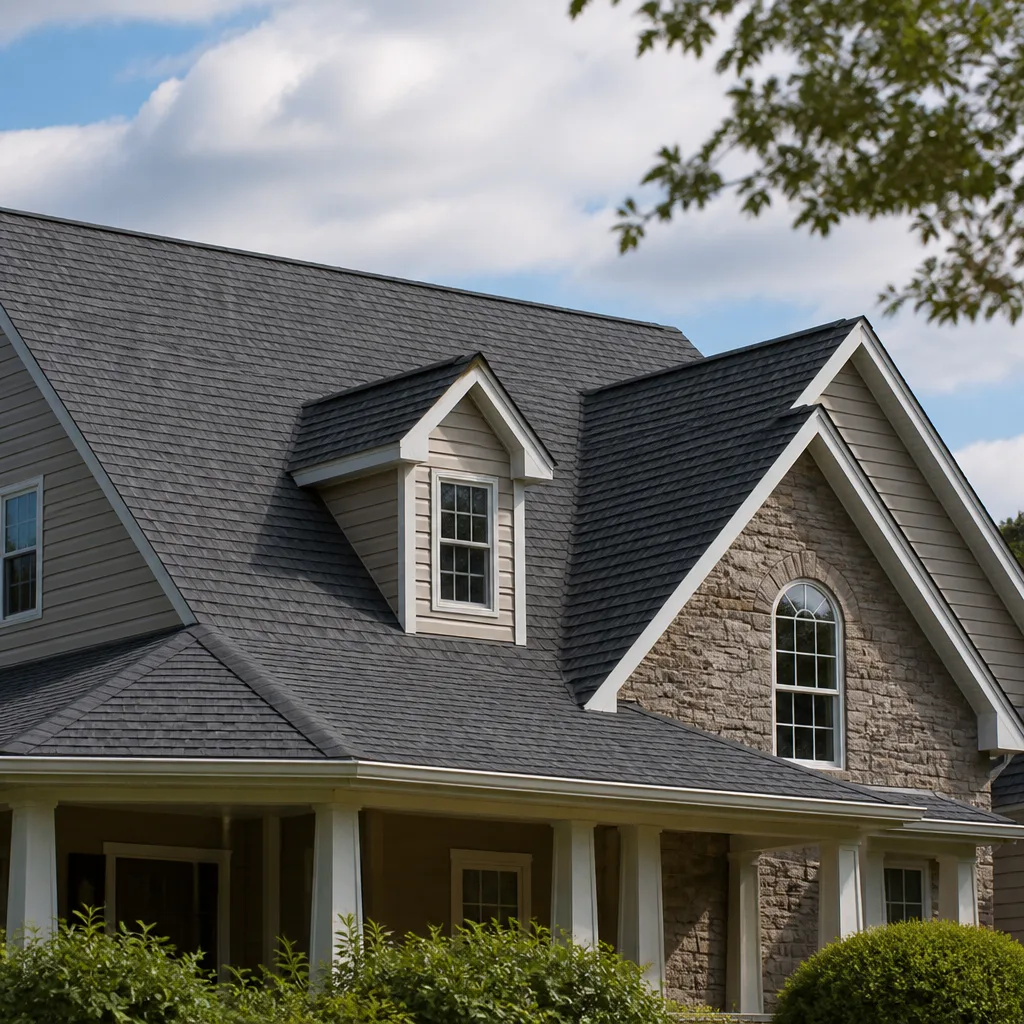 Owens Corning
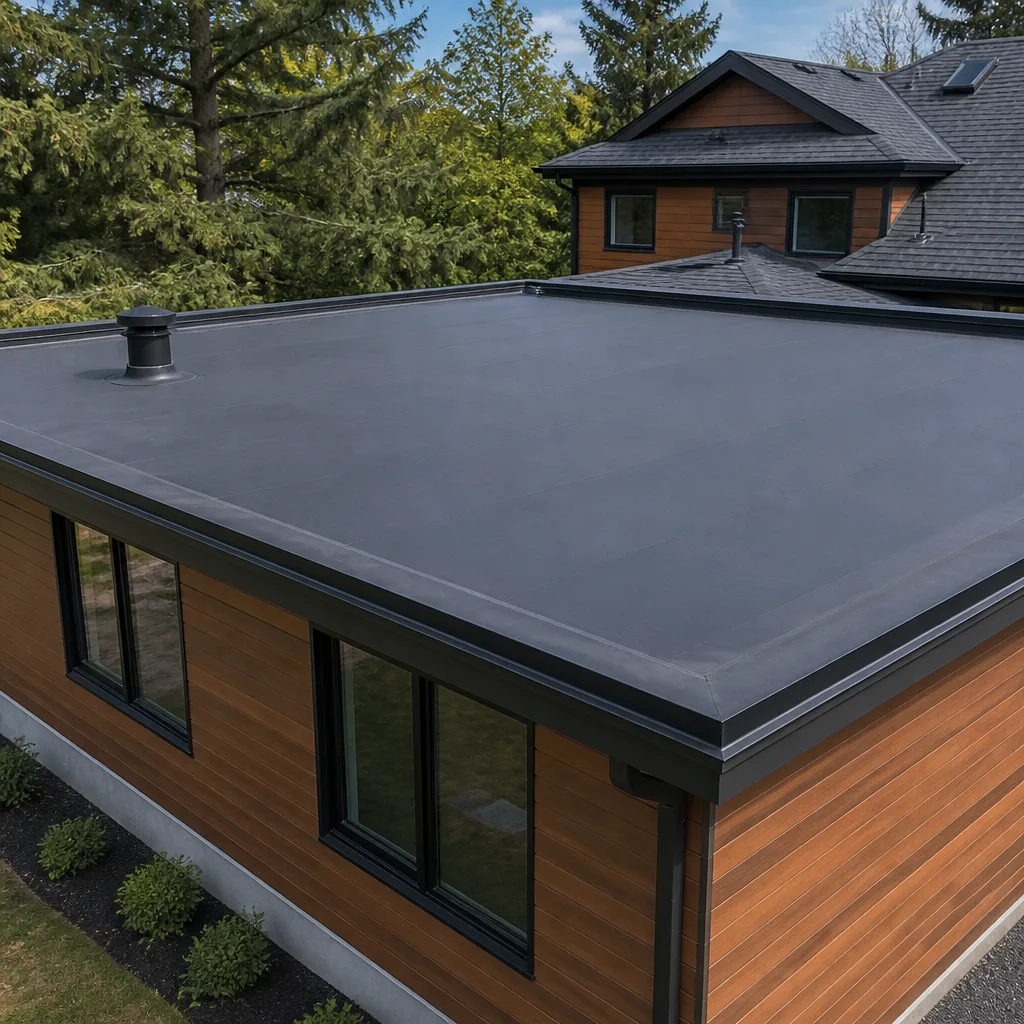 Flat & low-slope
Free roof inspection with deck photos before we talk money - GAF and Owens Corning certified installation
Seasonal Roofing Care for East Los Angeles: Year-Round Homeowner’s Guide
Most roofing guides tell you to check your roof every spring and fall. That advice was written for places with snow, ice dams, and freeze-thaw cycles. East Los Angeles has none of those. What we do have is a predictable pattern most homeowners never notice: hot, dry Santa Ana winds in September and October that desiccate sealants and lift shingle tabs, followed by sudden, pounding rain events from December through February that exploit every weakness the winds created. This guide walks through the actual seasonal rhythm of roofing in East Los Angeles, what to inspect before each season shifts, and how to catch small problems before they become water stains on your ceiling. For a deeper dive, see The Complete Guide to Roofing in East Los Angeles.
Styles & brands we work with
Quick Answer
Roof care in East Los Angeles revolves around two critical periods: pre-Santa Ana preparation in September (securing loose materials, clearing debris, checking sealants) and pre-rain readiness in November (flashing checks, drain flow confirmation, targeted repairs). Between these events, UV exposure and thermal cycling do the slow damage. We recommend a thorough roof inspection in East Los Angeles twice yearly: once in September and once in March, after the rain season ends.
Table of Contents
- The Real Roofing Calendar in East Los Angeles: Two Seasons, Not Four
- Pre-Santa Ana Prep (September): What to Inspect Before Wind Season
- Post-Wind Damage Assessment: What the Santa Anas Actually Do
- Winter Rain Readiness (November): Flashing, Flow, and Drainage
- The Long Dry Season (March – August): UV, Thermal Cycling, and Slow-Burn Damage
- Jacaranda, Palm, and Debris Cycles: Why ELA’s Trees Are Harder on Roofs
- When to Schedule a Professional Roof Inspection in East Los Angeles
- Common Mistakes to Avoid
- When to Call a Professional
- Frequently Asked Questions
- The Bottom Line
The Real Roofing Calendar in East Los Angeles: Two Seasons, Not Four
If you’ve lived in East Los Angeles for any length of time, you know the rhythm. October arrives and the air turns dry, scratchy, and restless. The Santa Anas come through the passes and hit the hillsides hard. Then December brings rain: not drizzle, but real, roof-testing downpours that hit after months of zero moisture. Between these two events, nothing dramatic happens. And that’s exactly the problem.
Roof damage in East Los Angeles is rarely a single event. It’s a sequence. The Santa Ana winds in September and October lift shingle edges, crack aging sealant, and drive fine grit under the tabs. The rain in December and January finds those lifted edges and works water underneath. By the time you see a stain on the ceiling in February, the actual cause happened months earlier.
This is why the standard four-season roofing calendar fails here. A “spring check” in April and a “fall check” in October might catch the rain damage after it’s happened, but it does nothing to prevent the wind damage that caused it. The useful calendar for East Los Angeles roof care looks like this:
- September: Pre-Santa Ana preparation. Secure loose materials, trim overhanging branches, clear drains, and check sealant integrity.
- October through November: Post-wind assessment. After the first major Santa Ana event, do a visual check for lifted tabs, missing granules, and dislodged ridge caps. Repair any wind damage before rain season.
- November: Pre-rain readiness. Confirm flashing seals, gutter flow, and low-slope drainage. This is the last window before the rainy months.
- December through February: Rain monitoring. Check for active leaks after heavy rain events. Address any damp spots immediately.
- March through August: The long dry season. This is an active damage period, not a dormant one. UV exposure and thermal cycling degrade materials all summer long. Use this window for repairs and replacements, when roofing work can be done without weather interference.
We see roofs in East Los Angeles every week that look fine from the street but have been quietly degrading for years. The homeowners didn’t miss a season; they missed the right season. The goal of this guide is to make sure you know what to look for and when to look for it. For The Complete Roof Repair Guide for East Los Angeles Homeowners, visit our blog.
Pre-Santa Ana Prep (September): What to Inspect Before Wind Season
September in East Los Angeles is the calm before the wind. Temperatures are still high, the sky is often hazy, and nothing about the weather suggests urgency. But this is the single most important month for roof maintenance in our area. What you do in September determines whether your roof survives the Santa Ana season without damage.
Here’s what to check before the winds arrive:
- Loose or lifted shingle tabs: After a long dry summer, shingle adhesive can lose its grip. Lift a few tabs carefully from the roof edge (or look for edges that are already lifting). If the seal releases with light pressure, the adhesive is failing. Those tabs will be vulnerable when the wind hits.
- Exposed nail heads: Nails that have worked loose over the summer create small openings for water. In wind season, they also become catch points that let gusts get under shingles.
- Flashing gaps: Check around chimneys, vents, and skylights for cracked or separated sealant. Caulk and roof cement dry out in the summer heat. By September, many flashings are brittle. A Santa Ana gust can peel back flashing that was already compromised.
- Gutter and drain debris: Summer leaves and dust accumulate in gutters and on low-slope drains. If they’re clogged when the first rain hits, water backs up and finds its way under the roofing material.
- Overhanging branches: Tree limbs that hang over the roof are whips in Santa Ana conditions. A long branch scraping across shingles in a 40 mph gust can strip granules down to the fiberglass mat.
We recommend doing this check about two weeks before Santa Ana season typically starts, which in East Los Angeles is usually early to mid-October. If you find problems, schedule a repair while the weather is still dry. You don’t want to be the homeowner chasing a roofer in November after a wind event has already exposed your underlayment.
One quick note on safety: inspecting your roof from a ladder means working at height. If you’re not comfortable on a ladder, or if your roof has a steep pitch, a professional inspection is the right call. We do roof inspections in East Los Angeles as a standalone service, so you get an honest assessment without any pressure to buy a repair. It’s the most useful September move you can make.
Post-Wind Damage Assessment: What the Santa Anas Actually Do
The Santa Ana winds that hit East Los Angeles every fall are unlike any other weather pattern in the country. They come down through the Cajon Pass and the San Gabriel Mountains, compress, and heat up. What arrives in the flatlands is hot, dry, and relentless. The gusts can hit 50 to 60 mph in exposed neighborhoods. And because the wind is hot, it doesn’t just blow things around. It bakes.
Here’s what these winds actually do to a roof:
- They dry out sealants in a single weekend. Roof cement, caulk, and shingle adhesive that were flexible in September can become brittle after two days of hot, dry wind. This rapidly accelerates the normal aging process. The sealant doesn’t fail at the moment it dries out; it fails later, when rain weight and wind gusts hit it.
- They lift shingle tabs. Shingles are designed to resist lift, but only when their adhesive seal is intact. Once that seal is compromised, wind gets under the edge and works the tab up. Repeated gust cycles fatigue the shingle, and eventually it tears or flies off entirely.
- They drive fine grit under lifted edges. This is one we see often in East Los Angeles. The wind carries dust, sand, and fine debris from the foothills. As shingles lift and settle, that grit works itself under the tabs. It acts like sandpaper against the shingle’s underside and the underlayment beneath. The damage isn’t visible from the ground, but it shortens the roof’s life.
- They dislodge ridge caps. Ridge cap shingles have the highest wind exposure on the roof. They’re also the most likely piece to be found in the yard after a Santa Ana event. A missing ridge cap exposes the ridge line and leaves the underlayment open to wind-driven rain.
After the first significant Santa Ana event of the season, walk your property and do a ground-level assessment. Look for:
- Shingles, pieces of shingle, or ridge caps in the yard or on the ground around the home
- Lifted or curled shingle edges visible from the ground
- Debris accumulation in valleys, behind chimneys, and against roof penetrations
- Granules collecting in gutters or at downspout outlets
- Any new gap or seam where the roof meets flashing
If you find any of these signs, don’t wait until the first rain to address them. A missing ridge cap is an open invitation to water. A lifted shingle tab is a leak waiting to happen. Schedule a roof repair in East Los Angeles while the weather is still dry. Repairs done in October are always cleaner, faster, and cheaper than emergency repairs in December.
Winter Rain Readiness (November): Flashing, Flow, and Drainage
By November, the Santa Ana season is typically winding down, and the first rain events are on the way. East Los Angeles gets about 15 inches of rain in an average year, and nearly all of it comes between November and March. That’s a short window with a lot of water, and the rain often arrives as intense, short-duration downpours rather than gentle, soaking rain.
November is your last practical window to prepare. Here’s what matters most:
Flashing Integrity
Flashing is the thin metal that seals the joints where your roof meets vertical surfaces: chimneys, vent pipes, skylights, dormer walls, and valleys. It’s the most common source of roof leaks in East Los Angeles, and it’s also the part most damaged by Santa Ana winds. A flashing that was slightly loose in October may be fully detached by late November.
Inspect the flashing around every penetration. Look for cracks in the sealant, gaps between the flashing and the surface, and any signs that the flashing has shifted. If you can see the edge of the flashing lifting away from the roof, that’s a problem. Water doesn’t need much of an opening to get underneath.
Gutter and Drain Flow
Before the rain hits, run water through your gutters and downspouts. You’re checking for two things: clogs that will cause overflows, and low spots where water pools instead of draining. Overflowing gutters send water down the fascia and into the eave, which causes rot that spreads into the roof deck.
On flat or low-slope roof sections, which are common on commercial buildings and some older homes in East Los Angeles, check the scupper drains and internal roof drains. Debris that collected during the dry months needs to be cleared before the first storm. A clogged flat roof drain means standing water, and standing water on a flat roof is the leading cause of premature membrane failure.
Low-Slope Drainage Confirmation
Many homes in East Los Angeles have section of low-slope roofing over porches, carports, room additions, or the main structure itself. These areas drain more slowly than steep slopes and are far less forgiving of debris. Confirm that water flows freely to the drain or scupper. If you see ponding after a rain, that’s a sign of improper drainage or sagging deck structure. Addressing it in November means avoiding a ceiling stain in January.
The November check doesn’t need to be exhaustive. But if you do nothing else, take twenty minutes to inspect flashings and clear drains. It’s the single most effective hour of roof maintenance you’ll spend all year.
The Long Dry Season (March – August): UV, Thermal Cycling, and Slow-Burn Damage
After the winter rains end in March, most homeowners in East Los Angeles stop thinking about their roofs for six months. That’s understandable; nothing visible is happening. But the long dry season is not a dormant season. It’s an active damage period that works more slowly and more quietly than any Santa Ana wind event.
Two forces are at work during the dry months:
UV Radiation
East Los Angeles sits in a high-UV zone. The sun here is intense, and it beats on roofs nearly every day from March through October. UV radiation breaks down the chemical bonds in asphalt shingles, causing them to become brittle. Granules, which protect the shingle from UV, slowly loosen and wash away. As granule loss progresses, the underlying asphalt is exposed, and the degradation accelerates.
Different materials handle UV differently. Boral’s tile and composite products, for example, are engineered for high-UV environments and hold their color and structure longer than standard asphalt. CertainTeed and GAF both offer premium shingle lines with enhanced granule adhesion specifically designed for sun-heavy climates. But no material is immune. A roof in East Los Angeles that’s been baking for 15 summers is not the same roof it was on day one, even if it looks fine from the street. If you’re weighing options, our post on Choosing the Right Roofing Brand: A Buyer’s Guide for East Los Angeles can help.
Thermal Cycling
Roof materials expand when heated and contract when cooled. In East Los Angeles, the temperature swing between a summer afternoon and the following night can be 35 to 40 degrees. Over the course of a summer, your roof undergoes hundreds of these expansion and contraction cycles.
This cycling stresses every seam, joint, and seal on the roof. Sealant cracks. Fasteners loosen. Shingle tabs lose their grip. None of this is visible from the ground, and none of it announces itself with a sound. The damage accumulates invisibly until the next rain event, when suddenly there’s a leak where there wasn’t one before.
This is why we recommend a March inspection, after the rains end. It catches the damage that the winter revealed. And if you’re considering a roof replacement in East Los Angeles, the dry season is the time to do it. Roofing work happens faster, adhesives cure properly, and there’s no risk of an unexpected storm exposing your home mid-project.
If your roof is in the second half of its expected lifespan, don’t wait for a visible problem. The dry season is when you should be making the decision about whether a repair can extend the life of what you have or whether a replacement makes more financial sense. And we’re honest about that call. We inspect first and recommend second. If a repair gets you another five years, that’s the recommendation. If the roof is done, we’ll tell you that too.
Jacaranda, Palm, and Debris Cycles: Why ELA’s Trees Are Harder on Roofs
East Los Angeles has a tree canopy unlike anything in the rest of the LA basin. The streets are lined with jacarandas, palms, magnolias, and mature deciduous trees that drop heavy debris on specific schedules. If you live here, you know the purple carpet on the sidewalk in late spring. What you may not know is what that debris cycle does to your roof.
Jacaranda Season: Late Spring
Jacarandas drop their purple flowers in May and June. The flowers themselves are light and blow off roofs readily, but they accumulate in valleys and behind chimneys. More problematic are the seed pods, which are hard, woody, and sharp. Jacaranda seed pods can puncture lightweight membrane roofing and scratch shingle surfaces, creating weak points where granule loss accelerates.
If you have a jacaranda overhanging your roof, schedule a gutter and valley cleaning in June. The pods that settle in valleys will hold moisture against the roof surface all summer, and that’s a recipe for localized material failure.
Palm Fronds: Year-Round Hazard
Palm trees are iconic in East Los Angeles, but they’re hard on roofs. Palm fronds can be 6 to 10 feet long and surprisingly heavy. When they fall, they strike the roof with significant force. A falling frond can crack tiles, dent metal valleys, and dislodge shingles. Fronds that land on the roof don’t blow away; they sit there and trap moisture, debris, and nesting material against the roof surface.
If palms surround your home, a roof inspection should include checking for frond impact damage. The damage patterns are distinctive: cracked tiles, dented flashing, or lines of disturbed granules along the impact path.
Magnolia and Deciduous Leaf Drop
Magnolias are slow shedders, dropping leaves almost year-round. Unlike most leaves, magnolia leaves are thick and waxy. They don’t break down quickly in gutters, and they form mats that block water flow. In East Los Angeles, we see magnolia leaf accumulation as a leading cause of clogged gutters and low-slope drainage failure.
Deciduous trees drop their leaves on a more predictable schedule, but the volume can be enormous in older neighborhoods with mature trees. If you have large deciduous trees near your roof, plan for a late-fall gutter cleaning after the leaves are down but before the rains start. A single heavy rain onto a gutter packed with wet leaves will overflow, and that water has to go somewhere. It usually goes into the roof edge.
The debris cycle in East Los Angeles is a real maintenance burden, and it’s one that generic roofing advice never addresses. The species that grow here create specific problems that require specific timing. Being aware of your trees and their schedules is one of the most practical things you can do to protect your roof.
When to Schedule a Professional Roof Inspection in East Los Angeles
A professional roof inspection serves a different purpose than the homeowner checks described above. It’s not just about finding visible problems. It’s about assessing the overall condition of a roof, predicting where failures are likely to occur, and helping you make smart decisions about whether to repair or replace.
We recommend scheduling a professional inspection at these specific points:
- If your roof is more than 10 years old. Asphalt shingles in the East Los Angeles climate typically last 18 to 25 years, but performance starts to decline after year 10. An inspection at this point establishes a baseline and catches early-stage issues before they become active leaks.
- After a significant Santa Ana event. If winds were strong enough to knock down fences or tree limbs, they were strong enough to damage your roof. A post-wind inspection is cheap insurance against a wet December.
- Before the winter rain season. A November inspection gives you time to make repairs before the first storm. This is the most common timing for roof inspections we perform in East Los Angeles, and it’s genuinely the most valuable.
- After the rain season ends. A March inspection catches damage the winter caused and gives you the full dry season to address it.
- Before you buy or sell a home. An objective roof assessment prevents surprises during escrow. We do inspections as a standalone service, so you get a real report, not a sales pitch for a roof you may not need.
What does an inspection actually include? At minimum, you should get a documented assessment of the roofing material condition, flashing integrity, drainage performance, visible signs of leak history, and an honest estimate of remaining roof life. If the inspector finds problems, you should get a clear explanation of what’s wrong, what the repair involves, and what happens if you delay it. If the inspector can’t or won’t provide that level of detail, look elsewhere. You’ll find more guides & resources on our blog.
We stock and install products from seven manufacturers, including GAF, CertainTeed, Owens Corning, and Boral. That matters during an inspection because it means we’re not trying to fit your roof to whatever shingle we happen to have in the warehouse. We can recommend the right material for your roof, your budget, and your neighborhood’s specific conditions, whether that’s an entry-level asphalt shingle or a premium product designed for UV-heavy climates.
Common Mistakes to Avoid
- Waiting for the leak before acting. By the time water shows up inside your home, the damage has been building for months. A roof that leaks in January was damaged in October. Addressing wind damage in October costs a fraction of what a January emergency repair costs.
- Skipping the post-Santa Ana check. The Santa Anas are the single most damaging weather event for roofs in East Los Angeles. If you do nothing else after a big wind event, at least walk the property and look for lifted shingles, missing ridge caps, and granule accumulation.
- Cleaning gutters once a year. In East Los Angeles, your gutters need maintenance on your trees’ schedule, not some arbitrary annual calendar. If you have jacarandas, clean after pod drop in June. If you have magnolias, you may need cleaning twice a year. If you have palms, you need to check after every frond fall.
- Painting over ceiling stains without investigating the roof. A water stain on the ceiling is a symptom. It tells you that water already got through the roof. Painting over it without finding and fixing the source guarantees you’ll be painting again after the next rain.
- Assuming a new roof doesn’t need maintenance. Even a brand-new roof has flashings, sealants, and drainage paths that need periodic checking. The first year is critical; improper installation issues reveal themselves quickly, and catching them early protects your warranty.
- Delaying repairs during the dry season. It’s tempting to put off a roof repair when it’s not actively raining. But the dry season is the best time for roofing work. Do it in June, not December.
- Trusting a single-brand contractor. If the roofer only carries one shingle brand, you’re choosing from a menu of one. That might work out fine, but it might also mean you’re getting a shingle chosen for the contractor’s margins, not your roof. A contractor who carries multiple brands, like we do, can actually match the material to your home and your budget.
When to Call a Professional
Some roof issues are safe to monitor from the ground. Others demand professional attention. Call a contractor if you see any of these: active water intrusion inside the home, visible daylight through the roof deck from the attic, multiple missing or torn shingles after a wind event, granule accumulation in gutters that signals advanced material degradation, flashing that has pulled away from any penetration, or a roof that’s past 15 years old and has never been professionally inspected. These are not DIY situations; they signal that the roof’s protective envelope has been compromised.
Sunrise Roof Repair offers free estimates in East Los Angeles. We inspect first and recommend second. Call (877) 752-3460 to schedule yours.
Frequently Asked Questions
Twice a year is ideal for East Los Angeles homes: once in September before Santa Ana season and once in March after the winter rains end. If your roof is under 10 years old and you’ve had no weather events, once a year in November is usually sufficient. Call (877) 752-3460 to schedule a free estimate.
Most minor roof repairs in East Los Angeles run between $350 and $1,200 depending on the type and extent of the damage. Repairs to flashing around a single penetration typically cost less than $600, while shingle replacement across a larger wind-damaged area can reach $1,500 or more. The only way to get an accurate number is an inspection. Call (877) 752-3460 for an exact quote; estimates are free.
It shouldn’t, if you’re working with a contractor who provides a written, line-item estimate. We provide fixed pricing with no change orders on standard roof repairs in East Los Angeles. The only time scope would change is if the inspection reveals damage that was inaccessible or hidden behind existing materials, and in that case we document it and get your approval before proceeding.
We handle all necessary permitting for roof replacement projects in Los Angeles County. Many repair projects don’t require permits, but when they do, we pull them and ensure the work passes inspection. You shouldn’t have to navigate the permit process yourself; a good contractor handles that for you.
Most residential roof replacements in East Los Angeles take three to seven days, depending on the size of the roof, the pitch, the number of existing layers that need removal, and the material being installed. A single-story home with a simple gable roof and no existing layer removal can often be done in three days. Multi-story homes, steep roofs, or tile replacements take longer. We provide a detailed timeline with every estimate.
Yes, often significantly. A targeted repair to failing flashing or wind-damaged shingles can add five to ten years of service life to an otherwise sound roof. The key is catching the problem early. By the time a roof is leaking in multiple locations or showing widespread granule loss, repair is usually no longer cost-effective. We repair when repair is right and replace when it’s not.
The Bottom Line
Roof care in East Los Angeles is about timing. The October Santa Anas and the January rain events are the two moments when your roof is most vulnerable, and the months between them are when the real damage happens. Prep in September, assess after the winds, confirm drainage in November, and use the dry season for repairs and replacements. Watch your trees, especially jacarandas and palms, and clean your gutters on your trees’ schedule. A professional inspection twice a year, or at minimum once before the rains, will catch small problems before they become expensive ones. The roof over your head is the most important system in your home. Treat it that way.
Written by the team at Sunrise Roof Repair, serving East Los Angeles since 2015.
See the difference
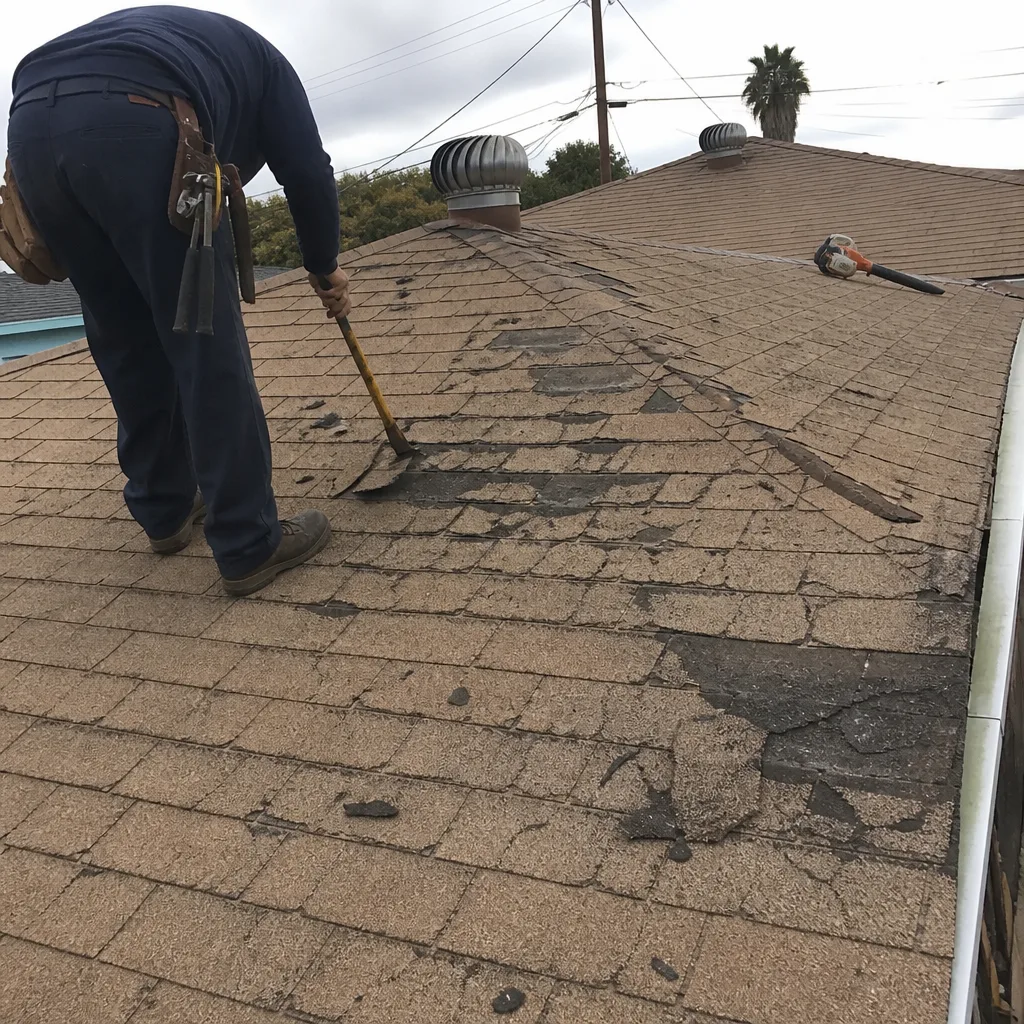 Before
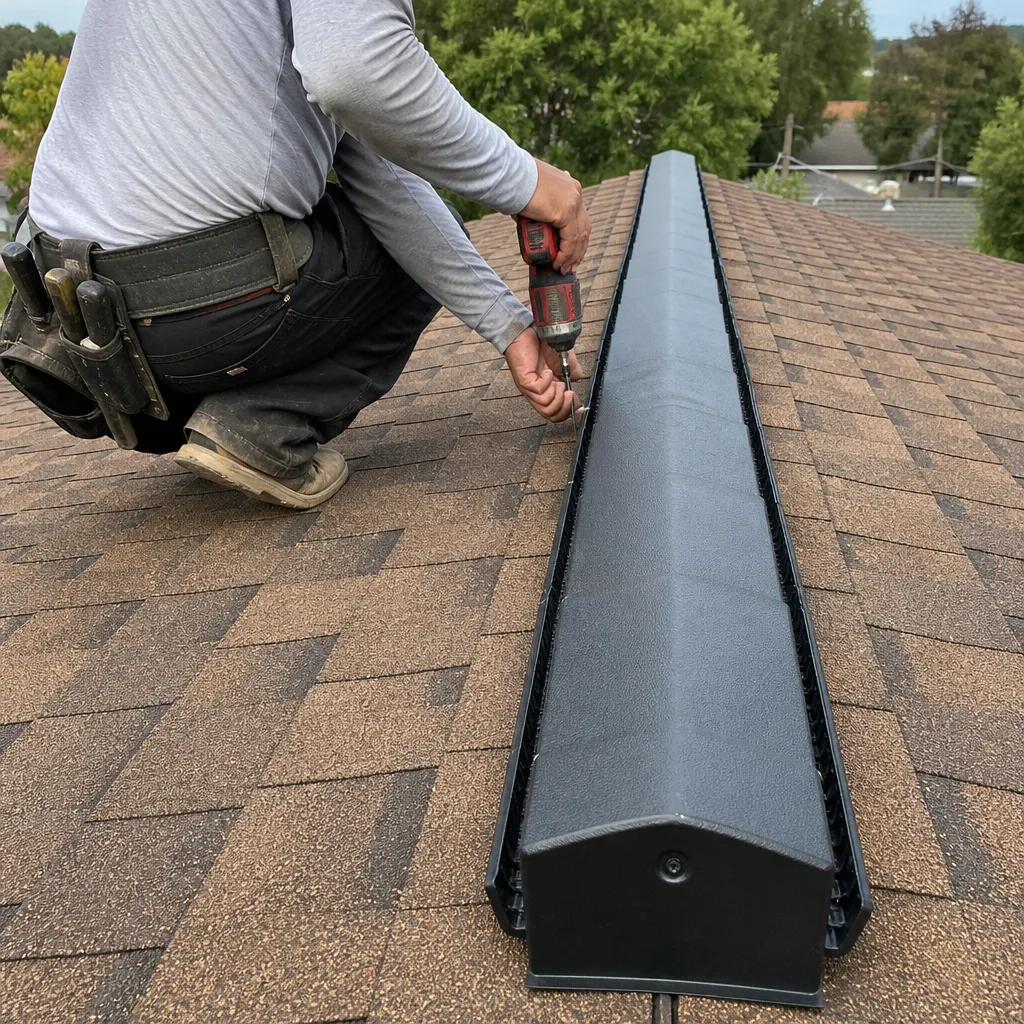 After
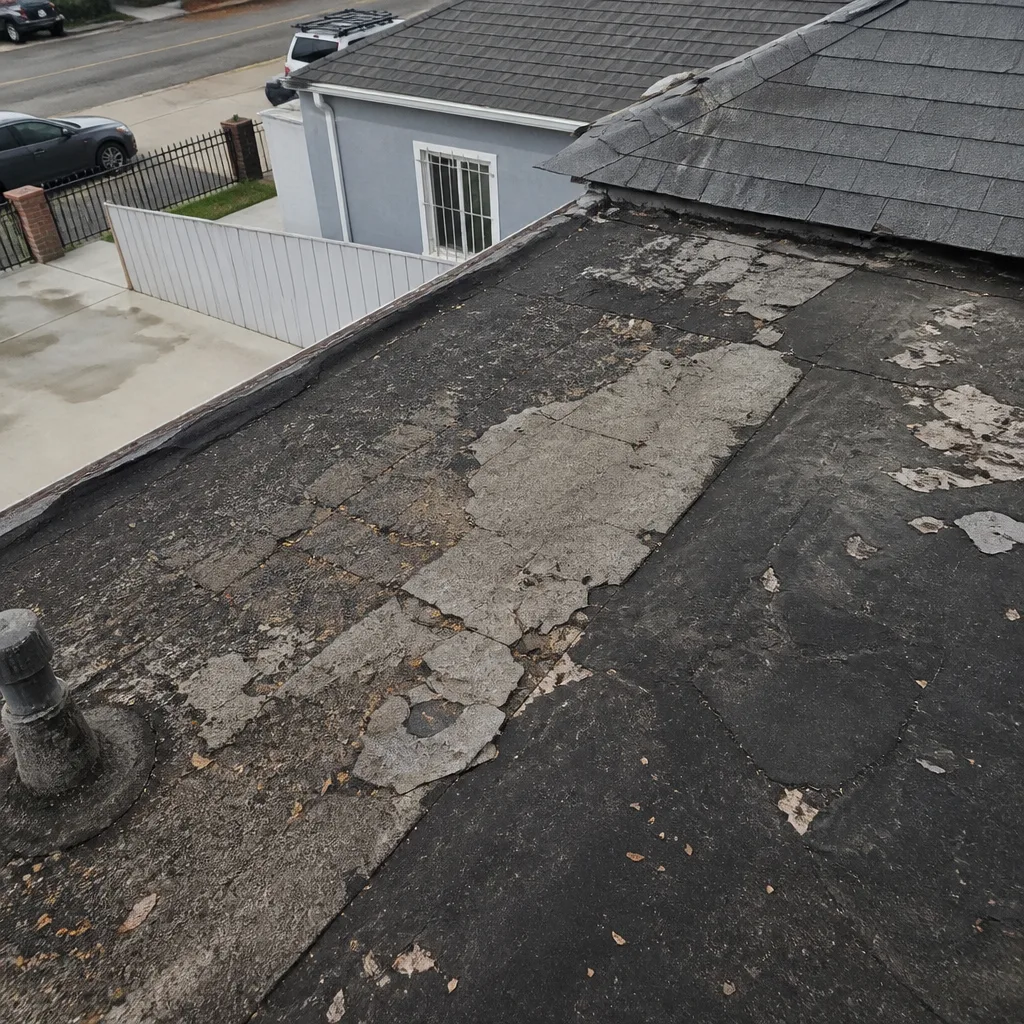 Before
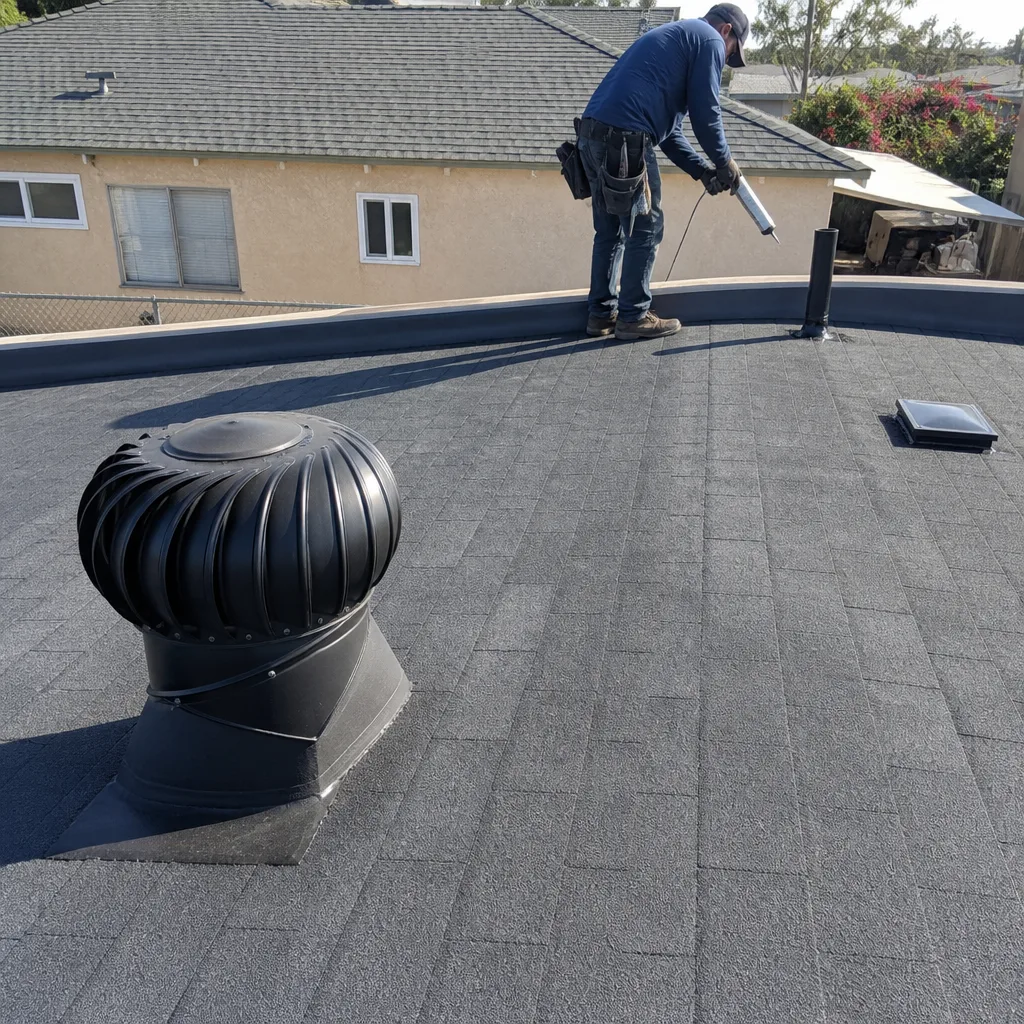 After
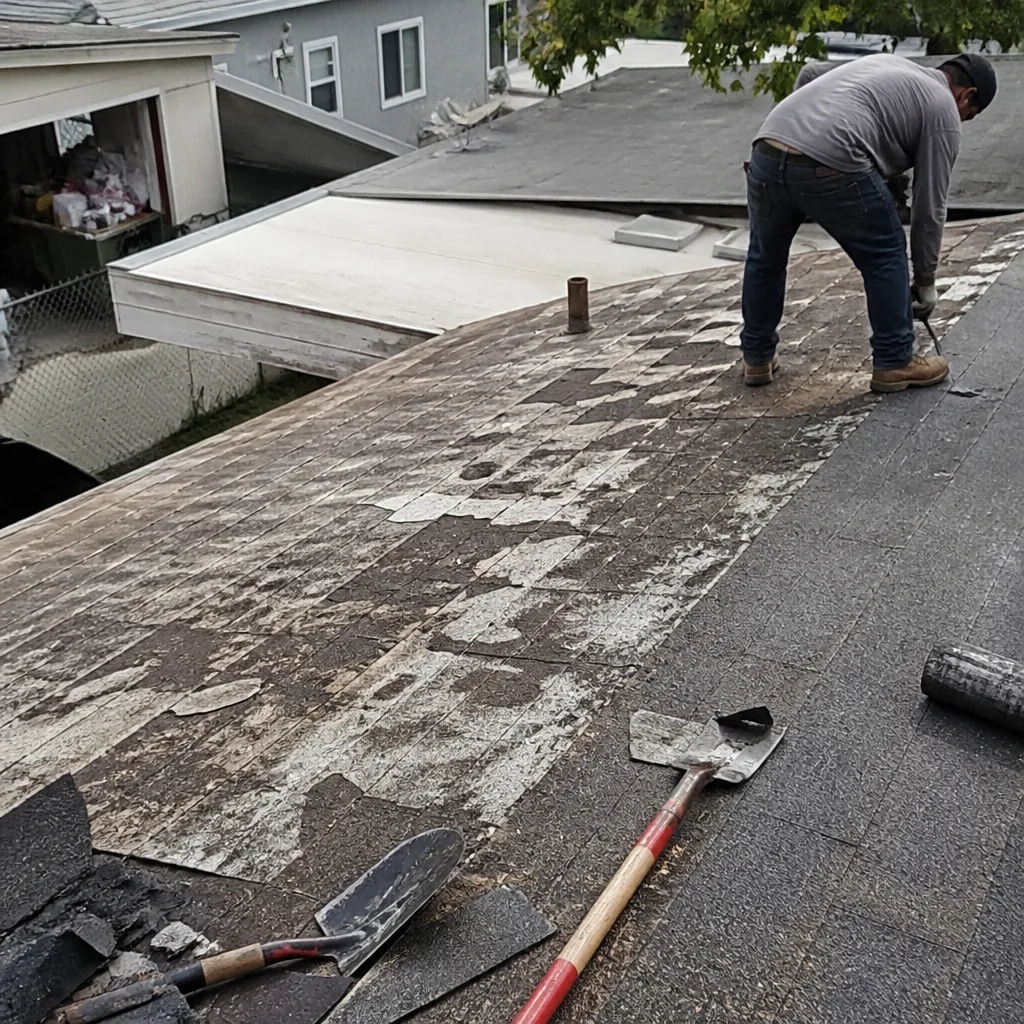 Before
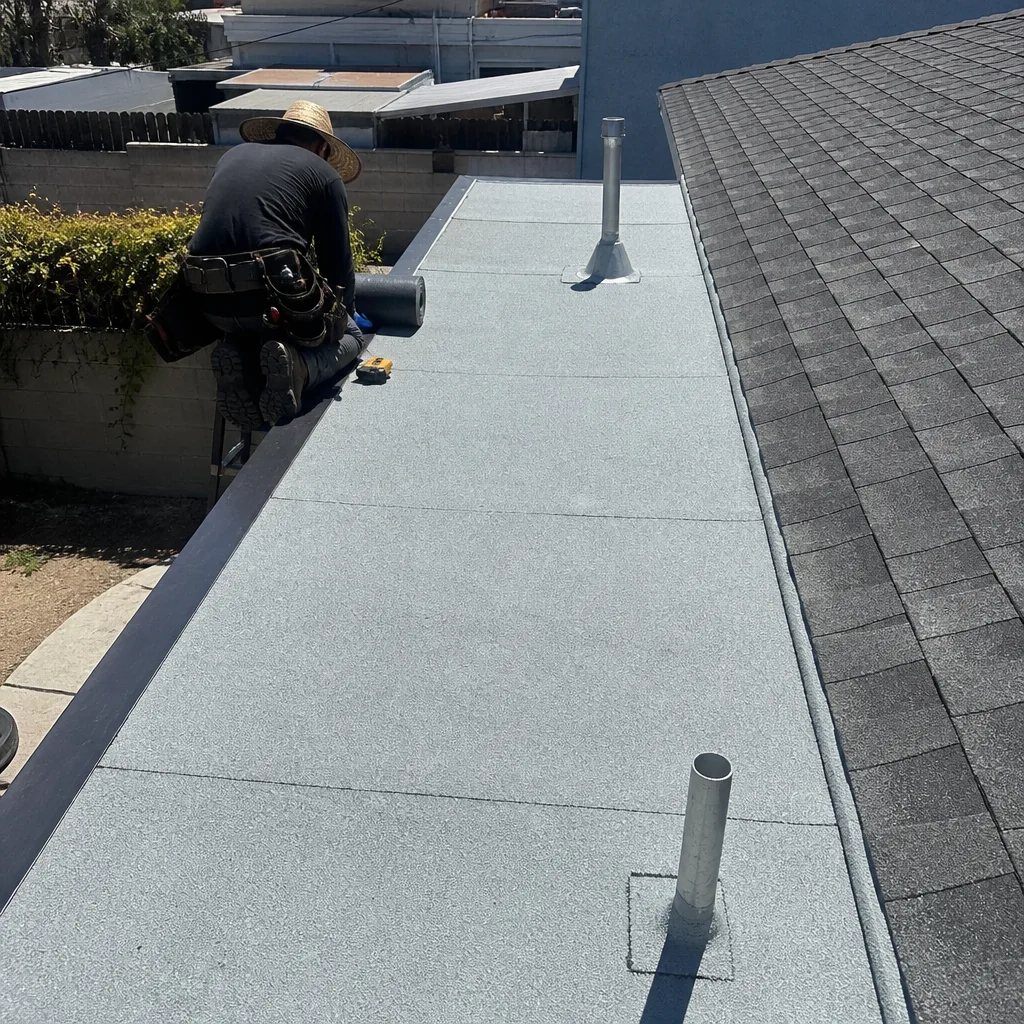 After