Last updated October 31, 2026
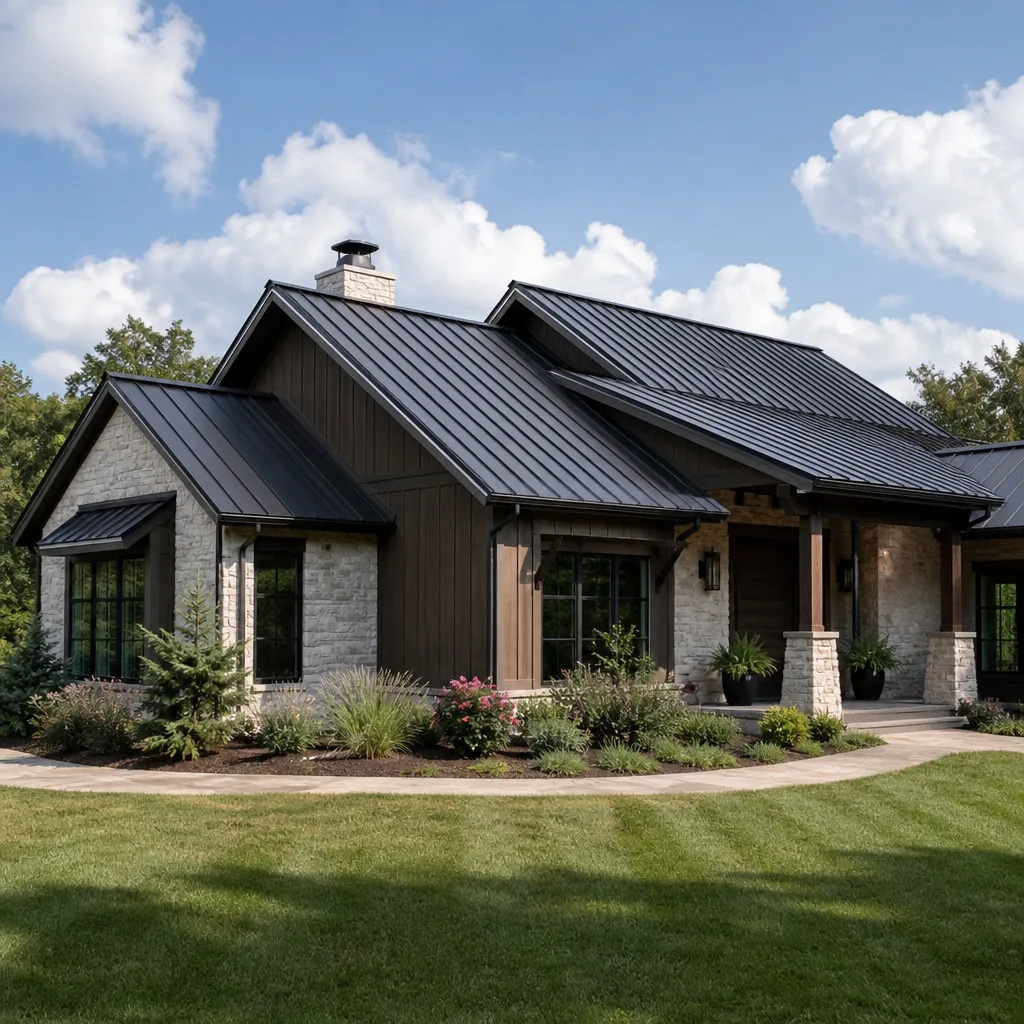 Metal roofing
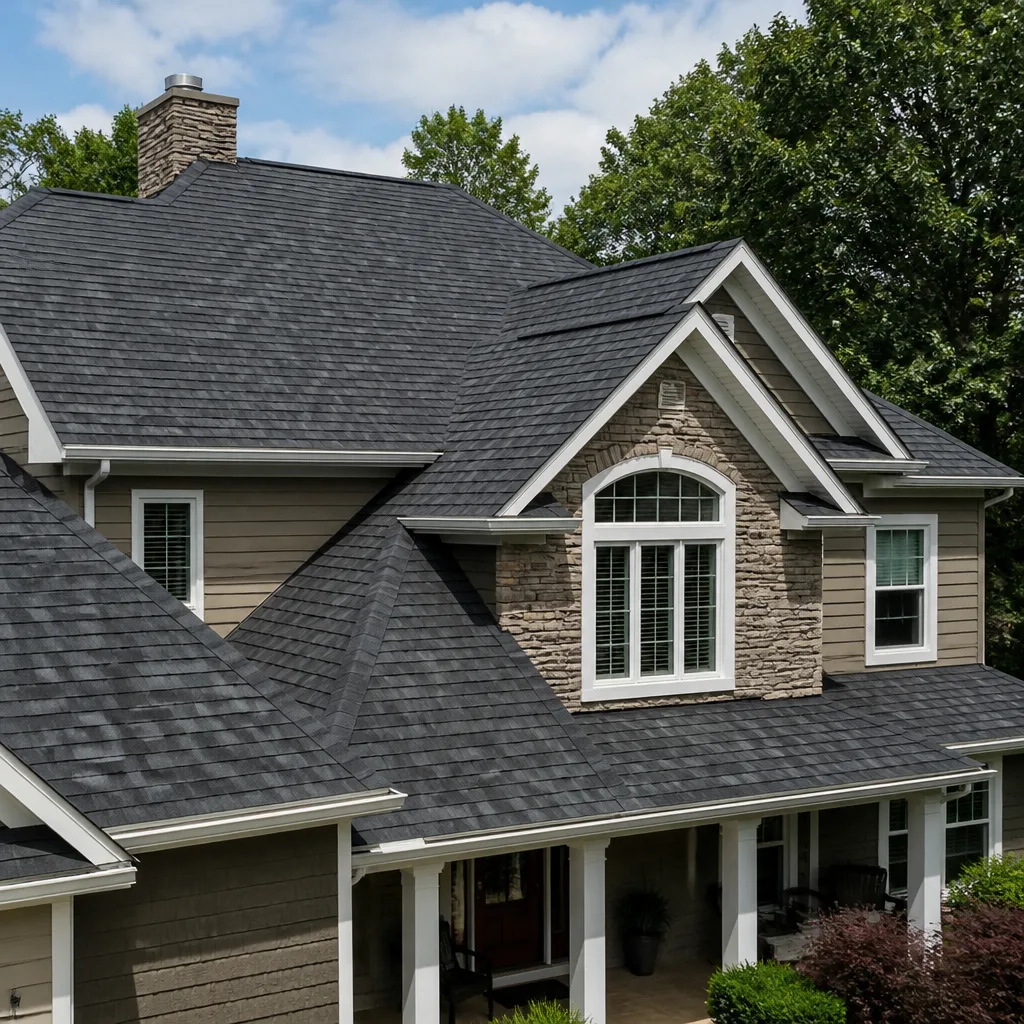 Architectural shingles
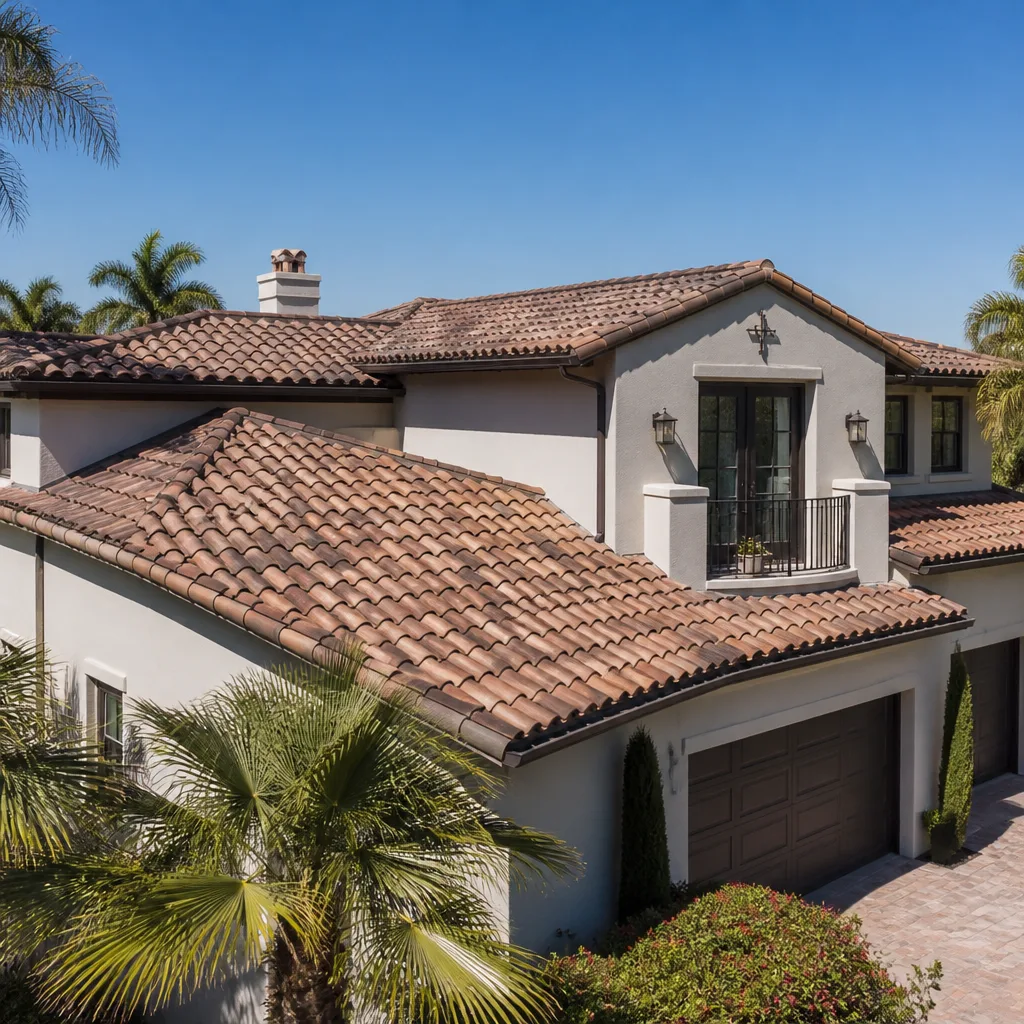 Tile roofing
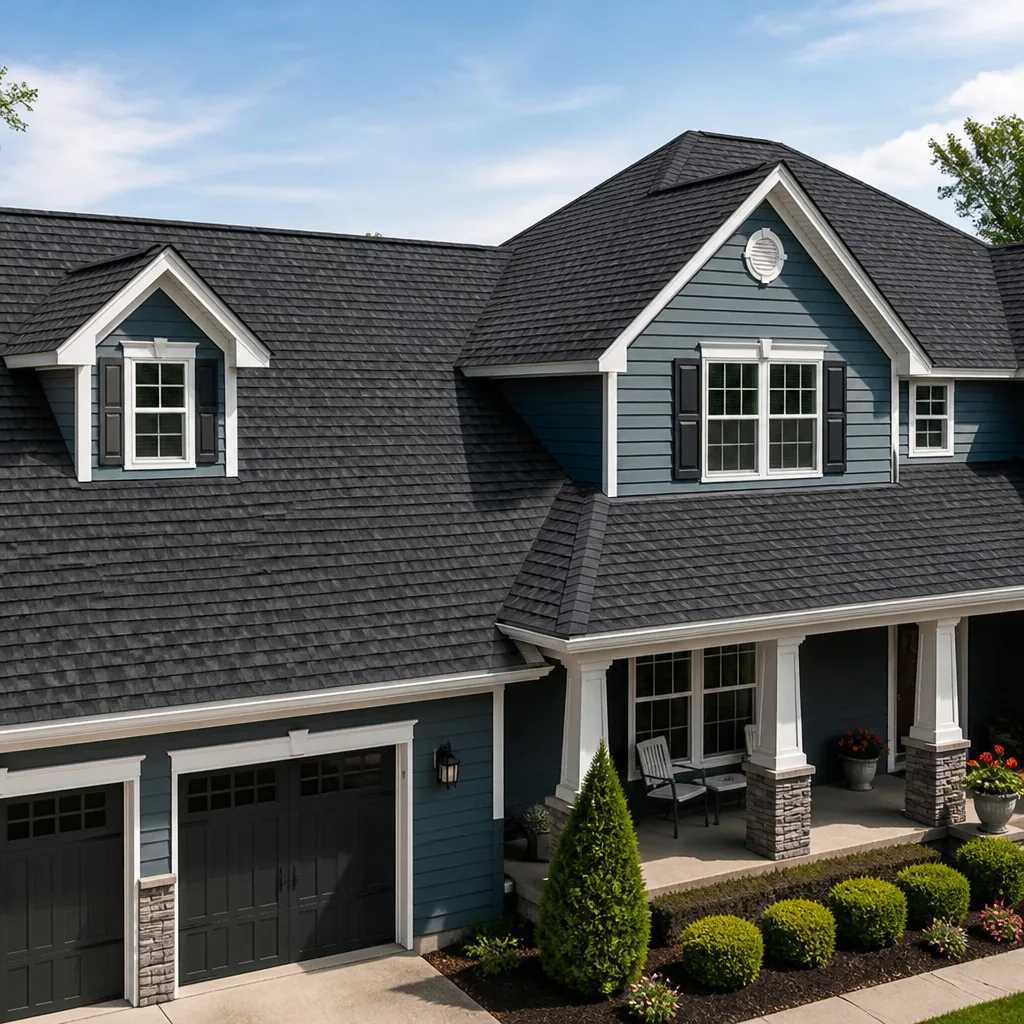 GAF
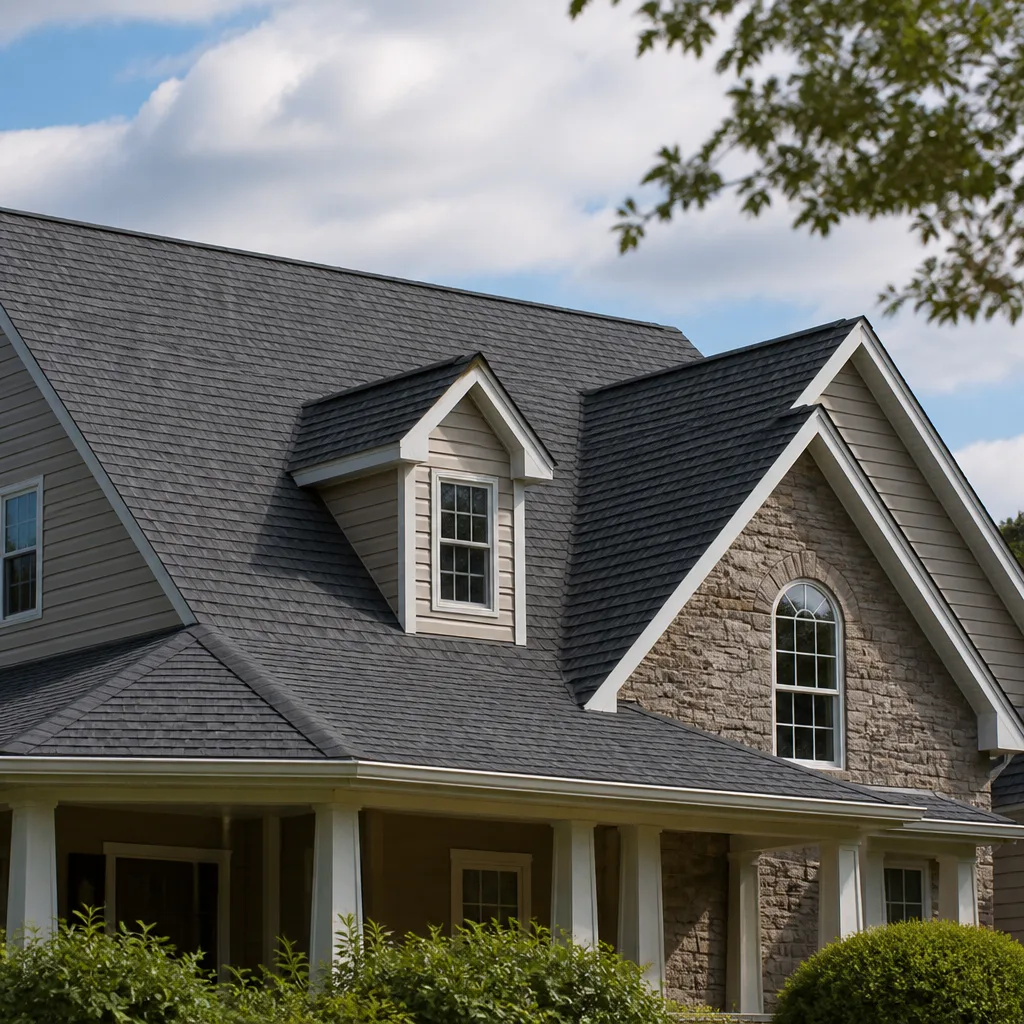 Owens Corning
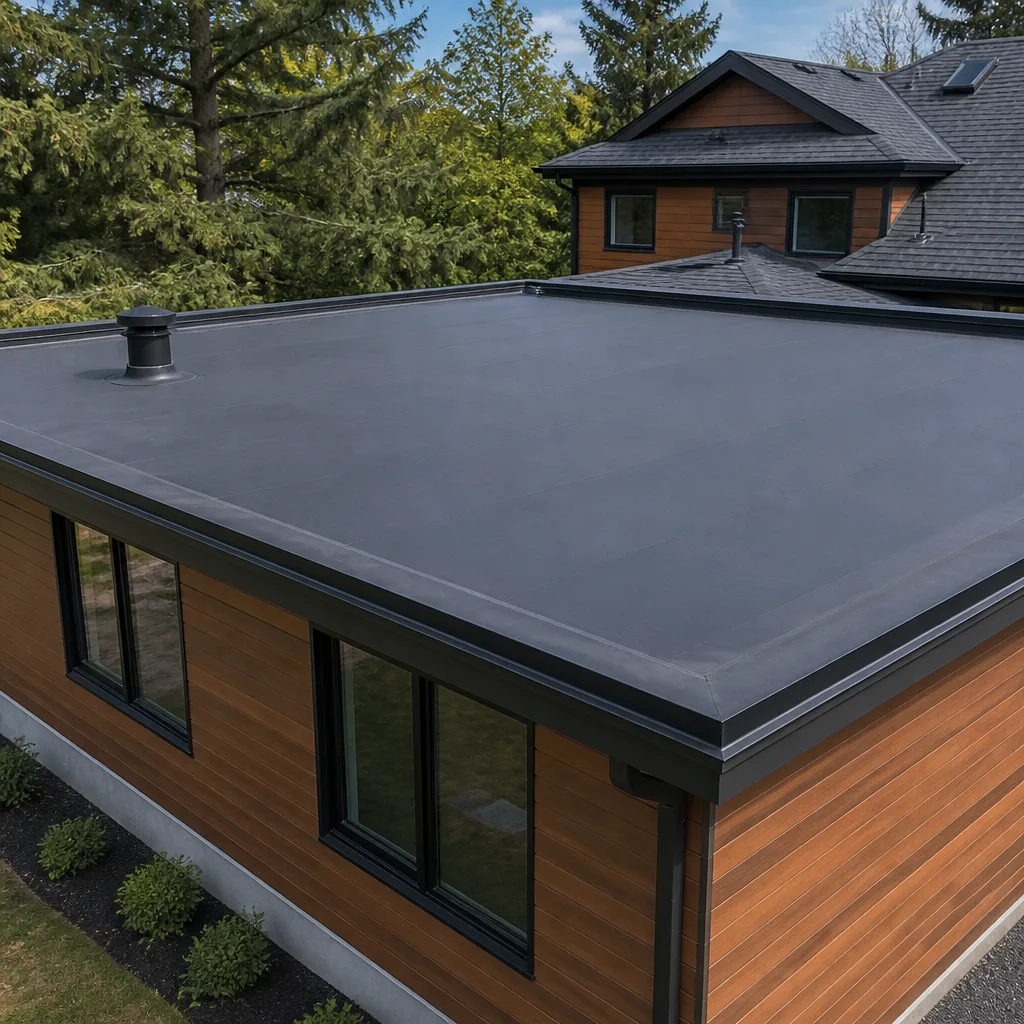 Flat & low-slope
Free roof inspection with deck photos before we talk money - GAF and Owens Corning certified installation
Roofing Permits, Codes & Inspections in CA: What You Need to Know
In California, a roof replacement that skips a permit doesn’t just risk a fine. It can legally void your homeowner’s insurance claim if the unpermitted work is connected to the loss. That’s a detail most homeowners in East Los Angeles don’t learn until it’s too late, and it’s exactly the kind of thing we walk through in this guide. You’ll learn when a permit is actually required, how Title 24 energy rules shape your material choices, what inspectors look for at each stage, and what happens if unpermitted work surfaces during escrow. This is the practical, no-fluff version, written from the perspective of a roofing contractor who works these neighborhoods every week. For more guides & resources, visit our blog.
Styles & brands we work with
Quick Answer
Most full roof replacements in California require a building permit, and all re-roofing projects must meet Title 24 energy standards plus any local fire zone requirements. Repairs covering less than 10% of the roof surface may be exempt, but East Los Angeles addresses inside designated fire hazard zones face stricter material rules. You’ll need at least two inspections, possibly three, and unpermitted work can stall a home sale or void an insurance claim. Always verify your specific address against LA County’s current code amendments before starting.
Table of Contents
- When a Roofing Project Needs a Permit vs. When Repair Is Exempt
- Title 24 Cool Roof Rules: What Applies to Re-Roofing
- LA County Fire Zone Map and Material Choices for East Los Angeles
- The Inspection Sequence: Rough, Dry-In, and Final
- Unpermitted Roofing Work and Home Sales: What Escrow Reveals
- Permit Costs and Realistic Timelines in LA County
- Common Mistakes to Avoid
- When to Call a Professional
- Frequently Asked Questions
- The Bottom Line
When a Roofing Project Needs a Permit vs. When Repair Is Exempt
The short answer: if you’re replacing the entire roof covering, you need a permit. If you’re patching a small section, you probably don’t. But the actual threshold in LA County is more specific than most people realize, and it’s worth understanding exactly where the line sits.
Under the California Residential Code (CRC), adopted with amendments by Los Angeles County, a building permit is required when you remove and replace more than 10% of the roof covering on a residential building. That means a single missing shingle, a small patch around a vent pipe, or a repair covering a few square feet of damaged underlayment doesn’t trigger the permit requirement. But once you cross that 10% threshold, which on most East Los Angeles homes translates to roughly 100 to 200 square feet depending on roof size, you’re legally required to pull a permit.
Here’s the nuance that catches people off guard: the 10% threshold applies per 12-month period, not per project. So if you patch 6% of the roof in March and another 6% in September, the cumulative total exceeds the exemption, and the second project technically requires a permit. We’ve seen homeowners get flagged for this during a presale inspection.
What about structural work? If you’re replacing sheathing, modifying the roof structure, adding insulation, or changing the roof pitch, the permit requirement is absolute, regardless of square footage. Structural changes always require plans and structural review. In East Los Angeles, where many homes date from the 1920s through 1960s, opening up a roof often reveals dry rot or termite damage in the sheathing that forces a scope change from simple re-cover to structural repair. Homeowners concerned about what to watch for should review our Roofing Warning Signs: A East Los Angeles Homeowner’s Reference Guide. When that happens, the permit wasn’t optional in the first place, but now it’s unavoidable.
What typically triggers a permit in practice:
- Full tear-off and re-roof of the entire roof surface
- Replacement of more than 10% of the roof covering
- Any structural repair, including sheathing replacement or rafter repairs
- Adding or relocating skylights, vents, or roof penetrations
- Changing roofing material type (for example, from shingles to tile)
- Installing solar panels that attach to the roof structure
What’s typically exempt:
- Patching a small leak covering less than 10% of the roof
- Replacing a few damaged shingles after a wind event
- Resealing a roof penetration or flashing joint
- Cleaning, coating, or maintaining an existing roof surface
The material you choose doesn’t determine the permit requirement. Whether you’re installing CertainTeed asphalt shingles, Owens Corning architectural shingles, or a standing seam metal roof, the trigger is scope and structure, not product. That said, material choice does affect which code requirements apply, particularly under Title 24, which we’ll get to next.
If you’re unsure whether your project crosses the threshold, the safest step is a Roof Inspection in East Los Angeles that documents the current condition and the exact scope of work needed. That documentation matters if questions ever come up later.
Title 24 Cool Roof Rules: What Applies to Re-Roofing
California’s Title 24 Building Energy Efficiency Standards apply to every re-roofing project in the state, no exceptions. When you replace a roof on a residential building in East Los Angeles, the new roofing material must meet minimum cool roof requirements unless the project qualifies for a specific exemption.
Here’s what “cool roof” actually means in code terms: the roofing material must meet a minimum aged solar reflectance and thermal emittance rating. For most residential re-roofing projects, the standard is an aged solar reflectance of 0.20 and a thermal emittance of 0.75, but the specific numbers vary by climate zone. East Los Angeles falls in California Climate Zone 9, which has its own prescriptive requirements.
The practical takeaway: most modern asphalt shingle products from major manufacturers already comply with Title 24. Manufacturers including CertainTeed, Owens Corning, IKO, and Atlas produce shingle lines that are either inherently cool-roof rated or have specific color blends that meet the reflectance standards. That doesn’t mean every product in their catalogs qualifies. Before you pick a material, verify that the specific product line and color meets Title 24 for Climate Zone 9.
What automatically complies, in most cases:
- Lighter-colored asphalt shingles with documented CRRC (Cool Roof Rating Council) ratings
- Most tile roofing products in light to medium earth tones
- Metal roofing with factory-applied reflective coatings
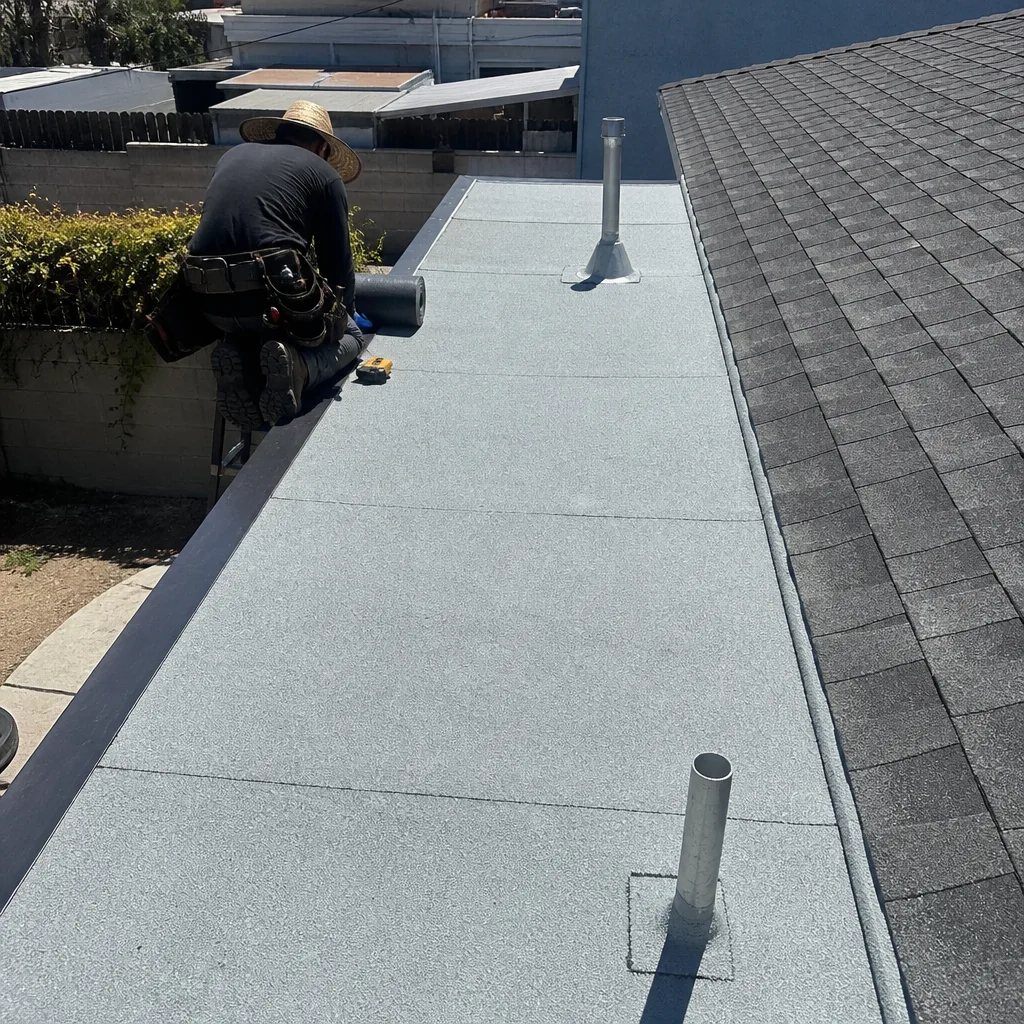
- Certain single-ply membrane systems rated for low-slope applications
What may fail Title 24 review:
- Dark, saturated color blends without CRRC ratings
- Unrated specialty products
- Salvaged or reclaimed materials without documentation
Here’s a detail most guides miss: the Title 24 compliance documentation is not optional paperwork. Your contractor must submit the Certificate of Compliance (CF-1R) to the building department and the Certificate of Installation (CF-2R) after the work is complete. Some jurisdictions require a HERS rater to verify the installation. In LA County, the inspection process often incorporates compliance verification, but the paperwork remains the contractor’s responsibility. If the paperwork never gets filed, your home may fail a future resale inspection even if the physical roof is fine.
There’s a common misconception that Title 24 only applies to full replacements. The code applies to any project that removes and reinstalls the roof covering beyond the repair threshold. So a 12% repair that requires a permit also triggers Title 24 compliance on that portion of the roof. In practice, this means most permitted re-roofing work in East Los Angeles requires cool roof materials.
If you’re weighing material options and want to match Title 24 requirements to your actual budget and home, a conversation with a contractor who works across multiple manufacturers helps. We stock and install products from several major brands, so the conversation starts with what works best for your home in Climate Zone 9, not with whichever single brand we happen to carry. Our Choosing the Right Roofing Brand: A Buyer’s Guide for East Los Angeles explains how we evaluate options.
LA County Fire Zone Map and Material Choices for East Los Angeles
If your home sits in a designated Fire Hazard Severity Zone, the rules change. Material choices become more restrictive, and the inspection process gets more rigorous. East Los Angeles is an interesting case here because the fire zone map isn’t uniform across the area. Some hillside neighborhoods, particularly those backing up to the Montecito Heights and El Sereno areas along the western edge of ELA, fall within or adjacent to zones where wildfire ignition-resistant construction requirements apply. The flatter, more densely built sections of East Los Angeles generally fall outside the highest severity zones, but the boundaries shift with updated maps.
The practical step is to check your exact address on the California Department of Forestry and Fire Protection (CAL FIRE) Fire Hazard Severity Zone map, and then cross-reference LA County’s local amendments. The county has its own fire zone designations that may be more restrictive than the state map.
What changes if you’re in a fire zone:
- Class A fire-rated roof coverings become mandatory, not optional
- Specific underlayment requirements may apply
- Roof penetrations may require ember-resistant designs
- Eave and soffit construction may need modification
- Some products, including certain wood shakes and shingles, become prohibited
What counts as Class A fire-rated:
- Most asphalt composition shingles from major manufacturers, including CertainTeed, Owens Corning, IKO, and Atlas
- Concrete and clay tile
- Most metal roofing systems
- Fire-rated synthetic roofing products
In our experience across East Los Angeles, the fire zone conversation usually surfaces during a Roof Replacement in East Los Angeles project when the homeowner discovers their existing wood shake roof can’t legally be replaced with another wood shake roof. That’s been the case for years under LA County amendments, regardless of fire zone status. The more common scenario today is a homeowner in the hills discovering that their preferred shingle color or profile isn’t rated for their fire zone, or that the underlayment requirements add a meaningful cost line item.
The point isn’t to scare you off any particular material. It’s to flag that the material decision isn’t purely aesthetic. Fire zone designation, Title 24 reflectance requirements, and the existing roof structure all constrain what you can legally install. A contractor who carries multiple product lines can work within those constraints honestly. Seven brands, one contractor, means the recommendation adapts to your address, not to our inventory limitations.
The Inspection Sequence: Rough, Dry-In, and Final
Most residential re-roofing projects in LA County involve at least two inspections, and projects with structural work involve three. Understanding what each inspection covers removes the mystery, and it also tells you what a legitimate contractor should be doing even before the inspector arrives.
The Three Inspection Stages
- Rough inspection (structural only): This applies only when structural work is involved, such as sheathing replacement, rafter repair, or strapping for seismic compliance. The inspector checks that the structural repairs match the approved plans, that fasteners are correctly spaced, and that any required engineering details are followed. If your project is a straightforward re-cover with no structural changes, this inspection is typically skipped.
- Dry-in inspection (mandatory): This happens after the underlayment is installed but before the roof covering goes on. The inspector verifies underlayment type and installation method, checks nailing patterns, inspects flashing details at penetrations and edges, and confirms that the underlayment meets any fire zone or Title 24 requirements. In LA County, this inspection is often called the “pre-cover” or “in-progress” inspection, and it’s the one homeowners most frequently miss because the timeline moves fast.
- Final inspection (mandatory): This happens after the roof covering is installed. The inspector verifies the finished roof matches the approved plans, checks that the roof covering meets the required fire rating and Title 24 compliance, confirms flashing and edge details are complete, and signs off on the Certificate of Installation.
What inspectors are actually checking at the dry-in stage matters more than most homeowners assume. The underlayment isn’t just a temporary waterproofing layer. In fire zones, it’s part of an assembly that prevents ember penetration. In all zones, it’s the last line of defense when the roof covering fails. An inspector who sees improperly lapped underlayment, exposed fasteners, or missing flashing at the eaves will fail the inspection, and the contractor has to redo work that was already done once.
At the final inspection, the inspector is looking for code compliance, not aesthetic perfection. They check that the product installed matches the product specified. They verify ridge cap installation, valley construction, and edge metal details. They confirm the roof has the required drainage characteristics. They don’t climb the roof and check every nail, but they do look for performance issues that suggest deeper problems.
The timeline from permit approval to final sign-off varies. In unincorporated LA County, a straightforward re-roof on a single-family home typically completes its two inspections within 10 to 14 business days, assuming no corrections. In the City of Los Angeles, where many East Los Angeles adjacent properties fall under city jurisdiction, inspection scheduling can add another week or more. Your contractor should be able to give you a realistic inspection schedule before work begins.
Unpermitted Roofing Work and Home Sales: What Escrow Reveals
This is where the abstract idea of “permits are important” becomes very concrete. When a home with unpermitted roofing work goes into escrow, the standard resale inspection process often surfaces it. Insurance companies, title companies, and buyers’ inspectors all look for evidence that work was done without permits, and the consequences range from inconvenient to deal-killing.
Here’s what actually happens when unpermitted roofing work is discovered during escrow:
- The buyer’s home inspector flags it. An experienced inspector can often tell when an asphalt shingle roof was replaced by looking at condition, installation details, and product age. If the county has no permit record matching the apparent age, a red flag goes up.
- The buyer’s lender may require remediation. If the lender’s appraisal notes unpermitted work, the loan can be conditioned on retroactive permitting. The seller has to open a permit, pay fees, and bring the work into compliance, which may require partial or full tear-off if the existing work doesn’t meet current code.
- The buyer’s insurance company may refuse coverage. Some insurers won’t bind a policy on a home with known unpermitted work, which stalls the sale indefinitely.
- The listing agent may be required to disclose it. In California, sellers must disclose known unpermitted work on the Transfer Disclosure Statement. Failure to disclose creates legal liability that extends well beyond the sale.
The most expensive version of this scenario is one we’ve seen more than once: a roof was replaced without a permit several years before a sale. The seller never thought about it. During escrow, the buyer’s inspector flags it, the lender conditions the loan, and the seller now has to pay for a new permit, additional inspections, and potentially corrections, all on the buyer’s timeline and at the buyer’s leverage. What would have cost a few hundred dollars in permit fees years ago now costs thousands and risks the entire sale.
Remediation options if you’re the seller:
- Retroactive permitting through the county, which may require an inspection of the existing roof and possibly opening sections to verify underlayment
- Negotiating a price reduction instead of remediation, which weakens your position
- Replacing the roof with permitted work, which is sometimes required if the existing work can’t be verified
If you’re the buyer, always cross-check the county permit record against the roof’s apparent age before closing. And if you’re the homeowner planning to sell in the next few years, the cheapest time to fix an unpermitted roof is now, not in escrow.
Permit Costs and Realistic Timelines in LA County
Permit costs for residential re-roofing in LA County are modest, especially compared to the cost of the roof itself. The exact fee depends on the project valuation, which your contractor declares on the permit application.
Typical ranges, based on current LA County fee schedules for residential re-roofing:
| Fee Type | Typical Range |
|---|---|
| Building permit (valuation-based) | $350 – $700 |
| Plan check fee (structural work only) | $150 – $400 |
| Inspection fees (included in permit) | N/A |
| Title 24 documentation | $0 – $150 |
| HERS verification (when required) | $0 – $300 |
| Retroactive permit penalties (if applicable) | 1.5x – 2x standard fees |
These are ranges, not quotes, and they shift with county fee schedule updates. The point is that the permit itself is rarely the cost barrier. What costs money is the work required to pass inspection: code-compliant underlayment, Title 24 rated materials, and proper flashing details. A contractor quoting a permit-free install is either working outside the law or leaving out scope that will surface later.
Timeline expectations for a typical East Los Angeles re-roof:
- Permit application and approval: 3 to 10 business days for simple projects
- Material delivery: 3 to 7 business days after approval
- Tear-off and dry-in: 1 to 2 days
- Dry-in inspection: 1 to 3 business days after request
- Roof covering installation: 1 to 3 days
- Final inspection: 1 to 5 business days after request
Total timeline for a straightforward replacement: roughly 2 to 4 weeks from permit application to final sign-off. Weather delays and inspection backlogs can stretch that. Summer and early fall are the busiest months in East Los Angeles, when every contractor in the county is scheduling inspections. Planning your project for a shoulder season can meaningfully compress the timeline. See our Seasonal Roofing Care for East Los Angeles: Year-Round Homeowner’s Guide for timing strategies.
Common Mistakes to Avoid
- Skipping the permit on a full replacement to save a few hundred dollars. The savings disappear when the insurance claim gets denied or the buyer’s lender flags the work during escrow.
- Assuming all asphalt shingles meet Title 24. They don’t. Specific colors and product lines from CertainTeed, Owens Corning, IKO, and Atlas are rated for compliance, but not every product a supplier lists qualifies for Climate Zone 9.
- Ignoring the fire zone map because the house has never been near a wildfire. The map designation, not the actual fire history, determines the code requirement. East Los Angeles hillside areas have stricter rules regardless of the last burn.
- Not checking whether the address is in the City of Los Angeles or unincorporated LA County. Two different building departments, two different fee schedules, and different amendment packages. The border runs directly through the East Los Angeles area.
- Accepting a bid that doesn’t include permit fees or inspection scheduling. That’s a contractor who plans to skip the process, and you’re the one who carries the liability.
- Assuming a “cool roof” rating means the product is fire-rated, or vice versa. These are separate ratings with separate verification systems. A product can meet one without meeting the other.
- Not saving the final inspection sign-off and Title 24 certificates. Ten years from now, that paperwork is what proves to a buyer’s inspector that the roof was done right. Without it, you’re in the same position as someone who skipped the permit entirely.
When to Call a Professional
Some roofing decisions can wait. Some can’t. If you’ve noticed a leak, water staining on a ceiling, or shingles in the yard after a wind event, the clock is running. Water intrusion in East Los Angeles homes moves fast, especially in older construction where the roof decking may already be compromised.
Call a professional when the roof is leaking, when the last repair was five or more years ago, when an insurance claim requires a documented inspection, or when you’re planning to sell and want to avoid unpermitted work surfacing during escrow. The inspection itself is the right first step regardless of the outcome. We inspect first, recommend second. Sunrise Roof Repair offers free estimates in East Los Angeles. Call (877) 752-3460 to schedule an inspection before the next rain hits.
Frequently Asked Questions
Yes, if the replacement covers more than 10% of the roof surface or involves any structural work. Patching a small leak under that threshold is generally exempt. In East Los Angeles, where many homes are older, opening up a roof often reveals structural work that makes the permit requirement absolute.
Residential re-roofing permits typically range from $350 to $700 based on project valuation, with additional plan check fees of $150 to $400 if structural work is involved. Call (877) 752-3460 for guidance on your specific project, and we’ll walk you through the actual fee schedule.
Title 24 applies to any permitted re-roofing work, including repairs that cross the 10% threshold and trigger a permit. The new material on that portion of the roof must meet cool roof reflectance and emittance standards for Climate Zone 9.
The buyer’s inspector or lender may flag the unpermitted work, which can stall escrow, condition the loan on retroactive permitting, or force a price reduction. In East Los Angeles’s active resale market, unpermitted roofing work reliably surfaces during due diligence.
Yes. Hillside areas and other designated fire hazard zones require Class A fire-rated roof coverings, specific underlayment, and sometimes ember-resistant penetration details. Check your address on the CAL FIRE and county maps before selecting materials.
A straightforward re-cover needs two: a dry-in inspection after underlayment and a final inspection after the covering. Structural work adds a rough inspection before dry-in. Project timelines in East Los Angeles typically land between 2 and 4 weeks from permit application to final sign-off.
The Bottom Line
California roofing permits aren’t bureaucratic theater. They’re the mechanism that verifies your roof meets energy standards, fire safety requirements, and structural standards that protect your home and your resale position. The permit process in LA County is manageable when you understand the trigger thresholds, the Title 24 material rules, the fire zone map, and the inspection sequence. The homeowners who get surprised are the ones who never learned any of it. If you’re planning a roof project in East Los Angeles, start with an honest inspection that tells you exactly what scope you’re facing. From there, the code compliance becomes a checklist, not a crisis.
Need a roof assessment? We offer free estimates across East Los Angeles. Call (877) 752-3460 or visit our Roof Repair in East Los Angeles page to learn more. If you’re considering a full replacement, start with our Roof Inspection in East Los Angeles service before committing to any scope. We inspect first, recommend second.
Written by the team at Sunrise Roof Repair, serving East Los Angeles since 2015.
See the difference
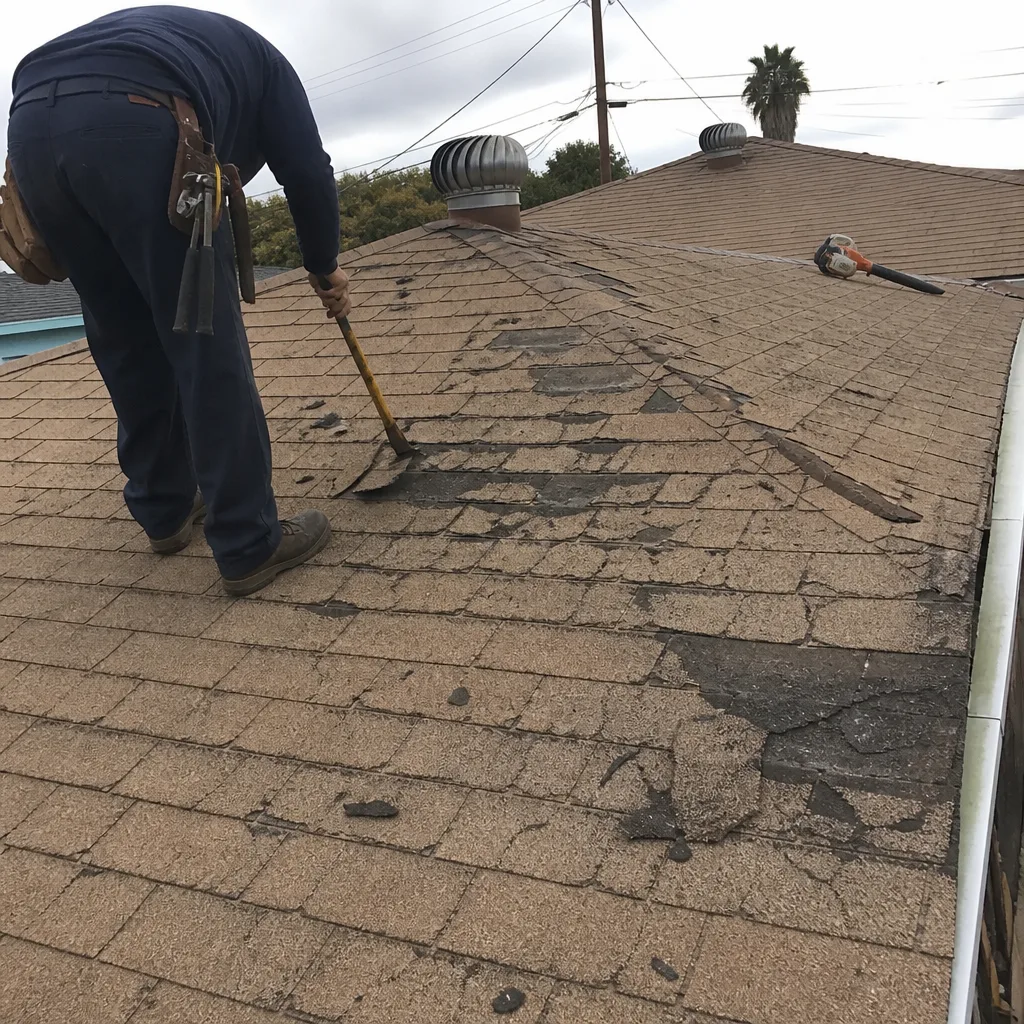 Before
 After
 Before
 After
 Before
 After